Love this? Save it for later!
Share the inspiration with your friends
“You know, I wasn’t expecting to learn steak secrets from a barista.” That’s how my Tuesday started last fall, standing in line at a quirky little coffee shop called The Corner Grind. As I waited, the guy in front of me, who looked more like a skateboarder than a chef, was chatting about his weekend cooking adventures. When he mentioned his “foolproof cast iron skillet steak” that “never dries out,” I was intrigued. Honestly, I was skeptical—how could someone so casual make steak that perfect?
Well, fast forward a few weeks, and I found myself trying his method on a random Wednesday night, after a long day and with a slightly cracked skillet that I’d been meaning to replace. That first bite? Juicy, tender, with a crust so satisfying it almost made me forget about the mess I’d made in the kitchen. If you’ve ever been there—craving that perfectly cooked steak but ending up with something dry or tough—you’re going to want this recipe in your life.
Maybe you’ve been there, too: staring at a thick cut of meat, wondering if you’ll ever nail the balance between char and juicy pink inside. Let me tell you, this foolproof cast iron skillet steak recipe doesn’t just promise juiciness every time—it delivers it. And the best part? It’s surprisingly simple, no fancy gadgets required. That’s why I keep coming back to it, skillet and all, even on hectic weeknights when all I want is a meal that feels like a treat without the fuss.
Why You’ll Love This Recipe
This cast iron skillet steak recipe has become a kitchen staple for me, and I’m excited to share why it might become yours, too. It hits the sweet spot between simplicity and flavor, making it ideal for steak lovers who want consistent juiciness without the guesswork.
- Quick & Easy: From prep to plate in under 30 minutes, perfect for busy evenings or spontaneous dinner plans.
- Simple Ingredients: Uses pantry essentials—just quality steak, salt, pepper, and a few pantry staples you probably have on hand.
- Perfect for Any Occasion: Whether it’s a cozy dinner for one or impressing friends at your next gathering, this steak shines.
- Crowd-Pleaser: Family, friends, even steak skeptics rave about the tender, juicy texture and rich crust.
- Unbelievably Delicious: The secret lies in searing at just the right heat and finishing with butter and aromatics for that mouthwatering finish.
What sets this recipe apart is the methodical approach to heat management and timing. It’s not just about tossing a steak on a hot pan—there’s a rhythm here that locks in juices and creates that crave-worthy crust. I’ve tested this technique over dozens of steaks, tweaking times and temperatures, and this version feels like the one I’d bet on for a perfect steak night every single time.
Honestly, this recipe isn’t just about steak—it’s about confidence in the kitchen. You get to enjoy that satisfying sizzle and aroma, knowing the result will be juicy and tender. It’s comfort food that feels a little fancy but requires zero stress, and that’s a win in my book.
What Ingredients You Will Need
This foolproof cast iron skillet steak recipe keeps things straightforward with quality ingredients that highlight the meat’s flavor and texture without overwhelming it. Most items are pantry staples or easy to find at your local market.
- Steak: 1 thick-cut ribeye or New York strip steak (about 1 to 1.5 inches thick, roughly 12-16 oz / 340-450 g). Choose well-marbled cuts for juiciness. I prefer USDA Choice grade from my local butcher for best flavor.
- Salt: Kosher salt or sea salt (coarse grind recommended for better crust).
- Freshly ground black pepper: Adds a subtle heat and depth—grind fresh if possible.
- High smoke point oil: 1-2 tablespoons of avocado oil or grapeseed oil (I like avocado oil for its neutral flavor and heat tolerance).
- Unsalted butter: 2 tablespoons, for basting (adds richness and helps finish the steak beautifully).
- Fresh aromatics: 2 sprigs of thyme and/or rosemary, and 2 garlic cloves crushed (optional, but highly recommended).
If you want to swap out the ribeye for a leaner cut like sirloin, just be mindful it may cook faster and be less forgiving. For a dairy-free version, you can replace butter with ghee or a neutral oil during basting.
Seasoning is simple but crucial. I always salt the steak generously at least 40 minutes before cooking (or even overnight) to let it penetrate. If you’re in a rush, season just before cooking but be generous. It makes a huge difference in flavor and moisture retention.
Equipment Needed
The beauty of this recipe lies in its minimal equipment list, which means you don’t need a fancy grill or sous vide setup to get a steakhouse-worthy result.
- Cast iron skillet: An 8 to 12-inch heavy skillet is ideal. Cast iron holds and distributes heat evenly, creating that perfect sear and crust.
- Tongs: For flipping the steak without piercing it (which helps keep juices inside).
- Instant-read meat thermometer: Optional but highly recommended for precision. It takes the guesswork out of doneness.
- Small spoon: To baste the steak with butter and aromatics during cooking.
- Paper towels: For patting the steak dry before seasoning, which is key to a great crust.
If you don’t have a cast iron skillet, a heavy stainless steel pan can work, but you might miss out on some of that signature crust and heat retention. For budget options, you can find decent cast iron skillets online or at thrift stores—just make sure they’re well-seasoned or give them a quick seasoning before use.
Personally, I keep a dedicated steak skillet that’s a bit scratched and imperfect, but it’s become my secret weapon for consistently juicy steaks.
Preparation Method
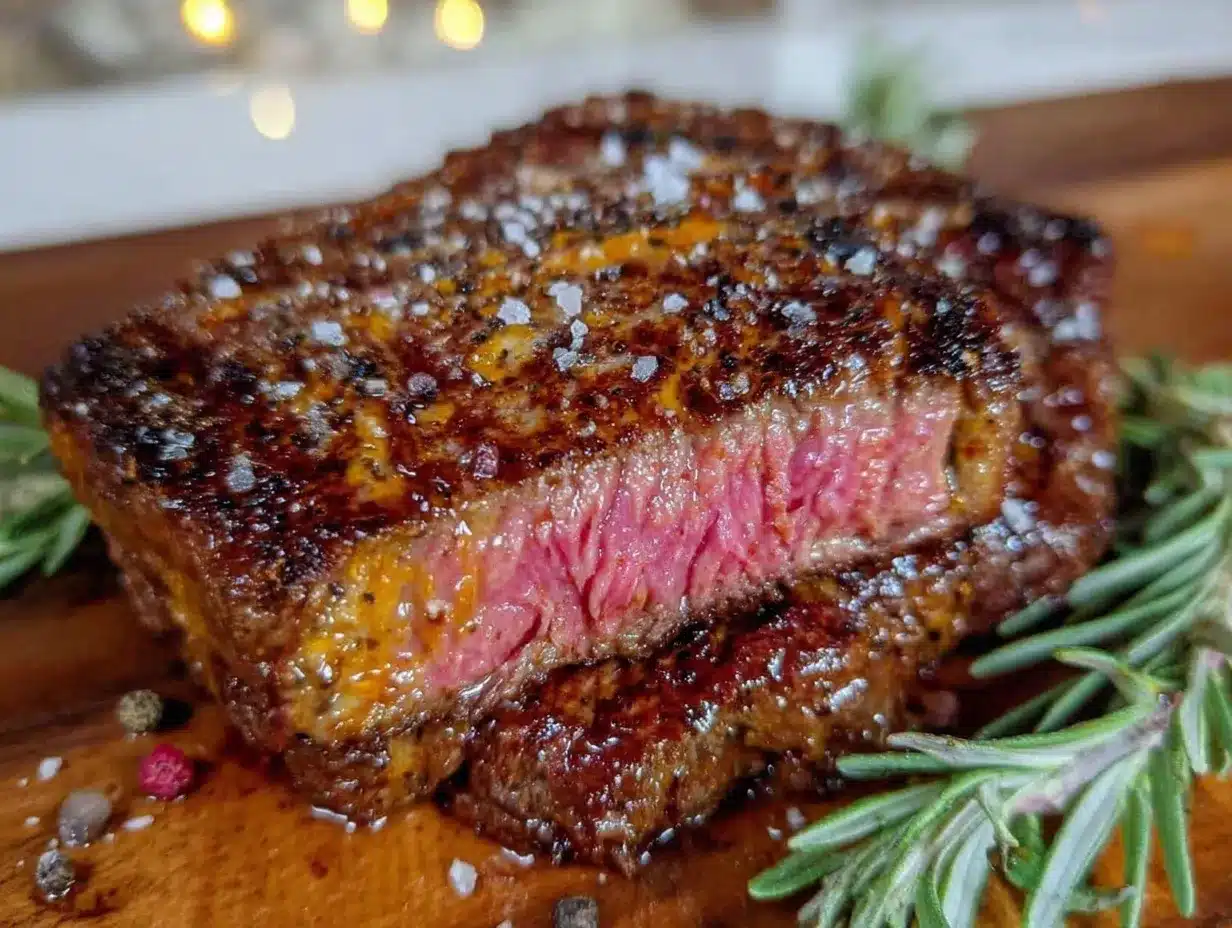
- Bring the steak to room temperature: Remove your steak from the fridge about 30-45 minutes before cooking. This ensures even cooking throughout. Pat it dry thoroughly with paper towels to remove excess moisture—this step is crucial for a good sear.
- Season generously: Sprinkle both sides of the steak with kosher salt and freshly ground black pepper. If time allows, season at least 40 minutes ahead or even overnight in the fridge uncovered to dry brine. This step helps intensify flavor and improves texture.
- Preheat your cast iron skillet: Place your skillet on the stove over medium-high heat and let it get smoking hot—about 5 minutes. You want the pan screaming hot before the steak hits it. This ensures that beautiful crust.
- Add oil: Swirl 1-2 tablespoons of avocado oil into the pan. It should shimmer but not smoke excessively. If it smokes too much, reduce the heat slightly.
- Sear the steak: Carefully lay the steak in the pan away from you to avoid splatters. Don’t move it for about 2-3 minutes (for a 1-inch steak). You’re aiming for a deep golden-brown crust. If it sticks, it’s not ready to flip.
- Flip and sear the other side: Using tongs, turn the steak and sear the other side for 2-3 minutes. This locks in the juices and forms an even crust.
- Add butter and aromatics: Reduce heat to medium-low. Add 2 tablespoons of unsalted butter, crushed garlic cloves, and herb sprigs to the skillet.
- Baste the steak: Tilt the skillet slightly and, using a spoon, continuously baste the melted butter and herbs over the steak for 1-2 minutes. This adds flavor and keeps the steak moist.
- Check doneness: Use an instant-read thermometer to gauge internal temperature:
- Rare: 120-125°F (49-52°C)
- Medium rare: 130-135°F (54-57°C)
- Medium: 140-145°F (60-63°C)
Remember, the steak will continue to cook slightly after you remove it from the pan.
- Rest the steak: Transfer the steak to a warm plate and tent loosely with foil. Let it rest for 5-10 minutes to redistribute juices—this step is where the magic happens for juiciness!
One time I got distracted mid-baste (my cat jumped on the counter), and the butter started to brown too much. I quickly pulled the steak off and ended up with a slightly nuttier crust that actually tasted fantastic. So, a little imperfection can sometimes add character!
Cooking Tips & Techniques
Getting a perfect cast iron skillet steak every time is about mastering a few key points. Here’s what I’ve learned through trial and error:
- Pat your steak dry: Moisture is the enemy of a good crust. Always dry the meat before seasoning.
- Don’t overcrowd the pan: Cook one steak at a time unless you have a large skillet. Overcrowding lowers the pan temperature and prevents proper searing.
- Use high heat initially: The intense heat gives you that golden-brown crust, but lower the heat later for butter basting to avoid burning.
- Use tongs, not a fork: Piercing the steak lets precious juices escape.
- Rest the steak: I can’t stress this enough. Resting results in juices settling evenly, making every bite juicy and tender.
- Thermometer is your friend: Guessing doneness can lead to overcooked steak. I recommend an instant-read thermometer for confidence.
At one point, I tried flipping the steak repeatedly to “cook faster,” but that just prevented a good crust from forming and led to uneven cooking. Lesson learned: patience pays off. Also, multitasking while cooking steak is tempting, but staying focused on the pan is key. The sizzle and aroma give you clues if the heat’s on point.
Variations & Adaptations
This foolproof cast iron skillet steak recipe is flexible enough for different tastes and dietary needs:
- Garlic butter twist: Mix softened butter with minced garlic and parsley, then dollop it atop the resting steak for an extra flavor boost.
- Spicy kick: Add a pinch of smoked paprika or cayenne pepper to your seasoning blend for subtle heat that pairs beautifully with the steak’s richness.
- Herb crust: Press finely chopped rosemary, thyme, and cracked black pepper into the steak before searing for aromatic crust variations.
- Oven finish: For thicker cuts (2 inches or more), after searing both sides, pop the skillet in a preheated 400°F (200°C) oven for 4-6 minutes to reach desired doneness.
- Allergen-friendly: Skip butter and use clarified butter or coconut oil for dairy-free versions without sacrificing flavor.
One variation I adore is adding a splash of balsamic vinegar to the pan during the last minute of basting—it creates a subtle tang that cuts through the richness. It’s a little twist that keeps the recipe exciting without complicating it.
Serving & Storage Suggestions
Serve your skillet steak hot, sliced against the grain to maximize tenderness. I like to plate it with a simple side like roasted garlic mashed potatoes or a fresh arugula salad dressed lightly with lemon vinaigrette. A robust red wine or a cold craft beer pairs beautifully, but honestly, it’s delicious on its own.
If you have leftovers (which can be rare!), wrap them tightly in foil or an airtight container and refrigerate for up to 3 days. Reheat gently in a skillet over low heat with a splash of broth or water to avoid drying out. Avoid microwaving if possible—steak can turn rubbery that way.
Flavors also deepen slightly after resting overnight in the fridge, so sometimes I enjoy thin slices cold or room temperature the next day, perfect for steak sandwiches or salads.
Nutritional Information & Benefits
A 6-ounce (170 g) ribeye steak provides roughly 400 calories, packed with 30 grams of protein and essential nutrients like iron, zinc, and vitamin B12. These nutrients support muscle health and energy metabolism.
Choosing a well-marbled cut means you’re getting some fat, which is necessary for flavor and satiety—just balance it with plenty of veggies or whole grains on the side. For lower fat options, leaner cuts like sirloin work well but may require careful cooking to avoid dryness.
This recipe is naturally gluten-free and dairy-free if you swap butter as noted, making it accessible for many dietary preferences. I appreciate how it fits into a balanced lifestyle without sacrificing that hearty, satisfying feeling only a great steak can bring.
Conclusion
There’s something truly satisfying about mastering a recipe that consistently delivers juicy, flavorful steak without fuss. This foolproof cast iron skillet steak has become my go-to because it’s straightforward, forgiving, and downright delicious. Whether you’re a seasoned home cook or just starting, it’s one of those recipes that builds confidence—and taste buds will thank you.
Feel free to tweak the seasoning or try the variations to make it your own. I love hearing how readers put their spin on classic recipes, so don’t hesitate to share your experiences or questions below. Your perfect steak night is just a skillet away—go on, treat yourself!
And if you want to try something equally tempting, my crispy garlic chicken recipe pairs wonderfully for a hearty meal that’s easy to make any night of the week.
FAQs
How do I know when my steak is perfectly cooked?
The best way is to use an instant-read thermometer: 130°F (54°C) for medium-rare, 140°F (60°C) for medium. Also, look for a deep brown crust and feel the steak’s firmness—medium-rare should have some give but not be mushy.
Can I use this method for thinner steaks?
Yes, but thinner cuts cook much faster. Reduce searing time to 1-2 minutes per side and watch closely to avoid overcooking.
Why is resting the steak important?
Resting lets the juices redistribute throughout the meat instead of spilling out when cut, making the steak juicier and more tender.
Can I marinate the steak before cooking?
This recipe shines by highlighting the steak’s natural flavor with simple seasoning. Marinating isn’t necessary but adding a quick herb or garlic marinade can add extra flavor if you like.
What if I don’t have a cast iron skillet?
A heavy stainless steel pan works as a substitute, but cast iron’s heat retention and even cooking make it ideal for this recipe. If using another pan, increase heat gradually to avoid hot spots.
Pin This Recipe!
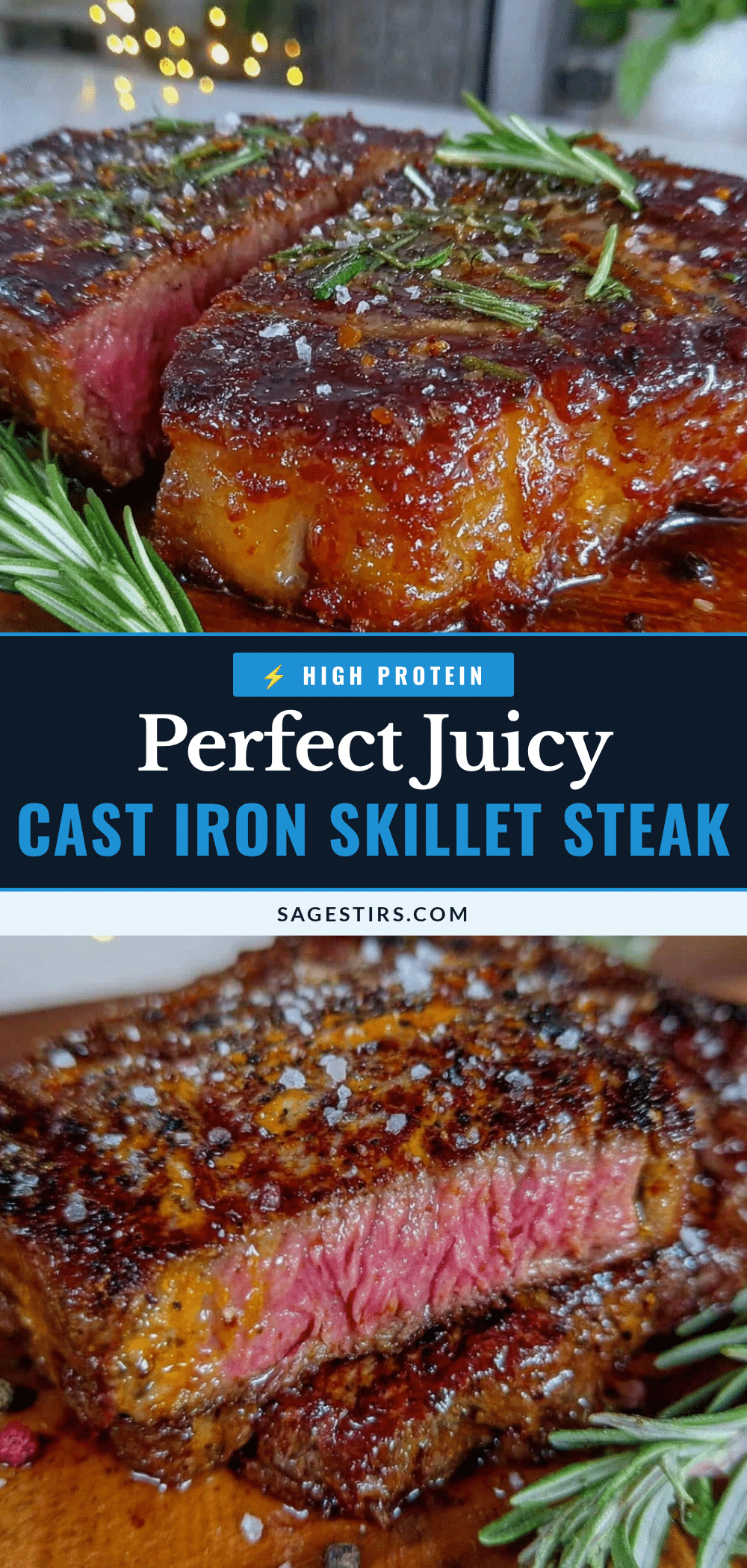
Foolproof Cast Iron Skillet Steak Recipe for Perfect Juiciness Every Time
This recipe delivers a juicy, tender steak with a satisfying crust using a simple cast iron skillet method. Perfect for steak lovers seeking consistent results without fuss.
- Prep Time: 10 minutes
- Cook Time: 10 minutes
- Total Time: 20 minutes
- Yield: 1 serving 1x
- Category: Main Course
- Cuisine: American
Ingredients
- 1 thick-cut ribeye or New York strip steak (1 to 1.5 inches thick, 12–16 oz / 340–450 g)
- Kosher salt or sea salt (coarse grind recommended)
- Freshly ground black pepper
- 1–2 tablespoons avocado oil or grapeseed oil
- 2 tablespoons unsalted butter
- 2 sprigs thyme and/or rosemary (optional)
- 2 garlic cloves, crushed (optional)
Instructions
- Remove steak from fridge 30-45 minutes before cooking to bring to room temperature. Pat dry thoroughly with paper towels.
- Season both sides generously with kosher salt and freshly ground black pepper. If possible, season at least 40 minutes ahead or overnight uncovered in the fridge.
- Preheat cast iron skillet over medium-high heat until smoking hot, about 5 minutes.
- Add 1-2 tablespoons of avocado oil to the pan and swirl to coat. The oil should shimmer but not smoke excessively.
- Place steak carefully in the pan and sear without moving for 2-3 minutes until a deep golden-brown crust forms.
- Flip steak using tongs and sear the other side for 2-3 minutes.
- Reduce heat to medium-low. Add 2 tablespoons unsalted butter, crushed garlic cloves, and herb sprigs to the skillet.
- Tilt skillet and baste steak continuously with melted butter and aromatics for 1-2 minutes.
- Check doneness with an instant-read thermometer: Rare 120-125°F, Medium rare 130-135°F, Medium 140-145°F.
- Transfer steak to a warm plate, tent loosely with foil, and rest for 5-10 minutes before serving.
Notes
Pat steak dry before seasoning to ensure a good crust. Do not overcrowd the pan; cook one steak at a time. Use tongs to flip to avoid piercing the meat. Rest steak after cooking to redistribute juices. Butter basting adds richness and moisture. For thicker cuts, finish in a 400°F oven for 4-6 minutes after searing. For dairy-free, substitute butter with ghee or neutral oil.
Nutrition
- Serving Size: 1 steak (12-16 oz)
- Calories: 400
- Sodium: 600
- Fat: 30
- Saturated Fat: 12
- Protein: 30
Keywords: cast iron skillet steak, juicy steak, ribeye steak, New York strip, easy steak recipe, skillet steak, steak dinner, pan-seared steak