Love this? Save it for later!
Share the inspiration with your friends
Pulling a singed baking sheet out of the oven with my bare hands—no mitt, just pure instinct and regret—when I realized I had exactly twenty minutes to turn a single, sad-looking honeynut squash into something that didn’t taste like desperation. The squash had been sitting on my counter for two weeks, shrinking slightly, almost mocking me every time I walked past. I’d bought it on a whim because it looked cute—smaller than butternut, more orange, somehow more confident. And there it was, my last hope for a dinner that didn’t involve scrambled eggs again.
I’d been meaning to make a proper risotto for months, but the constant stirring always scared me off. You know how it is—you read about the endless ladling and the arm fatigue and the risk of ending up with mushy rice, and you just grab a box of something quick instead. But that night, with the squash roasting and filling my tiny kitchen with this insane caramelized smell, I figured I had nothing to lose. If it failed, I’d call it soup and move on.
What came out of that pan was honestly shocking. The risotto turned this deep, golden orange—like sunset in a bowl—and the sage leaves I’d crisped up in butter added this salty, herbaceous crunch that made every bite interesting. I stood at the counter eating straight from the pan, not even bothering with a plate. That’s when I knew this creamy honeynut squash risotto with crispy sage wasn’t just a happy accident; it was something I’d be making on purpose for years to come. And spoiler alert: I have.
Why You’ll Love This Recipe
This isn’t your typical fussy risotto that demands constant attention and a culinary degree. I’ve tested this recipe at least a dozen times—sometimes with the squash roasted ahead, sometimes thrown in raw (don’t do that), and once with a friend’s toddler “helping” stir—and it holds up every single time. Here’s why it’s become my fall dinner MVP:
- Surprisingly Simple: You don’t need to babysit the stove for an hour. The key is roasting the squash first (which does its own thing in the oven), then letting the rice do most of the work with a solid stirring rhythm that feels meditative, not stressful.
- Pantry-Friendly Ingredients: Arborio rice, chicken or vegetable broth, a single honeynut squash, fresh sage, butter, onion, garlic, and Parmesan. That’s it. No fancy truffle oil or imported cheese that costs a mortgage payment.
- Perfect for Cozy Nights In: This risotto screams fall comfort food. It’s the kind of meal you make when you want to feel like you’re eating at a rustic Italian farmhouse, but you’re actually in sweatpants watching the leaves fall outside your window.
- Always Impresses Guests: I’ve served this at two small dinner parties now, and both times people asked for the recipe before they finished their first bite. It looks impressive—the vibrant orange against the green sage—but you’ll know the secret: it’s mostly just patience and good butter.
- Unbelievably Creamy Without Heavy Cream: The magic here is the squash itself. Once roasted and stirred into the rice, it breaks down into this velvety, naturally sweet puree that coats every grain. You get that luxurious mouthfeel without a drop of cream.
What really sets this apart from other squash risottos I’ve tried is the texture contrast. The crispy sage leaves aren’t just garnish—they’re a crucial element that cuts through the richness and adds this little pop of savory crunch. It’s the difference between a good risotto and one you’ll dream about later.
What Ingredients You Will Need
This recipe relies on simple, wholesome ingredients that work together to create something far greater than the sum of their parts. Most of these are probably already in your kitchen, which is exactly how weeknight cooking should feel.
- 1 medium honeynut squash (about 1 pound) — peeled, seeded, and cut into 1-inch cubes. Honeynut squash is smaller and sweeter than butternut, with a thin skin that roasts beautifully. If you can’t find it, use butternut squash or even kabocha. Look for one that feels heavy for its size and has deep orange flesh.
- 4 tablespoons unsalted butter, divided — 2 tablespoons for roasting the squash, 1 tablespoon for the sage, and 1 tablespoon for finishing the risotto. I use Kerrygold because the higher fat content makes everything taste richer, but any good unsalted butter works.
- 1 tablespoon olive oil — for roasting the squash alongside the butter. Helps everything caramelize without burning.
- 1 small yellow onion (about 1 cup diced) — finely chopped. You want it small enough to melt into the rice, not leave chunks. Shallots work great here too if you have them.
- 2 cloves garlic, minced — because risotto without garlic feels incomplete. Add it after the onion is soft so it doesn’t burn.
- 1 cup Arborio rice — this is non-negotiable for the creamy texture. Arborio has the right starch content to create that signature risotto creaminess. Carnaroli or Vialone Nano are also excellent if you can find them.
- ½ cup dry white wine — something you’d actually drink, like a Sauvignon Blanc or Pinot Grigio. The wine adds acidity that balances the sweet squash. No wine? Use an extra ½ cup of broth with a squeeze of lemon juice.
- 4 cups warm chicken or vegetable broth — low-sodium so you control the salt. I prefer chicken broth for deeper flavor, but vegetable broth keeps this vegetarian and works beautifully.
- ½ cup freshly grated Parmesan cheese — please don’t use the green can stuff. Grate it yourself from a block; it melts so much smoother and tastes infinitely better. Pecorino Romano works too for a saltier kick.
- 10-12 fresh sage leaves — for that crispy topping. Look for leaves that are evenly colored without brown spots. If your sage is older and limp, it won’t crisp up as well.
- Salt and freshly ground black pepper — to taste. I use flaky sea salt for finishing because it adds little bursts of salinity.
- Optional: Pinch of nutmeg — freshly grated if you have it. It’s not traditional, but it plays beautifully with the squash and adds a warm, almost floral note.
Equipment Needed
You don’t need a professional kitchen to pull this off, but having the right tools makes the process smoother and more enjoyable. Here’s what I use every time:
- Baking sheet — rimmed, preferably half-sheet size. The rim is important so nothing slides off when you toss the squash halfway through roasting.
- Large, heavy-bottomed pot or Dutch oven — I use my 5.5-quart Le Creuset, but any heavy pot works. The weight helps distribute heat evenly and prevents the rice from scorching on the bottom.
- Wooden spoon or silicone spatula — for stirring. Wooden spoons are traditional and won’t scratch your pot, but I actually prefer a stiff silicone spatula because it scrapes the bottom more effectively.
- Ladle — for adding broth one scoop at a time. A ½-cup ladle is perfect for controlling the liquid.
- Small skillet — for crisping the sage leaves. A non-stick skillet works best here because the butter and sage can stick to stainless steel if you’re not careful.
- Chef’s knife and cutting board — a sharp knife makes peeling and cubing the squash much less frustrating. Trust me on this one; I’ve fought with dull knives and squash before, and the squash always wins.
- Microplane or box grater — for grating the Parmesan. A Microplane gives you that fluffy, melt-in-the- rice texture.
If you don’t have a Dutch oven, a deep stainless steel pot works fine—just keep the heat on medium-low and stir a little more frequently. And if you don’t have a ladle, a measuring cup with a spout works in a pinch.
Preparation Method
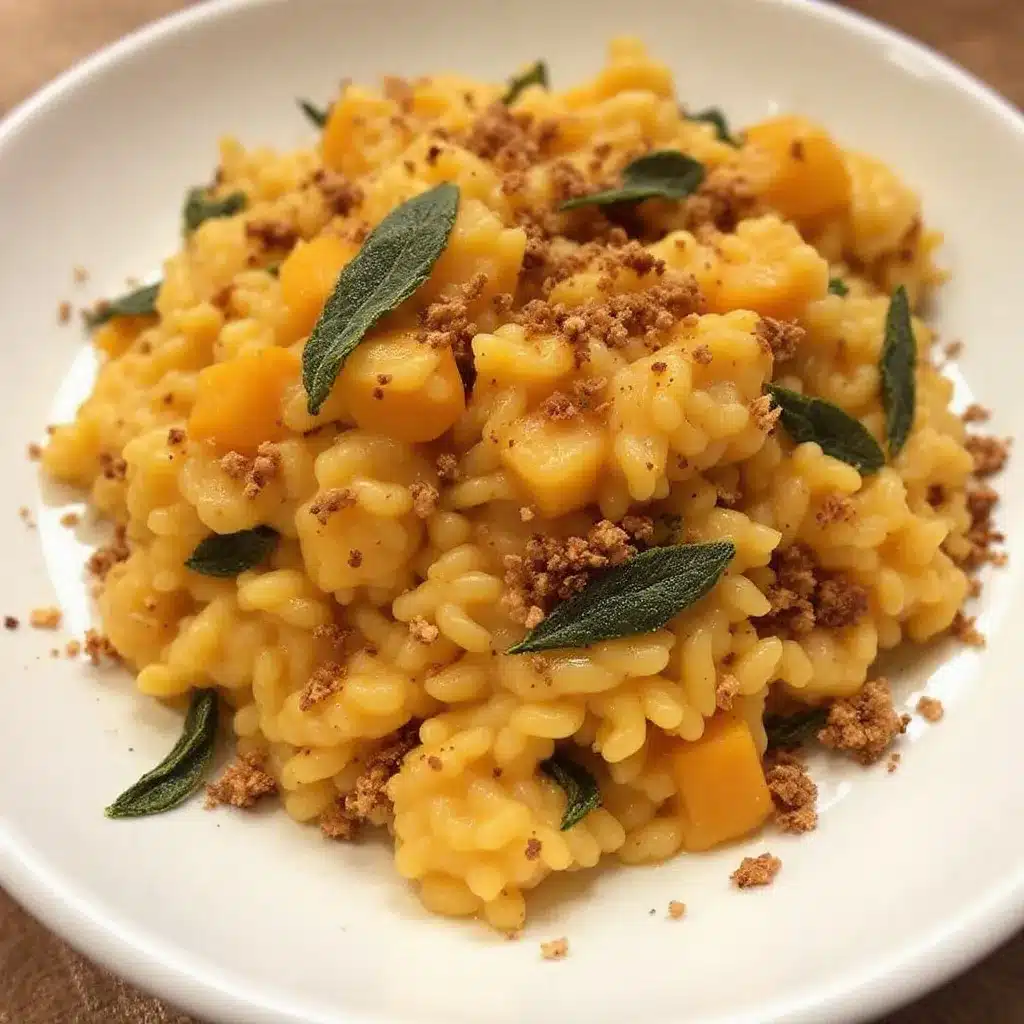
Let’s walk through this step by step. I’ve included visual cues and timing so you know exactly what to look for at each stage. Take your time—risotto rewards patience.
- Preheat your oven to 400°F (200°C). Line a baking sheet with parchment paper if you want easier cleanup, though I often skip it and just scrub the pan after. Place the cubed honeynut squash on the sheet, drizzle with 2 tablespoons melted butter and 1 tablespoon olive oil, and toss to coat. Sprinkle with a pinch of salt and pepper. Roast for 25-30 minutes, flipping halfway through, until the squash is fork-tender and the edges are caramelized and slightly browned. The smell at this point is ridiculous—sweet and nutty and deeply comforting.
- While the squash roasts, warm your broth. Pour 4 cups of broth into a small saucepan and keep it over low heat. You want it warm, not boiling, because adding cold broth to the rice shocks the grains and slows down cooking. I’ve made this mistake before, and it adds an extra 10 minutes of stirring. Not fun.
- In your large pot or Dutch oven, melt 1 tablespoon of butter over medium heat. Add the diced onion and cook for 4-5 minutes, stirring occasionally, until the onion is soft and translucent but not browned. You want it to look like it’s sweating, not frying. Add the minced garlic and cook for another 30 seconds until fragrant—your kitchen should smell amazing at this point.
- Add the Arborio rice to the pot and stir. Cook for 1-2 minutes, stirring constantly, until the grains become translucent around the edges and start to make a slight clicking sound against the pot. This toasting step is crucial—it helps the rice absorb liquid evenly and prevents it from turning mushy. You’ll notice the rice goes from cloudy white to slightly glossy.
- Pour in the white wine and stir. It will sizzle and steam dramatically—that’s good. Keep stirring until the wine is mostly absorbed, about 1-2 minutes. The alcohol cooks off, leaving behind acidity that balances the sweetness of the squash. If you’re using the lemon juice alternative, add it here with an extra splash of broth.
- Begin adding the warm broth, one ladleful at a time. Start with about ½ cup, and stir frequently until the liquid is almost fully absorbed before adding the next ladleful. This is the rhythm: add, stir, absorb, repeat. Each addition should take about 2-3 minutes. You don’t need to stir constantly—just every 30 seconds or so to keep things moving. Total time for this step is about 18-20 minutes. The risotto should be creamy but still have a slight bite to the rice (al dente, like pasta).
- About 5 minutes before the risotto is done, stir in the roasted squash. I like to set aside a few cubes for topping at the end, but most of it goes into the pot. Use your spoon to break up the squash as you stir—it will melt into the rice and create that gorgeous orange color. The risotto will look thinner at first, but it will thicken as the squash incorporates.
- Remove the pot from heat. Stir in the remaining 1 tablespoon of butter and the grated Parmesan. The butter adds shine and richness, while the Parmesan brings savory depth. Stir vigorously for about 30 seconds—this extra agitation helps release more starch and creates that signature creamy texture. Taste and adjust salt and pepper. If the risotto seems too thick, add a splash of warm broth to loosen it.
- While the risotto rests, make the crispy sage. In a small skillet, melt 1 tablespoon of butter over medium heat. Once it’s bubbling, add the sage leaves in a single layer. Cook for 30-45 seconds per side, until they turn darker green and become crisp. They’ll sizzle and shrink slightly. Transfer to a paper towel-lined plate and sprinkle with a tiny pinch of salt. Be careful not to burn them—they go from perfect to bitter in about 10 seconds.
- Serve immediately. Spoon the risotto into warm bowls, top with the reserved roasted squash cubes and crispy sage leaves. A final grating of Parmesan and a crack of black pepper never hurts. Eat while it’s hot—risotto waits for no one.
Cooking Tips & Techniques
After making this recipe more times than I can count, I’ve learned a few things the hard way. Let me save you some trouble.
Don’t rinse the rice. I know it’s tempting, especially if you’re used to rinsing other grains, but Arborio rice needs its surface starch to create that creamy texture. Rinsing it washes away the starch and leaves you with sad, separate grains. I learned this the hard way when I made risotto for a dinner party and ended up with what looked like seasoned birdseed.
Keep your broth warm. This is probably the most common mistake I see. Cold broth stops the cooking process every time you add it, which means you’ll be stirring forever and the rice will cook unevenly. I keep my broth in a small saucepan on the stove’s back burner on low heat. If I’m feeling fancy, I’ll add a sprig of rosemary or a bay leaf to the broth for extra flavor.
Trust the visual cues, not just the timer. Every stove and pot behaves differently. Instead of watching the clock, pay attention to the rice. When you drag your spoon across the bottom of the pot, the risotto should slowly flow back together—that’s the perfect consistency. If it stays separated, it’s too dry. If it floods back immediately, keep cooking.
One mistake I still make. Sometimes I get impatient and add too much broth at once. I’ll dump in a full cup instead of a ladleful, thinking it’ll save time. It never does. The rice can’t absorb that much liquid at once, so you end up with soupy risotto that takes even longer to cook. Slow and steady wins this race.
For the best texture, serve immediately. Risotto is at its peak right after cooking. It continues to thicken as it sits, so if you’re making it for guests, time it so the last ladle of broth goes in just before everyone sits down. If you have leftovers, don’t despair—they make excellent arancini (fried risotto balls) the next day.
Variations & Adaptations
One of the things I love about this risotto is how adaptable it is. Here are some variations I’ve tested and loved:
- Vegan Version: Replace butter with vegan butter or olive oil, use nutritional yeast instead of Parmesan (about 3 tablespoons), and swap the chicken broth for vegetable broth. The texture won’t be quite as rich, but the squash does a lot of the heavy lifting. I’ve made this for a vegan friend and she didn’t miss the dairy at all.
- Add Protein: Top the finished risotto with pan-seared scallops, roasted chicken thighs, or even crispy tofu. The sweetness of the squash pairs beautifully with savory proteins. My personal favorite is adding leftover shredded rotisserie chicken at the end—it makes this a complete one-bowl meal.
- Herb Swap: No sage? Try crispy rosemary or thyme leaves instead. Rosemary is more assertive, so use smaller sprigs. Thyme is more delicate and works beautifully. I’ve also used fried basil leaves in summer, and the anise-like flavor is surprisingly good with the squash.
- Make it a One-Pot Meal: Stir in cooked spinach or kale at the end for extra greens. The heat from the risotto will wilt them perfectly. Add a handful of toasted walnuts or pine nuts for crunch if you’re not using the sage.
- Different Squash Options: Honeynut is ideal, but butternut, kabocha, or even canned pumpkin puree (about 1 cup) work in a pinch. If using canned pumpkin, stir it in at the end rather than roasting it first—you’ll lose some depth of flavor but save time. I once made this with roasted delicata squash (skin on!), and the texture was fantastic.
Serving & Storage Suggestions
This risotto is a showstopper served hot, straight from the pot. Here’s how to make the most of it:
Serving Temperature: Serve immediately while it’s still warm and creamy. I like to warm my bowls with hot water before plating—it keeps the risotto hot longer. Top with the crispy sage leaves right before serving so they stay crunchy. A drizzle of good olive oil or balsamic glaze over the top adds a lovely finishing touch.
What to Serve With It: This risotto is hearty enough to be a main course, but it also pairs beautifully with a simple arugula salad dressed with lemon vinaigrette (the peppery greens cut through the richness). For a full fall spread, serve it alongside cozy slow cooker fall harvest beef stew or a crispy one-pan garlic butter chicken thigh for extra protein. A glass of dry white wine, like a Sauvignon Blanc or unoaked Chardonnay, is the perfect companion.
Storage: Store leftovers in an airtight container in the refrigerator for up to 3 days. The risotto will firm up significantly as it cools. Don’t freeze this dish—the texture becomes grainy and unappealing upon thawing.
Reheating: The best way to reheat risotto is in a skillet over medium-low heat with a splash of broth or water. Stir frequently until warmed through, about 5-7 minutes. You can also microwave it in 30-second bursts, stirring between each, but add a little liquid to prevent it from drying out. The texture won’t be as perfect as fresh, but it’s still delicious—especially if you top it with fresh crispy sage.
Flavor Development: Interestingly, the flavors actually deepen overnight. The squash sweetness becomes more pronounced, and the Parmesan melds into everything. If you have leftovers, consider shaping them into patties and pan-frying them for a crispy risotto cake—breakfast of champions!
Nutritional Information & Benefits
While risotto isn’t exactly health food, this version has some surprising nutritional perks thanks to the star ingredient. Here’s the breakdown per serving (about 1.5 cups):
- Calories: Approximately 380-420 per serving
- Protein: 10-12 grams (mostly from Parmesan and broth)
- Carbohydrates: 55-60 grams
- Fiber: 4-5 grams
- Fat: 14-16 grams
- Vitamin A: Over 200% of the daily value (thank you, honeynut squash!)
- Vitamin C: About 20% of the daily value
Health Highlights: Honeynut squash is packed with beta-carotene, which your body converts to vitamin A for healthy vision and immune function. It’s also a good source of fiber, which helps with digestion and keeps you feeling full. The olive oil and butter provide healthy fats that help absorb the fat-soluble vitamins in the squash. Plus, the slow-cooked rice provides steady energy without the blood sugar spike of faster-digesting carbs.
Dietary Considerations: This recipe is vegetarian if you use vegetable broth. It contains dairy (butter and Parmesan) and gluten-free as written (all risotto rice is naturally gluten-free, but always check your broth label). For a lower-calorie version, reduce the butter to 2 tablespoons total and use less Parmesan.
Conclusion
This creamy honeynut squash risotto with crispy sage has become my go-to fall recipe for a reason. It’s the kind of meal that feels special enough for a holiday table but simple enough for a Tuesday night when you need something warm and comforting. The sweetness of the roasted squash, the savory depth of the Parmesan, and that perfect crunch from the sage—every bite hits just right.
I love that this recipe doesn’t demand perfection. If your squash cubes are uneven, that’s fine. If you stir a little too fast or too slow, it’ll still turn out delicious. The first time I made it, I forgot to set aside the squash cubes for topping and just stirred everything in—it was still incredible. Cooking should feel like that sometimes: forgiving and fun and full of happy accidents.
I’d love to hear how yours turns out! Did you try a variation? Add something unexpected? Burn the sage leaves like I definitely haven’t done multiple times? Drop a comment below and let me know. And if you’re looking for more cozy fall recipes, don’t miss our flaky maple cinnamon pumpkin scones for a sweet treat or the cozy fall chicken and wild rice soup for another bowl of comfort. Happy cooking, friends!
Frequently Asked Questions
Can I use butternut squash instead of honeynut?
Absolutely. Honeynut is sweeter and creamier, but butternut squash works perfectly. Just peel, cube, and roast it the same way. You might need to roast it a few minutes longer since butternut cubes are often larger and denser. The flavor will be slightly less sweet, so consider adding a tiny pinch of brown sugar to the roasting pan if you want to mimic that honeynut sweetness.
Do I have to use Arborio rice?
For the creamiest texture, yes—Arborio is the gold standard for risotto. But if you’re in a pinch, Carnaroli or Vialone Nano are excellent substitutes. Short-grain sushi rice can work in a pinch, but the texture will be slightly stickier and less creamy. Avoid long-grain rice like basmati or jasmine—they won’t release enough starch to create that signature risotto creaminess.
Can I make this risotto ahead of time?
Risotto is best served fresh, but you can prep components ahead. Roast the squash up to 2 days in advance and store it in the fridge. You can also measure out your rice, grate the Parmesan, and wash the sage leaves ahead of time. The actual cooking process takes about 30 minutes, so it’s not a huge time commitment on the day you serve it. Leftover risotto can be reheated with a splash of broth, as mentioned above.
My risotto turned out too thick. What went wrong?
This usually happens if you cooked it too long or added too much squash. Next time, stop cooking when the rice is al dente and the risotto is still slightly loose—it will continue to thicken as it sits. If it’s already too thick, stir in a splash of warm broth or water until it reaches the right consistency. Don’t add cold liquid, or you’ll shock the rice and make it gluey.
Can I make this dairy-free?
Yes! Use a high-quality vegan butter (I like Miyoko’s) and nutritional yeast instead of Parmesan. The texture won’t be quite as rich, but the roasted squash does a lot of the work. For the crispy sage, you can fry the leaves in olive oil instead of butter—they’ll still get perfectly crispy, just with a slightly different flavor profile. Use vegetable broth to keep it fully plant-based.
Pin This Recipe!
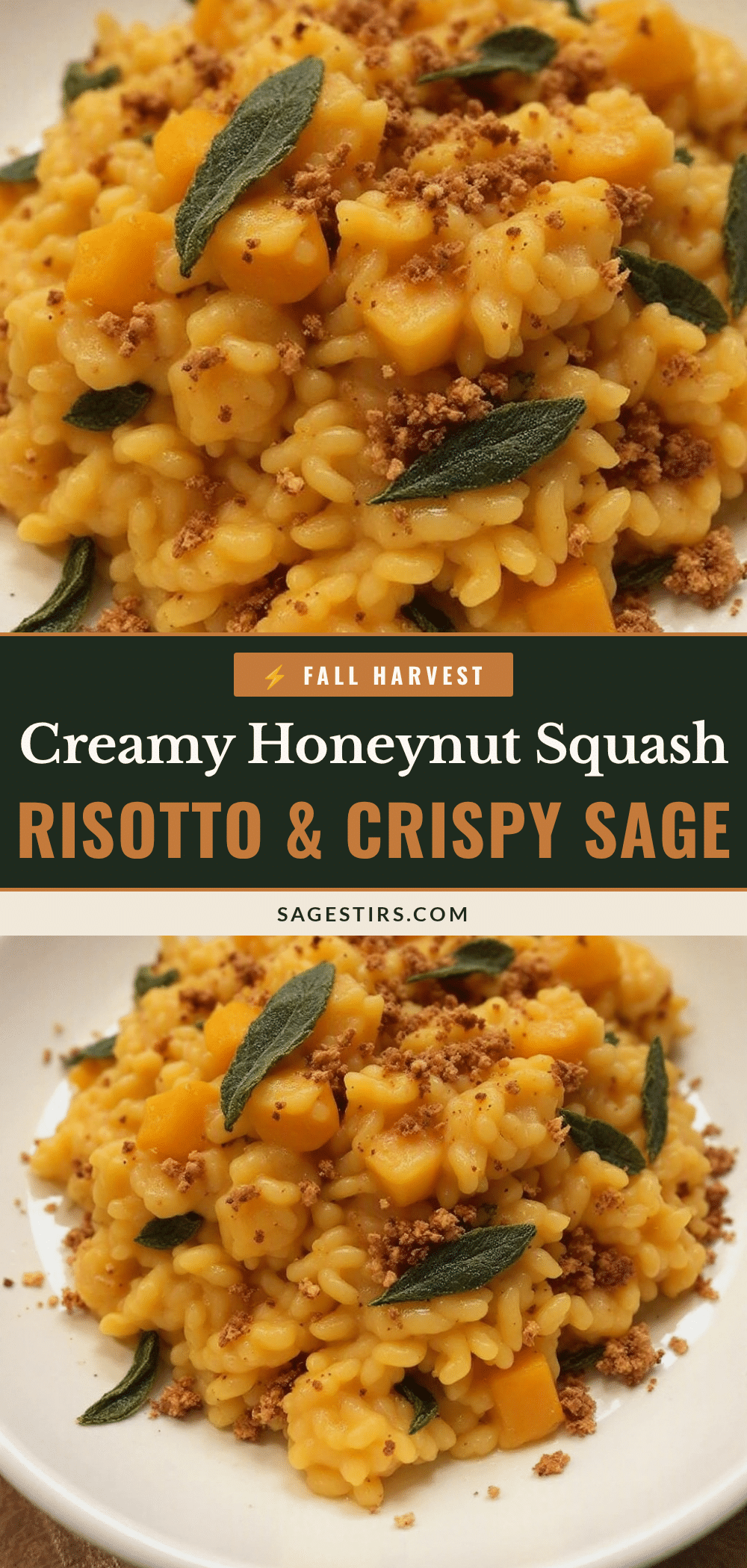
Creamy Honeynut Squash Risotto with Crispy Sage

A creamy, comforting risotto made with roasted honeynut squash and topped with crispy sage leaves. This fall favorite is surprisingly simple to make and packed with sweet, savory flavor.
- Prep Time: 15 minutes
- Cook Time: 30 minutes
- Total Time: 45 minutes
- Yield: 4 servings 1x
- Category: Main Course
- Cuisine: Italian
Ingredients
- 1 medium honeynut squash (about 1 pound), peeled, seeded, and cut into 1-inch cubes
- 4 tablespoons unsalted butter, divided
- 1 tablespoon olive oil
- 1 small yellow onion (about 1 cup), finely chopped
- 2 cloves garlic, minced
- 1 cup Arborio rice
- ½ cup dry white wine (such as Sauvignon Blanc or Pinot Grigio)
- 4 cups warm chicken or vegetable broth (low-sodium)
- ½ cup freshly grated Parmesan cheese
- 10–12 fresh sage leaves
- Salt and freshly ground black pepper, to taste
- Optional: Pinch of freshly grated nutmeg
Instructions
- Preheat your oven to 400°F (200°C). Line a baking sheet with parchment paper (optional). Place the cubed honeynut squash on the sheet, drizzle with 2 tablespoons melted butter and 1 tablespoon olive oil, and toss to coat. Sprinkle with a pinch of salt and pepper. Roast for 25-30 minutes, flipping halfway through, until the squash is fork-tender and the edges are caramelized and slightly browned.
- While the squash roasts, warm the broth in a small saucepan over low heat. Keep it warm, not boiling.
- In a large pot or Dutch oven, melt 1 tablespoon of butter over medium heat. Add the diced onion and cook for 4-5 minutes, stirring occasionally, until soft and translucent. Add the minced garlic and cook for another 30 seconds until fragrant.
- Add the Arborio rice to the pot and stir. Cook for 1-2 minutes, stirring constantly, until the grains become translucent around the edges and start to make a slight clicking sound against the pot.
- Pour in the white wine and stir. Cook until the wine is mostly absorbed, about 1-2 minutes.
- Begin adding the warm broth, one ladleful (about ½ cup) at a time. Stir frequently until the liquid is almost fully absorbed before adding the next ladleful. Each addition should take about 2-3 minutes. Total time for this step is about 18-20 minutes. The risotto should be creamy but still have a slight bite to the rice (al dente).
- About 5 minutes before the risotto is done, stir in the roasted squash (reserve a few cubes for topping if desired). Use your spoon to break up the squash as you stir—it will melt into the rice and create a creamy, orange color.
- Remove the pot from heat. Stir in the remaining 1 tablespoon of butter and the grated Parmesan. Stir vigorously for about 30 seconds. Taste and adjust salt and pepper. If the risotto seems too thick, add a splash of warm broth to loosen it.
- While the risotto rests, make the crispy sage. In a small skillet, melt 1 tablespoon of butter over medium heat. Once bubbling, add the sage leaves in a single layer. Cook for 30-45 seconds per side, until they turn darker green and become crisp. Transfer to a paper towel-lined plate and sprinkle with a tiny pinch of salt.
- Serve immediately. Spoon the risotto into warm bowls, top with reserved roasted squash cubes and crispy sage leaves. Add a final grating of Parmesan and a crack of black pepper if desired.
Notes
Don’t rinse the Arborio rice—it needs its surface starch for creaminess. Keep the broth warm to ensure even cooking. Serve immediately for the best texture; risotto continues to thicken as it sits. Leftovers can be reheated with a splash of broth or made into arancini.
Nutrition
- Serving Size: 1.5 cups
- Calories: 400
- Sugar: 6
- Sodium: 600
- Fat: 15
- Saturated Fat: 8
- Carbohydrates: 58
- Fiber: 5
- Protein: 11
Keywords: honeynut squash risotto, creamy risotto, fall risotto, sage risotto, vegetarian risotto, easy risotto recipe