Love this? Save it for later!
Share the inspiration with your friends
This was supposed to be a quick, no-fuss fig chutney for a cheese board I was throwing together last fall. I had the shallots diced, the vinegar measured, and a plan that felt foolproof. But somewhere between answering the door for a package and realizing I was out of brown sugar, the whole thing went sideways. I grabbed what I thought was light brown sugar from the pantry, dumped it in, and only after the figs had started to break down did I notice the bag said “dark brown sugar — extra molasses.” My heart sank. This was going to be a sticky, overly sweet mess, not the sharp, savory chutney I had envisioned.
Honestly, I almost tossed the whole pot. But I had spent good money on those fresh figs at the farmers market, and throwing them away felt like a sin. So I doubled down. I threw in a sprig of fresh rosemary from the plant on my windowsill, a pinch of cracked black pepper, and a squeeze of lemon to cut the sweetness. I let it simmer, stirring occasionally, waiting for the disaster to reveal itself. What came out was nothing like the plan — and better. It was jammy, aromatic, and surprisingly complex. The rosemary cut through the sweetness, the pepper added a little warmth, and that extra molasses gave it a deep, almost caramel-like richness.
I brought it to the party anyway, labeling it “Spiced Fig Jam” with a shrug. It was gone in twenty minutes. Someone asked for the recipe, and I had to admit I had no idea what I had actually done. But I recreated it the next week, and the week after that, and now it’s the only fig jam I make. Maybe you’ve been there — a kitchen mistake that turns into your most requested recipe. This is that jam for me, and I think it might become that for you too.
Why You’ll Love This Recipe
This isn’t your average fruit jam. It’s got a little personality. A little edge. And it comes together faster than you’d expect for something that tastes this intentional. Let me break down why this recipe works so well.
- Quick & Easy: No canning water baths or complicated sterilization steps. This jam comes together in about 45 minutes start to finish. Perfect for a weekend afternoon project or a last-minute hostess gift.
- Simple Ingredients: You only need seven core ingredients, and most of them are probably in your kitchen right now. Figs are the star, and they’re easy to find fresh in late summer or early fall.
- Perfect for Gifting: I cannot tell you how many jars of this I have given away. It looks gorgeous in a little mason jar with a ribbon, and it feels so much more personal than something store-bought.
- Crowd-Pleaser: I have served this to everyone from my picky-eater nephew to a food critic friend, and it gets the same reaction: silence followed by “wait, what is this?”
- Unbelievably Delicious: The combination of sweet figs, piney rosemary, and warm spice is genuinely addictive. It’s the kind of jam you eat straight from the jar with a spoon, and I am not ashamed to admit I have done that.
What makes this recipe different from every other fig jam recipe out there is the balance. Most fig jams are just sweet — good, but one-note. This one has layers. The rosemary adds an herbal, almost savory note that keeps things interesting. The black pepper gives it a tiny kick at the end. And the lemon keeps it from being cloying. It’s not just another version of fig jam; it’s the version I keep coming back to, and I think you will too.
This jam is the kind of thing that makes you close your eyes after the first bite. It’s comfort food for your cheese board. It turns a simple piece of toast into a moment. And honestly, it makes you look like you know what you’re doing in the kitchen — even if, like me, you started with a total accident.
What Ingredients You Will Need
This recipe uses simple, wholesome ingredients to deliver bold flavor and satisfying texture without the fuss. Most of these are pantry staples, and the fresh ingredients are easy to find at any grocery store or farmers market. Here is what you will need:
For the Jam
- Fresh figs, stemmed and quartered — 2 pounds (about 900 grams). Look for figs that are soft but not mushy, with a little give when you squeeze them. Black Mission or Brown Turkey figs both work beautifully. I prefer Black Mission for their intense sweetness.
- Granulated sugar — 1 cup (200 grams). You can reduce this slightly if your figs are very sweet, but sugar is what helps the jam set and preserves it.
- Dark brown sugar, packed — ½ cup (100 grams). This is the ingredient that started my happy accident. The molasses in dark brown sugar adds a deep, almost smoky sweetness that regular sugar can’t match. I recommend using a brand like Domino or C&H for consistent results.
- Fresh lemon juice — 3 tablespoons (45 ml). Fresh is non-negotiable here. Bottled lemon juice has a flat, metallic taste that will dull the brightness of the jam. You need that acidity to balance the sweetness.
- Fresh rosemary sprigs — 2 large sprigs (about 6 inches each). Strip the leaves from the stems and chop them finely, or leave the sprigs whole and fish them out before jarring. I prefer finely chopped because the flavor distributes more evenly, but whole sprigs give a more subtle infusion.
- Freshly cracked black pepper — ½ teaspoon. This is optional, but I strongly recommend it. The pepper adds a warmth that plays beautifully with the figs and rosemary. Use a coarse grind for texture.
- Pinch of salt — Just a small pinch of flaky sea salt like Maldon or kosher salt. Salt amplifies the sweetness and balances the flavors.
Optional Add-Ins
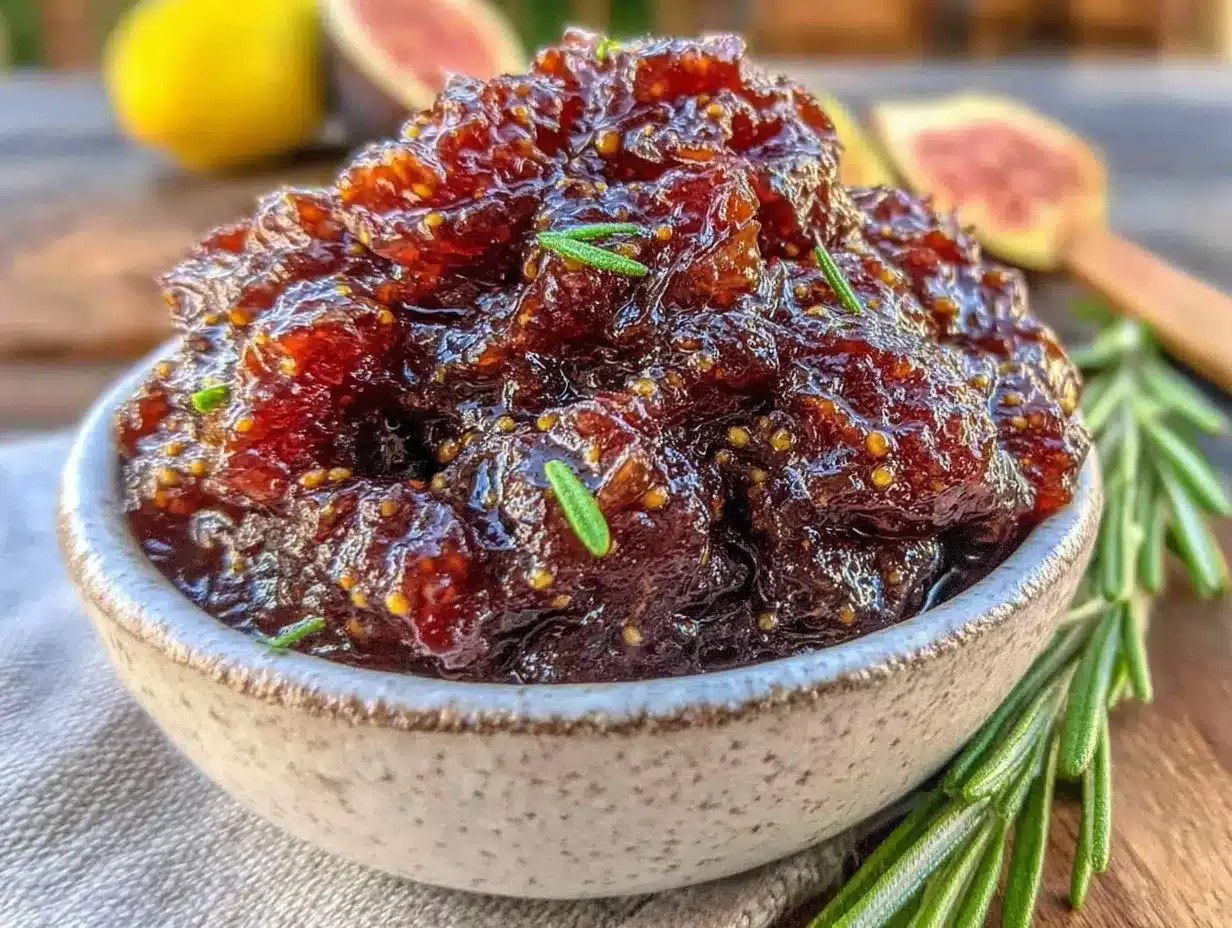
- Balsamic vinegar — 1 tablespoon. Adds a tangy, slightly acidic depth that pairs wonderfully with figs. Use a good quality balsamic, not the cheap stuff.
- Vanilla extract — ½ teaspoon. A little vanilla rounds out the flavors and adds warmth. Use pure vanilla extract, not imitation.
- Orange zest — From 1 orange. Adds a bright, citrusy note that complements the rosemary. Use a microplane to avoid the bitter white pith.
Equipment Needed
You don’t need a professional kitchen to make this jam. Here is what you will need:
- Large, heavy-bottomed pot or Dutch oven — A 4- to 5-quart pot works best. The heavy bottom helps distribute heat evenly and prevents scorching. I use my Le Creuset Dutch oven, but any heavy pot will do. If you only have a thin-bottomed pot, just stir more frequently.
- Wooden spoon or heatproof spatula — For stirring. Wooden spoons are ideal because they don’t scratch your pot and they don’t conduct heat. A silicone spatula works too, but make sure it’s heatproof up to at least 400°F.
- Measuring cups and spoons — For accurate measurements. I cannot stress this enough — jam-making is a science, and eyeballing ingredients can lead to a jam that doesn’t set properly.
- Sharp knife and cutting board — For prepping the figs. A sharp knife makes clean cuts and prevents the figs from getting bruised and mushy.
- Jars with lids — 2 to 3 half-pint (8-ounce) jars. You can use mason jars, Weck jars, or even recycled jam jars. Just make sure they are thoroughly cleaned and sterilized. To sterilize, wash them in hot soapy water, rinse well, and place them in a 225°F oven for 10 minutes.
- Funnel (optional but helpful) — A wide-mouth funnel makes pouring the hot jam into jars much less messy. If you don’t have one, you can use a ladle and a steady hand.
- Small plate or saucer — For testing the set. Place it in the freezer for at least 10 minutes before you start cooking. This is an old-school trick that works every time.
If you don’t have a Dutch oven, don’t worry. A stainless steel stockpot works fine. Just keep an eye on the heat and stir often. I have made this jam in a cheap pot from a dorm room kitchen, and it turned out great. The key is patience, not pricey equipment.
Preparation Method
Alright, let’s make some jam. This process is straightforward, but there are a few moments where things can go wrong. I will walk you through each step so you can avoid my early mistakes.
- Prep the figs. Rinse your figs under cool water and pat them dry with a clean kitchen towel. Remove the stems — just pinch them off with your fingers or cut them off with a knife. Quarter the figs lengthwise. If you have very large figs, you can cut them into sixths. The goal is uniform pieces so they cook evenly. Place them in a large bowl and set aside.
- Combine the sugars and lemon juice. In your large pot, combine the granulated sugar, dark brown sugar, and lemon juice. Stir them together until the sugars start to dissolve. The mixture will look grainy and thick — that’s normal. Don’t worry if it doesn’t look like much yet.
- Add the figs and rosemary. Add the quartered figs to the pot, along with the chopped rosemary (or whole sprigs) and the cracked black pepper. If you are using balsamic vinegar, vanilla, or orange zest, add them now. Give everything a good stir so the figs are coated in the sugar mixture.
- Let it macerate. Let the fig mixture sit at room temperature for 15 to 20 minutes. This step is crucial — it draws the natural juices out of the figs and helps the sugar dissolve before you apply heat. You will see the mixture become more liquid as the figs release their moisture. I usually set a timer and prep my jars during this time.
- Bring to a boil. Place the pot over medium-high heat. Stir occasionally as the mixture heats up. Once it comes to a full, rolling boil — big, active bubbles that don’t stop when you stir — reduce the heat to medium-low. Add the pinch of salt.
- Simmer and stir. Let the jam simmer gently for 25 to 35 minutes, stirring every 5 minutes or so. The jam will darken and thicken as it cooks. You will notice the color deepen from a bright reddish-purple to a deep, almost burgundy shade. The smell at this point is intoxicating — sweet figs, piney rosemary, and warm spice filling your kitchen.
- Test the set. After 25 minutes, start testing for doneness. Place a small spoonful of jam on your frozen plate. Let it sit for 30 seconds, then push it with your finger. If it wrinkles and holds its shape without flooding back together, it’s done. If it’s still runny, continue cooking for another 5 minutes and test again. This is the most important step — undercooked jam will be runny, and overcooked jam will be stiff and candy-like.
- Remove the rosemary sprigs (if using whole). If you used whole rosemary sprigs, fish them out with tongs before jarring. If you chopped the rosemary, leave it in.
- Let it cool slightly. Remove the pot from the heat and let the jam cool for 5 to 10 minutes. This allows it to thicken a bit more and makes it easier to handle. Don’t let it cool completely, or it will be too thick to pour into jars.
- Jar the jam. Carefully ladle the hot jam into your sterilized jars, leaving about ½ inch of headspace at the top. Wipe the rims with a clean, damp cloth to remove any sticky residue. Seal the jars with their lids. If you want to process the jars for longer storage, place them in a boiling water bath for 10 minutes. Otherwise, let them cool to room temperature and store in the refrigerator.
Pro tip: Don’t skip the maceration step. I learned this the hard way when I was in a rush and threw everything in the pot without waiting. The sugar didn’t dissolve properly, and I ended up with grainy jam that had pockets of raw sugar. Letting it sit for 15 minutes makes a world of difference.
Cooking Tips & Techniques
I have made this jam probably two dozen times now, and I have made every mistake in the book. Here is what I have learned so you don’t have to repeat my failures.
Don’t walk away from the pot. Jam-making requires attention. The moment you turn your back, it can scorch on the bottom or boil over. I once left the kitchen to answer a phone call, and came back to a sticky mess all over my stovetop. Set a timer for every 5 minutes so you remember to stir.
Use a heavy-bottomed pot. Thin pots create hot spots that can burn your jam before the rest of it is cooked. If you only have a thin pot, stir more frequently and keep the heat on the lower side of medium. You want a gentle simmer, not a violent boil.
Trust the wrinkle test. I know it’s tempting to rely on a thermometer, but the wrinkle test is more reliable for small batches. Thermometers can be off, and jam sets at different temperatures depending on the sugar content and altitude. The frozen plate trick never lies.
Don’t over-stir. Once the jam is simmering, you don’t need to stir constantly. Over-stirring can introduce too much air and cause the jam to foam. Stir every 5 minutes, scraping the bottom to prevent sticking. If you see foam forming on the surface, skim it off with a spoon.
Adjust the sweetness to your taste. The sugar amounts in this recipe are a guideline. If your figs are exceptionally sweet — like peak-of-summer sweet — you can reduce the granulated sugar by a quarter cup. If they are a bit tart, add an extra tablespoon or two. Taste the jam as it cooks (carefully, it’s hot) and adjust accordingly.
Be patient with the set. Some batches set faster than others. I had one batch that took nearly 45 minutes to reach the wrinkle stage, and another that was done in 20. It depends on the water content of your figs and the humidity in your kitchen. Don’t rush it. A runny jam is disappointing, but a burnt one is a lost cause.
Variations & Adaptations
One of the best things about this recipe is how flexible it is. I have played around with it quite a bit, and here are some of my favorite variations.
Vegan Version
This recipe is already vegan as written. Sugar is sometimes processed with bone char, so if that’s a concern, look for organic or certified vegan sugar. I use Wholesome Sweeteners brand, which is vegan-friendly and widely available.
Low-Sugar Version
You can reduce the total sugar to 1 cup (using only granulated sugar, no brown sugar) and add 2 tablespoons of chia seeds to help with thickening. The texture will be more like a chia seed jam — a little less smooth, but still delicious. The flavor will be brighter and more tart, which some people actually prefer.
Spicy Fig Jam
Add ½ teaspoon of red pepper flakes along with the black pepper. The heat builds slowly and pairs beautifully with the sweetness. I made this for a friend who loves spicy food, and she ended up putting it on everything from toast to roasted chicken.
Herb Variations
Rosemary is my go-to, but thyme and lavender also work beautifully. Use 2 sprigs of fresh thyme instead of rosemary, or 1 teaspoon of dried culinary lavender. If you use lavender, go easy — it can get soapy if you overdo it.
Dried Fig Version
If fresh figs aren’t in season, you can use dried figs. Rehydrate 1 pound of dried figs in 2 cups of hot water for 30 minutes, then drain and chop them. Reduce the sugar to ¾ cup total, since dried figs are already concentrated in sweetness. The texture will be thicker and more paste-like, but the flavor is incredible.
Balsamic Fig Jam
Add 2 tablespoons of good balsamic vinegar along with the lemon juice. The acidity cuts through the sweetness and adds a tangy complexity. I like to use a balsamic that’s been aged for at least 5 years — it’s thicker and sweeter, with less sharpness.
Serving & Storage Suggestions
This jam is incredibly versatile. Here are some of my favorite ways to use it.
Serving temperature: Serve at room temperature for the best flavor and spreadability. If you keep it in the fridge, let it sit out for 15 to 20 minutes before serving. Cold jam is harder to spread and the flavors are muted.
On a cheese board: This jam is a showstopper on a cheese board. Pair it with a sharp aged cheddar, a creamy brie, or a funky blue cheese like gorgonzola. The sweetness and spice cut through the richness of the cheese beautifully. Add some crusty bread, crackers, and a few slices of apple or pear, and you have a board that looks like it came from a fancy restaurant.
On toast or scones: Slather it on warm buttered toast, English muffins, or freshly baked scones. It’s also incredible on buttermilk biscuits. I have been known to eat it straight from the jar with a spoon, but that’s between us.
With roasted meats: Use it as a glaze for roasted pork, chicken, or duck. Brush it on during the last 10 minutes of cooking for a sticky, caramelized finish. It also works as a sauce — just warm it up with a splash of water or broth and spoon it over the meat.
In desserts: Swirl it into yogurt, spoon it over vanilla ice cream, or use it as a filling for thumbprint cookies. I have even used it as a layer in a trifle, and it was a hit.
Storage: Store unopened jars in a cool, dark place for up to 6 months. Once opened, keep the jam in the refrigerator and use it within 3 months. If you see any mold, discard the entire jar — mold in jam can produce mycotoxins that are not safe to eat.
Freezing: You can freeze this jam for up to a year. Leave ½ inch of headspace in the jars to allow for expansion, and thaw in the refrigerator overnight. The texture might be slightly softer after freezing, but the flavor will be just as good.
Reheating: If your jam crystallizes or becomes too thick in the fridge, microwave it for 10 to 15 seconds, or warm it gently on the stovetop with a splash of water. Stir well before serving.
Nutritional Information & Benefits
Here is the estimated nutritional information for a 1-tablespoon serving of this jam. Please note that these values are approximate and can vary based on the exact ingredients and serving size.
| Nutrient | Amount Per Serving (1 tbsp) |
|---|---|
| Calories | 45 |
| Total Fat | 0g |
| Sodium | 10mg |
| Total Carbohydrates | 11g |
| Dietary Fiber | 1g |
| Sugars | 9g |
| Protein | 0g |
Figs are a good source of dietary fiber, which supports digestive health. They also contain potassium, magnesium, and antioxidants like polyphenols. Rosemary is known for its anti-inflammatory properties and is rich in antioxidants. While this jam does contain sugar, using it in moderation as part of a balanced diet is perfectly fine. A little sweetness goes a long way, and this jam is so flavorful that a small spoonful is usually enough.
Dietary considerations: This jam is naturally vegan, gluten-free, dairy-free, and nut-free. If you use the low-sugar variation, it is also suitable for lower-carb diets. The main allergen concern is the potential for cross-contamination with tree nuts if you use certain brands of sugar, but this is rare.
Conclusion
This spiced fig jam with rosemary started as a kitchen mistake, but it has become one of my most treasured recipes. It’s proof that sometimes the best things come from happy accidents — from grabbing the wrong bag of sugar or improvising when things don’t go according to plan. This jam is forgiving, flexible, and genuinely delicious. It makes you look like a culinary genius without requiring you to actually be one.
I encourage you to make this recipe your own. Play with the spices, try different herbs, adjust the sweetness to your liking. That’s the beauty of a simple recipe like this — it’s a canvas for your creativity. And if you end up with a jar that doesn’t set quite right, don’t worry. Just call it “fig sauce” and pour it over ice cream. No one will know.
I would love to hear how your jam turns out. Did you try a variation? Did you serve it with something unexpected? Drop a comment below and let me know. And if you share it on social media, tag me — I want to see your beautiful jars of homemade goodness. Happy cooking, friends. Here is to more happy accidents in the kitchen.
Frequently Asked Questions
Can I use dried figs instead of fresh?
Yes, absolutely. Rehydrate 1 pound of dried figs in 2 cups of hot water for 30 minutes, then drain and chop them. Reduce the sugar to ¾ cup total since dried figs are sweeter. The texture will be thicker and more paste-like, but the flavor is wonderful.
How do I know when the jam is done?
Use the wrinkle test. Place a small spoonful of jam on a frozen plate. Let it sit for 30 seconds, then push it with your finger. If it wrinkles and holds its shape, it’s done. If it floods back together, cook for another 5 minutes and test again.
Can I make this jam without pectin?
Yes, this recipe does not use added pectin. Figs naturally contain enough pectin to set the jam, especially when cooked with sugar and lemon juice. The lemon juice helps activate the pectin and helps the jam set properly.
How long does homemade fig jam last?
Unopened jars stored in a cool, dark place will last up to 6 months. Once opened, keep the jam in the refrigerator and use it within 3 months. You can also freeze it for up to a year. Always check for mold before using.
Can I reduce the sugar in this recipe?
Yes, you can reduce the total sugar to 1 cup if you prefer a less sweet jam. The texture will be a bit looser, and the jam won’t keep as long without processing. For a lower-sugar version, add 2 tablespoons of chia seeds to help thicken the jam naturally.
Pin This Recipe!
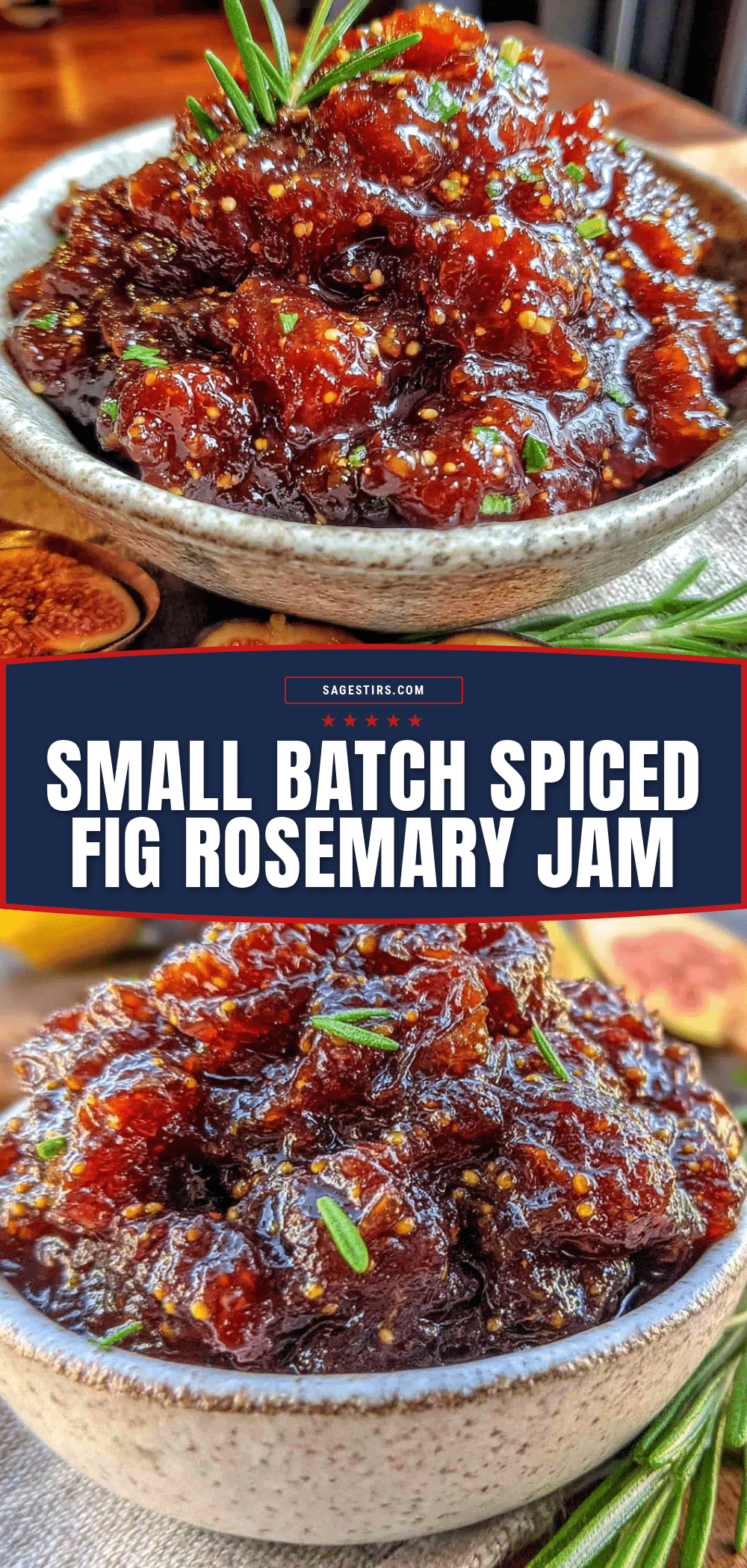
Easy Homemade Spiced Fig Jam with Rosemary

This spiced fig jam with rosemary started as a kitchen mistake but has become a treasured recipe. It’s a quick, easy, and forgiving jam with layers of sweet figs, piney rosemary, and warm spice, perfect for cheese boards, toast, or gifting.
- Prep Time: 15 minutes
- Cook Time: 30 minutes
- Total Time: 45 minutes
- Yield: 2 to 3 half-pint (8-ounce) jars 1x
- Category: Condiment
- Cuisine: American
Ingredients
- 2 pounds (about 900 grams) fresh figs, stemmed and quartered
- 1 cup (200 grams) granulated sugar
- ½ cup (100 grams) packed dark brown sugar
- 3 tablespoons (45 ml) fresh lemon juice
- 2 large sprigs fresh rosemary (about 6 inches each), leaves finely chopped or sprigs left whole
- ½ teaspoon freshly cracked black pepper
- Pinch of flaky sea salt or kosher salt
- 1 tablespoon balsamic vinegar (optional)
- ½ teaspoon vanilla extract (optional)
- Zest of 1 orange (optional)
Instructions
- Prep the figs: Rinse figs under cool water and pat dry. Remove stems and quarter lengthwise. Place in a large bowl and set aside.
- Combine the sugars and lemon juice: In a large, heavy-bottomed pot or Dutch oven, combine granulated sugar, dark brown sugar, and lemon juice. Stir until sugars start to dissolve.
- Add the figs and rosemary: Add quartered figs, chopped rosemary (or whole sprigs), and cracked black pepper. If using optional add-ins (balsamic vinegar, vanilla, orange zest), add them now. Stir to coat figs.
- Let it macerate: Let the fig mixture sit at room temperature for 15–20 minutes to draw out juices and dissolve sugar.
- Bring to a boil: Place pot over medium-high heat. Stir occasionally until mixture comes to a full, rolling boil. Reduce heat to medium-low and add the pinch of salt.
- Simmer and stir: Let jam simmer gently for 25–35 minutes, stirring every 5 minutes. The jam will darken and thicken.
- Test the set: After 25 minutes, place a small spoonful of jam on a frozen plate. Let sit for 30 seconds, then push with your finger. If it wrinkles and holds its shape, it’s done. If still runny, cook another 5 minutes and test again.
- Remove rosemary sprigs (if using whole): Use tongs to remove whole sprigs. If using chopped rosemary, leave it in.
- Let it cool slightly: Remove pot from heat and let jam cool for 5–10 minutes to thicken further.
- Jar the jam: Ladle hot jam into sterilized jars, leaving ½ inch headspace. Wipe rims, seal with lids. For longer storage, process in a boiling water bath for 10 minutes. Otherwise, let cool to room temperature and refrigerate.
Notes
Don’t skip the maceration step—it helps dissolve sugar and draw out fig juices. Use the wrinkle test for doneness rather than relying on a thermometer. If jam crystallizes or becomes too thick, microwave for 10–15 seconds or warm gently on stovetop with a splash of water. For a low-sugar version, reduce total sugar to 1 cup and add 2 tablespoons chia seeds.
Nutrition
- Serving Size: 1 tablespoon
- Calories: 45
- Sugar: 9
- Sodium: 10
- Carbohydrates: 11
- Fiber: 1
Keywords: fig jam, spiced fig jam, rosemary fig jam, homemade jam, easy jam recipe, fig preserve, holiday gift, cheese board jam