Love this? Save it for later!
Share the inspiration with your friends
Stirring a sizzling pan of thinly sliced beef while juggling a toddler on one hip and a barking dog at my feet, I realized dinner wasn’t going to happen on its own tonight. The fridge was looking a little bare, and honestly, I was scrambling to pull something together before everyone’s stomachs started growling louder than the chaos around me. That’s when this Flavorful Korean Beef Bowl with Creamy Gochujang Mayo came into existence — a quick, savory rescue that somehow felt like a proper meal instead of a last-minute throw-together.
The aroma of garlic, ginger, and that unmistakable hint of soy sauce hit the air, cutting through the noise and making everyone pause (well, as much as they could). The spicy, creamy drizzle of gochujang mayo was an afterthought that turned out to be the game-changer — balancing the rich beef with a perfect kick and cooling creaminess. It’s funny how some of the best recipes are born out of mild desperation and a pinch of improvisation.
This dish stuck with me because it’s not just fast; it’s got personality. Every bite feels like a little celebration of bold, comforting flavors, even on the busiest, messiest nights. If you’re anything like me — juggling a dozen things at once but craving something that feels homemade and special — this Korean beef bowl with creamy gochujang mayo might just become your new go-to. No frills, no fuss, just honest-to-goodness flavor that holds up even when life doesn’t.
Why You’ll Love This Recipe
After testing this recipe more times than I can count, I can say it consistently delivers that satisfying combo of savory, spicy, and creamy without demanding all your evening. Here’s why this Flavorful Korean Beef Bowl with Creamy Gochujang Mayo earns a permanent spot in the dinner rotation:
- Quick & Easy: Ready in under 30 minutes, it’s perfect for busy weeknights or those nights when you just want something tasty on the table fast.
- Simple Ingredients: No need for hard-to-find items; most are pantry staples or easy to grab at any grocery store.
- Perfect for Casual Meals: Great for dinner with family, casual lunches, or even meal prepping for the week.
- Crowd-Pleaser: The balance of sweet-savory beef and spicy mayo consistently wows kids and adults alike.
- Unbelievably Delicious: The creamy gochujang mayo adds a layer of richness that takes this bowl from simple to memorable.
What sets this apart? It’s the little details — like marinating the beef just long enough to soak in flavor without fuss, and mixing the gochujang mayo to get that silky texture that’s tangy, spicy, and smooth all at once. This isn’t just another beef bowl; it’s a dish that makes you close your eyes mid-bite and savor the moment, even if you’re rushing through the chaos of the day.
What Ingredients You Will Need
This recipe uses simple, wholesome ingredients to deliver bold flavor and satisfying texture without the fuss. Most of these are staples I always keep on hand — and the best part is you can swap a few items depending on what’s in your pantry or fridge.
- For the Beef:
- 1 pound (450g) ground beef or thinly sliced beef (I prefer ground chuck for juiciness)
- 2 tablespoons soy sauce (go for low-sodium if you prefer less salt)
- 1 tablespoon brown sugar (adds a subtle sweetness)
- 1 tablespoon sesame oil (toasting it lightly enhances the nutty flavor)
- 2 cloves garlic, minced (fresh is best for that punch)
- 1 teaspoon grated fresh ginger (you’ll notice this subtle warmth)
- 1/4 teaspoon black pepper
- For the Creamy Gochujang Mayo:
- 1/3 cup mayonnaise (I use Duke’s or Kewpie for creaminess)
- 1-2 tablespoons gochujang (Korean chili paste; adjust to your spice tolerance)
- 1 teaspoon lime juice (brightens the sauce)
- 1 teaspoon honey or maple syrup (balances the heat)
- For Serving:
- Cooked white or brown rice (about 3 cups cooked)
- 1 cup shredded carrots
- 1 cup thinly sliced cucumber or pickled radish
- 2 green onions, sliced thin
- Toasted sesame seeds (for garnish)
- Fresh cilantro or chopped peanuts (optional for extra texture)
If you want to make this gluten-free, swap soy sauce for tamari. For a lighter mayo, try substituting with Greek yogurt (though it changes the creaminess a bit). In warmer months, fresh cucumber or kimchi works wonders for adding cool crunch.
Equipment Needed
- Large non-stick skillet or cast iron pan – I find cast iron really locks in flavor and gives a nice sear on the beef.
- Mixing bowls – for marinating the beef and mixing the mayo sauce.
- Measuring spoons and cups – to keep your seasoning balanced.
- Sharp knife and cutting board – for prepping the garlic, ginger, and veggies.
- Rice cooker or pot – for preparing the rice base.
- Spoon or spatula – for stirring the beef and sauce.
If you don’t have a cast iron pan, a heavy-bottomed skillet works just fine. I’ve even made this in a wok when in a pinch. For the gochujang mayo, you can whisk it by hand easily—no fancy tools needed.
Preparation Method
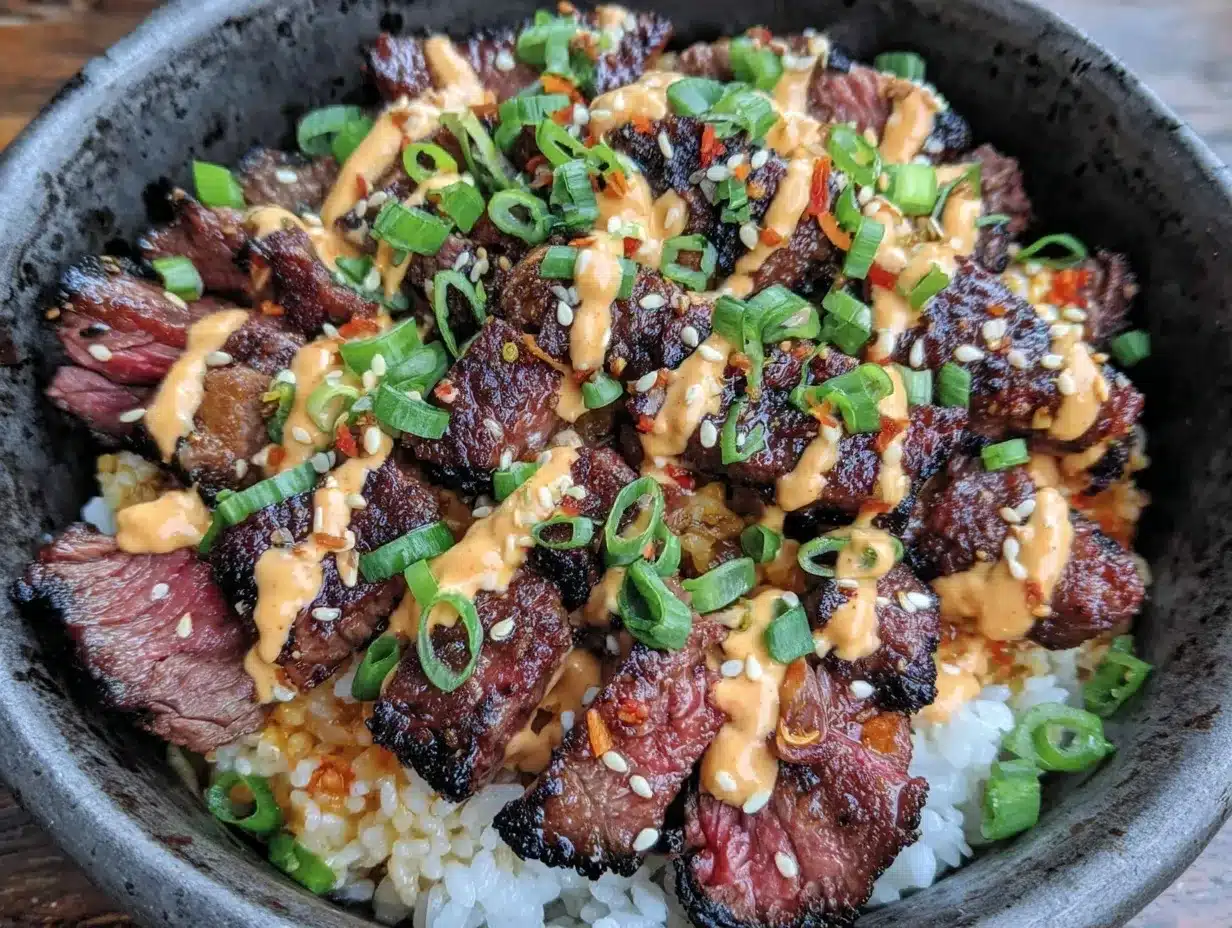
- Cook the rice: Start by cooking about 1 1/2 cups (uncooked) white or brown rice according to package instructions. This usually takes 15-20 minutes. Fluff and keep warm.
- Prepare the beef: In a medium bowl, combine 1 pound (450g) ground or thinly sliced beef with 2 tablespoons soy sauce, 1 tablespoon brown sugar, 1 tablespoon sesame oil, 2 minced garlic cloves, 1 teaspoon grated ginger, and 1/4 teaspoon black pepper. Mix gently but thoroughly so the flavors meld. Let it marinate for 10 minutes if you have time; if not, straight to cooking works fine.
- Make the gochujang mayo: In a small bowl, whisk together 1/3 cup mayonnaise, 1-2 tablespoons gochujang (start with 1 and add more if you like it spicy), 1 teaspoon lime juice, and 1 teaspoon honey. Taste and adjust for heat or sweetness. Set aside.
- Cook the beef: Heat a large skillet over medium-high heat. Once hot, add the beef mixture, breaking it up with a spatula. Cook for about 5-7 minutes until the beef is browned and cooked through. You’ll want the edges to have a little crispness, which adds texture.
- Prep the veggies: While the beef cooks, slice green onions thin, shred carrots, and slice cucumbers or prepare pickled radish if using. These fresh elements offer a crisp contrast to the savory beef.
- Assemble the bowls: Divide the cooked rice between 4 bowls. Top each with the flavorful beef, shredded carrots, cucumber slices, and a generous drizzle of creamy gochujang mayo. Sprinkle with toasted sesame seeds and green onions. Add cilantro or peanuts if desired.
- Enjoy: Dig in while warm and savor the layers of flavor and texture. The creamy, spicy mayo pairs beautifully with the tender beef and fresh veggies.
Pro tip: If your beef starts releasing too much water, turn up the heat slightly to help it evaporate and keep the meat from steaming rather than searing. Also, don’t overcrowd the pan — cook in batches if needed.
Cooking Tips & Techniques
Cooking this Korean beef bowl has taught me a few things — mostly about timing and balancing flavors. First, never rush the browning stage. Let the beef sit undisturbed in the pan for a minute or two before stirring; that caramelized crust is where the magic happens.
Also, freshly grated ginger and minced garlic make a noticeable difference compared to powders or pre-minced versions. The aroma alone wakes up your appetite. When mixing the gochujang mayo, start with less chili paste and add more gradually — it sneaks up on you!
One mistake I’ve made is overloading the bowl with too many toppings. This dish works best when the beef and mayo are the stars, with veggies providing a refreshing crunch without overwhelming every bite. Multi-task by prepping your rice and sauce while the beef marinates to save time.
Finally, if you want to add a bit of char flavor, toss the cooked beef under a broiler for a minute or two — just watch closely so it doesn’t burn.
Variations & Adaptations
- Vegetarian option: Swap beef for crumbled tofu or tempeh. Marinate and cook the same way for a plant-based twist.
- Spicy level: Adjust the gochujang amount in the mayo to suit your heat preference, or add a drizzle of sriracha on top.
- Low-carb version: Serve over cauliflower rice or shredded lettuce instead of traditional rice.
- Seasonal veggies: In spring or summer, try thinly sliced radishes, bean sprouts, or fresh cucumber ribbons. Fall and winter? Roasted sweet potato cubes or kimchi add warmth and tang.
- Personal twist: I’ve played with adding a fried egg on top for extra richness — runny yolk meets spicy mayo? Yes, please.
Different cooking methods like grilling the beef strips instead of pan-frying add a smoky depth. You can also prep the beef and sauce ahead for easy meal prep lunches or dinners.
Serving & Storage Suggestions
This Korean beef bowl is best served hot, right after assembly, so the mayo stays creamy and the beef juicy. For presentation, sprinkle those green onions and sesame seeds just before serving to keep them fresh and vibrant. Pair it with a simple cucumber salad or even the creamy honey butter corn casserole for a comforting side dish.
Leftovers keep well in an airtight container in the fridge for up to 3 days. Keep the gochujang mayo separate to avoid sogginess, and add it just before serving. Reheat the beef gently in a skillet or microwave, adding a splash of water if it feels dry.
Flavors meld nicely overnight, so sometimes I prefer the bowl the next day—just add fresh veggies for crunch. This recipe also freezes well without the mayo; thaw and reheat the beef and rice, then add fresh sauce and toppings.
Nutritional Information & Benefits
This dish offers a balanced meal with protein-packed beef, wholesome rice, and nutrient-rich veggies. One serving typically contains around 450-500 calories, with approximately 30 grams of protein, depending on the beef cut and rice portion.
Gochujang, made from fermented chili paste, contains probiotics beneficial for gut health, and the dish’s garlic and ginger add natural anti-inflammatory properties. Using lean beef cuts reduces saturated fat, making it a healthier comfort food choice. For gluten-free eaters, swapping soy sauce for tamari keeps the recipe inclusive.
From a wellness perspective, this meal feels satisfying without heaviness, which makes it a favorite for those who want flavor with mindful ingredients. Plus, it’s easy to customize to fit low-carb or vegetarian diets.
Conclusion
Honestly, this Flavorful Korean Beef Bowl with Creamy Gochujang Mayo came about because I needed dinner that didn’t require a full culinary shift after a long day. It’s become one of those recipes I trust to deliver big flavor with minimal fuss, and it’s flexible enough to make your own. Whether you’re feeding a hungry family or just craving something with a little kick and a lot of comfort, this bowl hits the mark.
Feel free to tweak the spice level, swap out veggies, or add your favorite crunch toppings. It’s that kind of dish that welcomes your personal touch. I love how it brings a little excitement to an otherwise hectic night without adding stress.
Give it a try, and when you do, I’d love to hear how you make it yours! Sharing your twists keeps the food conversation alive and tasty. Here’s to many more easy, flavorful meals that fit right into your busy life.
Frequently Asked Questions
Can I use ground turkey or chicken instead of beef?
Absolutely! Ground turkey or chicken works well here. Just be mindful that leaner meats cook faster and can dry out, so watch cooking time closely and add a bit of oil if needed.
What is gochujang, and where can I buy it?
Gochujang is a Korean fermented chili paste that’s sweet, spicy, and savory. You can find it in most Asian grocery stores or online. It’s the key to that authentic Korean flavor in the mayo.
Can I prep this recipe ahead of time?
Yes! Marinate the beef and make the gochujang mayo in advance. Cook just before serving for the best texture. Rice and veggies can also be prepped earlier to save time.
Is this recipe spicy?
The spice level depends on how much gochujang you add. Start with 1 tablespoon and increase if you like it hotter. The mayo helps mellow the heat, making it approachable for most tastes.
What are good side dishes to serve with this beef bowl?
Light sides like steamed or pickled veggies complement this bowl nicely. I often enjoy it with recipes like the easy juicy chicken dishes from the blog or a crisp salad to balance the richness.
Pin This Recipe!
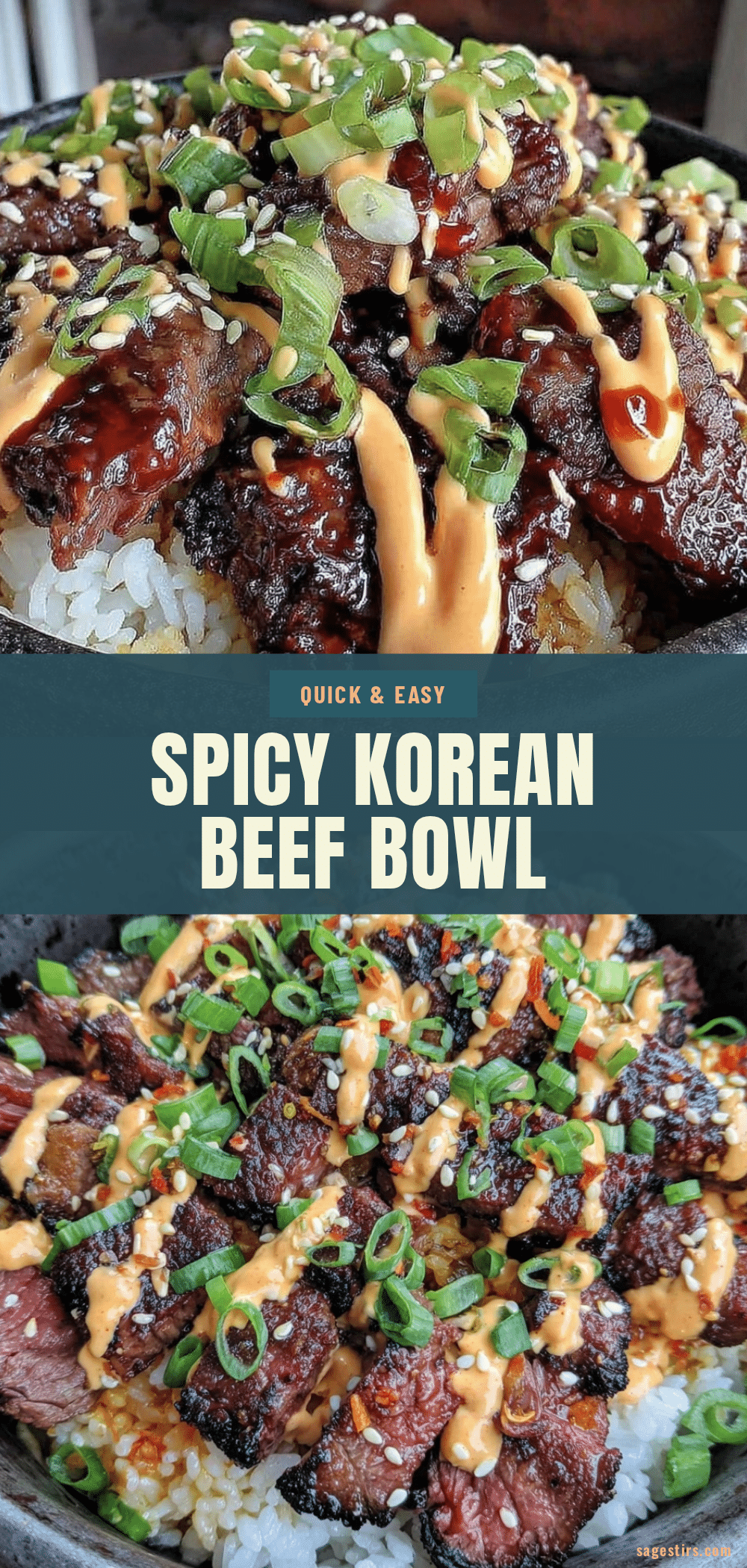
Flavorful Korean Beef Bowl Recipe with Easy Creamy Gochujang Mayo
A quick and savory Korean beef bowl topped with a creamy, spicy gochujang mayo that balances rich beef with fresh veggies for a comforting meal perfect for busy nights.
- Prep Time: 10 minutes
- Cook Time: 20 minutes
- Total Time: 30 minutes
- Yield: 4 servings 1x
- Category: Main Course
- Cuisine: Korean
Ingredients
- 1 pound ground beef or thinly sliced beef (preferably ground chuck)
- 2 tablespoons soy sauce (low-sodium optional)
- 1 tablespoon brown sugar
- 1 tablespoon sesame oil
- 2 cloves garlic, minced
- 1 teaspoon grated fresh ginger
- 1/4 teaspoon black pepper
- 1/3 cup mayonnaise
- 1–2 tablespoons gochujang (Korean chili paste)
- 1 teaspoon lime juice
- 1 teaspoon honey or maple syrup
- 3 cups cooked white or brown rice
- 1 cup shredded carrots
- 1 cup thinly sliced cucumber or pickled radish
- 2 green onions, sliced thin
- Toasted sesame seeds (for garnish)
- Fresh cilantro or chopped peanuts (optional)
Instructions
- Cook about 1 1/2 cups uncooked white or brown rice according to package instructions (about 15-20 minutes). Fluff and keep warm.
- In a medium bowl, combine beef with soy sauce, brown sugar, sesame oil, minced garlic, grated ginger, and black pepper. Mix gently and marinate for 10 minutes if possible.
- In a small bowl, whisk together mayonnaise, gochujang, lime juice, and honey. Adjust spice and sweetness to taste. Set aside.
- Heat a large skillet over medium-high heat. Add the beef mixture and cook for 5-7 minutes, breaking it up with a spatula, until browned and cooked through with some crisp edges.
- While beef cooks, prepare veggies: slice green onions, shred carrots, and slice cucumbers or prepare pickled radish.
- Divide cooked rice among 4 bowls. Top each with cooked beef, shredded carrots, cucumber slices, and a drizzle of gochujang mayo.
- Garnish with toasted sesame seeds, green onions, and optional cilantro or peanuts.
- Serve warm and enjoy.
Notes
If beef releases too much water, increase heat to evaporate moisture and avoid steaming. Do not overcrowd pan; cook in batches if needed. For gluten-free, use tamari instead of soy sauce. For lighter mayo, substitute Greek yogurt. Adjust gochujang amount for spice preference. Leftovers keep well for 3 days; store mayo separately to avoid sogginess.
Nutrition
- Serving Size: 1 bowl (approximatel
- Calories: 475
- Sugar: 7
- Sodium: 650
- Fat: 28
- Saturated Fat: 6
- Carbohydrates: 30
- Fiber: 2
- Protein: 30
Keywords: Korean beef bowl, gochujang mayo, quick dinner, easy weeknight meal, spicy mayo, ground beef recipe, Korean cuisine