Love this? Save it for later!
Share the inspiration with your friends
“You know that feeling when you wake up on a Sunday morning craving something simple, yet totally satisfying? Well, last weekend I found myself in exactly that spot. I was half-awake, rummaging through the fridge, when I realized I had just a handful of eggs and no fancy ingredients in sight. Honestly, I wasn’t expecting much—until I cracked those eggs and started whisking them up. What came out was the fluffiest, simplest scrambled eggs I’ve made in a long time.”
It all began with a small kitchen mishap—my favorite mixing bowl had a tiny crack, so I had to improvise with a random glass container. As I whisked, the eggs started to look silkier than usual, and I thought, “Hmm, maybe this will work out.” The sizzle when the eggs hit the buttered pan was just right, and the slow, gentle stirring made all the difference. By the time I plated them, the eggs were cloud-like, tender, and bursting with flavor.
Maybe you’ve been there too—scrambling eggs that end up rubbery or bland. This recipe changed my whole breakfast game, making mornings feel easy without sacrificing that cozy, soul-satisfying bite we all crave. I keep coming back to it, especially when I want a fuss-free, comforting start to the day that tastes like a little celebration on a plate.
Why You’ll Love This Recipe
After testing countless methods (and yes, burning a few batches), I can promise this fluffy simple scrambled eggs recipe stands out. It’s not just about cracking eggs and stirring—it’s about coaxing out that perfect texture and flavor, every single time. Here’s why it might just become your go-to breakfast:
- Quick & Easy: Ready in under 10 minutes, making it perfect for rushed mornings or lazy brunches.
- Simple Ingredients: Uses just eggs, butter, salt, and a splash of milk—no trips to specialty stores needed.
- Perfect for Any Occasion: Whether you’re feeding picky kids, impressing weekend guests, or just treating yourself.
- Crowd-Pleaser: I’ve made this for potlucks and family breakfasts, and it always disappears fast.
- Unbelievably Delicious: The eggs are tender and creamy, with a gentle fluffiness that feels indulgent but light.
What makes this recipe different? The secret lies in the slow, patient cooking and the addition of a little milk for creaminess—plus stirring gently instead of scrambling aggressively. It’s a tried-and-true method I picked up after a few kitchen slip-ups (including one time I left the pan unattended and ended up with scrambled egg “rocks”). This recipe isn’t just breakfast—it’s a warm hug on a plate.
What Ingredients You Will Need
This recipe uses simple, wholesome ingredients to deliver bold flavor and a satisfying texture without the fuss. Most of these are kitchen staples, and if you don’t have something, I’ll suggest easy swaps.
- Eggs – 4 large eggs (room temperature for best fluffiness)
- Unsalted butter – 1 tablespoon (for a creamy, rich finish; you can use olive oil for a dairy-free option)
- Milk – 2 tablespoons (whole milk preferred for creaminess, but any milk including plant-based works)
- Salt – ¼ teaspoon (adjust to taste; I like fine sea salt for even seasoning)
- Freshly ground black pepper – optional, to taste
- Fresh herbs – optional, like chives or parsley for garnish (adds a pop of color and freshness)
Pro tip: Using room temperature eggs helps them whisk together more easily, creating a fluffier texture. If you’re feeling adventurous, a splash of cream instead of milk amps up the richness, but milk keeps it light and simple. I usually buy my eggs from the local farmer’s market when possible—there’s something about their color and flavor that just feels better on the tongue.
Equipment Needed
- Mixing bowl – a medium-sized one; I usually grab a ceramic or glass bowl to whisk in (avoid plastic if you want to avoid static whisking issues)
- Whisk or fork – a whisk helps incorporate air, but a fork works fine in a pinch
- Non-stick skillet – an 8-inch or 10-inch pan works well for even cooking and easy cleanup
- Rubber spatula – for gentle folding and scraping the eggs from the pan
- Measuring spoons – to get butter and milk quantities just right
If you don’t have a non-stick skillet, a well-seasoned cast iron pan can work, but just be sure to use medium-low heat and plenty of butter to prevent sticking. I’ve tried both, and honestly, the non-stick pan gives you more control and less stress with eggs. Also, keeping your rubber spatula flexible and clean makes stirring easier and helps you avoid overcooking any bits stuck to the pan.
Preparation Method
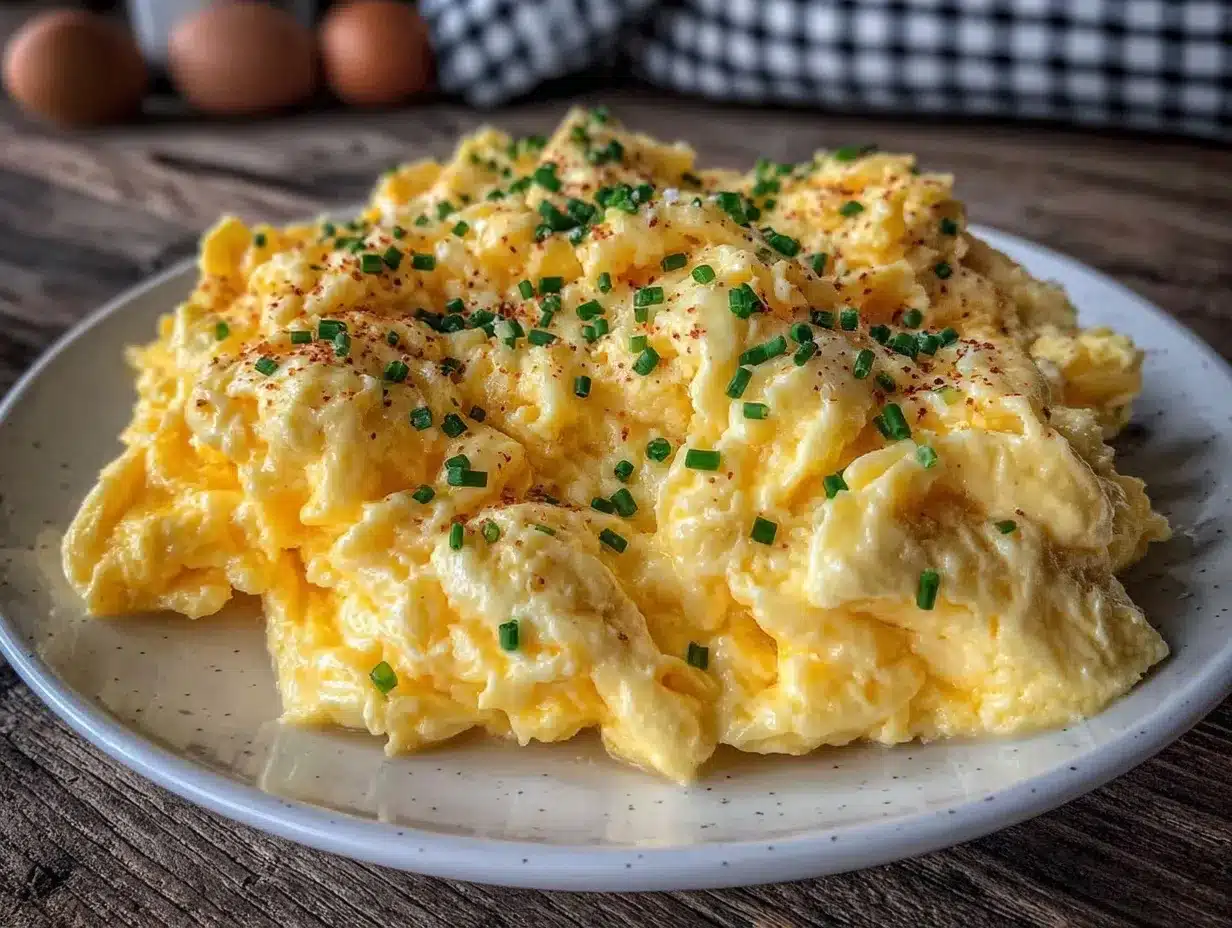
- Crack and whisk the eggs: Crack 4 large eggs into your mixing bowl. Add 2 tablespoons of milk and ¼ teaspoon of salt. Whisk briskly until the mixture is smooth and a bit frothy, about 30 seconds. You want to incorporate some air here, which helps with fluffiness.
- Heat the pan: Place your non-stick skillet over low to medium-low heat. Add 1 tablespoon of unsalted butter and let it melt slowly, coating the pan evenly. The butter should foam but not brown—if it starts browning, lower the heat.
- Cook the eggs gently: Pour the egg mixture into the pan. Let it sit undisturbed for about 15 seconds until the edges just begin to set.
- Stir softly and continuously: Using your rubber spatula, gently push the eggs from the edges toward the center. Keep moving slowly in a folding motion. This process should take about 3 to 4 minutes. The eggs will start to form soft curds but remain moist.
- Remove from heat early: When the eggs are mostly set but still slightly runny, take the pan off the heat. The residual warmth will finish cooking them. Overcooking makes scrambled eggs dry and rubbery, so it’s better to undercook slightly.
- Season and serve: Add freshly ground black pepper if desired and fold in any fresh herbs. Plate the eggs immediately while warm and fluffy.
Quick tip: If you notice the eggs cooking too fast or sticking, lower your heat and add a tiny bit more butter. The goal is slow, gentle cooking. I once tried high heat and ended up with scrambled eggs that looked more like a dry omelet—lesson learned!
Cooking Tips & Techniques
Cooking scrambled eggs sounds simple, but a few key techniques make all the difference:
- Low and slow is the way to go: High heat cooks eggs fast but makes them tough. Keeping your pan at low to medium-low heat ensures tender, creamy curds.
- Whisk well: Whisking adds air, which creates fluffiness. Don’t rush this step.
- Use fresh eggs: Fresher eggs tend to hold together better and taste brighter.
- Don’t over-stir: Gentle folding helps preserve texture. Stirring too vigorously breaks the curds down into mush.
- Finish off heat: Removing the pan just before fully cooked prevents dry eggs.
- Butter is your friend: It adds richness and prevents sticking. I always keep some good-quality butter like Kerrygold on hand.
One trick I learned the hard way was to resist the urge to crank up the heat when I was in a hurry. You might be tempted, but trust me, patience yields better eggs. Also, using a flexible spatula to fold eggs gently instead of scraping aggressively keeps things light and airy.
Variations & Adaptations
This fluffy simple scrambled eggs recipe is a fantastic base that you can tweak to your heart’s content:
- Cheesy Scrambled Eggs: Stir in ¼ cup shredded cheddar or feta just before finishing for a melty, savory twist.
- Herb & Veggie Boost: Add chopped spinach, tomatoes, or mushrooms sautéed beforehand for a nutrient-packed upgrade.
- Dairy-Free Version: Swap butter for olive oil and milk for almond or oat milk. The texture will be a bit different but still delicious.
- Spicy Kick: Mix in a pinch of smoked paprika or cayenne pepper for some warmth without overpowering the eggs.
- Slow Cooker Scramble: For hands-off mornings, pour the whisked eggs into a greased slow cooker and cook on low for about 1-1.5 hours, stirring halfway.
I once added a spoonful of whipped ricotta on top just before serving—surprisingly creamy and indulgent. Feel free to experiment! And if you’re interested in more breakfast ideas, the ultimate veggie omelet pairs well with these eggs.
Serving & Storage Suggestions
Serve your fluffy scrambled eggs immediately for the best texture and warmth. They pair beautifully with toasted sourdough, crispy bacon, or a fresh fruit salad. A cup of freshly brewed coffee or herbal tea rounds out the perfect breakfast experience.
If you have leftovers (it happens rarely in my house!), store them in an airtight container in the refrigerator for up to 2 days. To reheat, sprinkle a little water over the eggs and microwave them in short 20-second bursts, stirring gently in between to keep them moist.
Flavors tend to mellow a bit after refrigeration, so fresh herbs added after reheating really brighten things up. Honestly, these eggs taste best fresh, but the storage tips come in handy when you’re meal prepping or cooking for one.
Nutritional Information & Benefits
This recipe offers a balanced, protein-packed start to your day with approximately 200-220 calories per serving (based on 2 servings), including about 14 grams of protein. Eggs provide essential nutrients like vitamin B12, choline, and healthy fats, which support brain function and keep you feeling full longer.
Using butter and milk adds calcium and vitamin D, contributing to bone health. Plus, this dish is naturally gluten-free and can be made dairy-free with simple swaps, fitting a variety of dietary needs.
From my own wellness journey, I find this breakfast keeps my energy steady without the mid-morning crash that sugar-laden cereals can cause. It’s a wholesome, satisfying way to fuel your day.
Conclusion
Fluffy simple scrambled eggs are more than just a breakfast staple—they’re a comforting ritual that anyone can master. This recipe has stuck with me because it’s reliable, forgiving, and so satisfying, no matter how rushed or relaxed your morning might be.
Feel free to tweak the seasoning or add your favorite mix-ins to make it your own. And if you try it, I’d love to hear how it turns out for you—drop a comment below or share your favorite scrambled egg twist!
Here’s to many cozy mornings filled with the perfect scramble and a smile. Remember: sometimes the simplest recipes are the ones we keep coming back to.
Frequently Asked Questions
How do I make scrambled eggs fluffy?
Whisk the eggs well to incorporate air, cook them slowly over low heat, and stir gently to create soft curds. Adding a splash of milk or cream also helps.
Can I make scrambled eggs ahead of time?
You can refrigerate cooked scrambled eggs for up to 2 days, but they’re best fresh. Reheat gently with a bit of moisture to keep them from drying out.
What’s the best pan for cooking scrambled eggs?
A non-stick skillet is ideal for even cooking and easy cleanup. A well-seasoned cast iron pan works too but requires careful heat control and extra butter.
Can I add cheese or vegetables to scrambled eggs?
Absolutely! Add cheese near the end of cooking for melty goodness, and sauté vegetables beforehand to soften them before mixing into your eggs.
Why do my scrambled eggs sometimes turn rubbery?
Cooking eggs at too high a temperature or overcooking causes rubbery texture. Cook over low heat and remove from the pan just before they’re fully set for tender eggs.
Pin This Recipe!
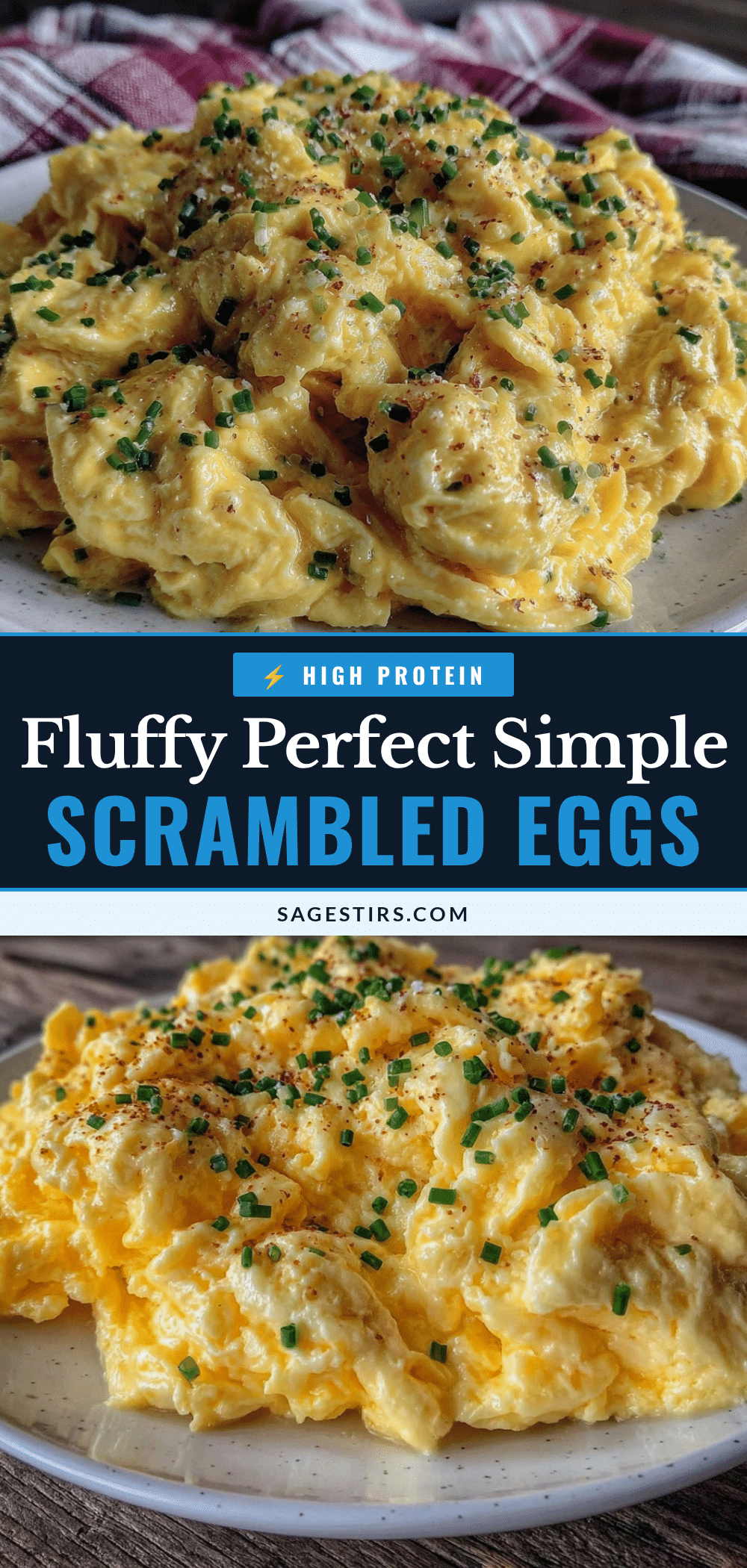
Fluffy Simple Scrambled Eggs Recipe Easy Perfect Breakfast Idea

A quick and easy recipe for fluffy, tender scrambled eggs made with simple ingredients and gentle cooking techniques, perfect for a satisfying breakfast.
- Prep Time: 5 minutes
- Cook Time: 5 minutes
- Total Time: 10 minutes
- Yield: 2 servings 1x
- Category: Breakfast
- Cuisine: American
Ingredients
- 4 large eggs (room temperature)
- 1 tablespoon unsalted butter (or olive oil for dairy-free option)
- 2 tablespoons milk (whole milk preferred, any milk including plant-based works)
- ¼ teaspoon salt (fine sea salt recommended)
- Freshly ground black pepper (optional, to taste)
- Fresh herbs like chives or parsley (optional, for garnish)
Instructions
- Crack 4 large eggs into a mixing bowl. Add 2 tablespoons of milk and ¼ teaspoon of salt. Whisk briskly until smooth and a bit frothy, about 30 seconds.
- Place a non-stick skillet over low to medium-low heat. Add 1 tablespoon of unsalted butter and let it melt slowly, coating the pan evenly without browning.
- Pour the egg mixture into the pan. Let it sit undisturbed for about 15 seconds until the edges just begin to set.
- Using a rubber spatula, gently push the eggs from the edges toward the center in a slow folding motion. Continue stirring softly for about 3 to 4 minutes until soft curds form but eggs remain moist.
- Remove the pan from heat when eggs are mostly set but still slightly runny. The residual heat will finish cooking them.
- Add freshly ground black pepper and fold in fresh herbs if desired. Serve immediately while warm and fluffy.
Notes
Use room temperature eggs for better fluffiness. Cook eggs slowly over low heat and stir gently to avoid rubbery texture. Remove from heat slightly before fully cooked to retain moisture. Butter adds richness and prevents sticking. For dairy-free, substitute butter with olive oil and milk with plant-based milk.
Nutrition
- Serving Size: 1 serving (half of t
- Calories: 210
- Sugar: 1
- Sodium: 300
- Fat: 16
- Saturated Fat: 7
- Carbohydrates: 2
- Protein: 14
Keywords: scrambled eggs, fluffy eggs, easy breakfast, simple scrambled eggs, quick breakfast, creamy eggs