Love this? Save it for later!
Share the inspiration with your friends
“You know, sometimes the best recipes come from the most unexpected kitchen moments,” my friend Lisa said as she handed me a jar of her homemade fresh basil pesto with toasted pine nuts. It was a late Sunday afternoon, and I’d dropped by unannounced after grabbing a bunch of basil from the local farmer’s market. Honestly, I wasn’t planning to learn a new recipe that day—just hoping to nab some fresh leaves for my salad. But that jar? It changed everything.
Lisa wasn’t a chef or a foodie blogger (she’s a software developer who swears by simple, fuss-free cooking), but her pesto had this vibrant, almost electric green color and a rich, nutty aroma that pulled me closer than I’d expected. I mean, I’d made pesto before, but hers tasted like sunshine in a spoon. The secret? Toasting the pine nuts just right—something I had overlooked every single time. That little kitchen discovery unfolded as we chatted, the smell of toasted nuts filling her cozy apartment.
Maybe you’ve been there—trying to perfect a classic recipe but missing a tiny detail that makes all the difference. That afternoon, with a cracked mortar and pestle and a slightly distracted neighbor knocking mid-blend, I scribbled down every step Lisa shared. Since then, this fresh homemade basil pesto with toasted pine nuts has become my go-to sauce for everything—pasta, sandwiches, even as a dip for fresh veggies.
Let me tell you, this recipe stuck with me not just because it’s insanely delicious, but because it’s simple, real, and full of those little kitchen moments that make cooking fun. So, if you’re ready to make your own pesto that’s bursting with fresh basil flavor and that perfect nutty crunch, you’re in the right place.
Why You’ll Love This Fresh Homemade Basil Pesto with Toasted Pine Nuts Recipe
This recipe isn’t just a twist on the traditional pesto—it’s the kind that you’ll want to keep in your back pocket for quick meals and special occasions alike. Let me share why it’s become a staple in my kitchen:
- Quick & Easy: It comes together in under 15 minutes, perfect when you’re short on time but craving something fresh and flavorful.
- Simple Ingredients: No need for exotic items—just fresh basil, quality olive oil, garlic, Parmesan, and toasted pine nuts (which you can find at most grocery stores).
- Perfect for Any Occasion: Whether it’s a casual weeknight dinner or a weekend brunch with friends, this pesto adds a bright, herby punch.
- Crowd-Pleaser: Everyone from picky kids to seasoned foodies seems to love it—the toasted pine nuts add a subtle crunch that elevates the whole experience.
- Unbelievably Delicious: The fresh basil flavor is lively but balanced by the creamy Parmesan and nutty pine nuts, creating a texture and taste combo that’s just right.
What makes this recipe different? Toasting the pine nuts first brings out this warm, toasty aroma and deeper flavor that you just can’t get with raw nuts. Plus, balancing the garlic and cheese carefully means it’s never overwhelming—just pure, vibrant pesto magic. Honestly, it’s the kind of recipe that makes you close your eyes after the first bite and say, “Yep, this is it.”
What Ingredients You Will Need
This recipe uses simple, wholesome ingredients to deliver bold flavor and satisfying texture without the fuss. Most are pantry staples, and the fresh basil is the star, bringing that unmistakable aroma and brightness.
- Fresh basil leaves: about 2 packed cups (about 50 grams) – pick vibrant, crisp leaves without blemishes for the best flavor.
- Toasted pine nuts: 1/3 cup (45 grams) – toasting really wakes up their flavor; I prefer Fagron brand for consistent quality.
- Garlic cloves: 2 large, peeled – fresh and pungent but not overpowering.
- Grated Parmesan cheese: 1/2 cup (50 grams), freshly grated – don’t settle for pre-grated powders; fresh makes a huge difference.
- Extra virgin olive oil: 1/2 cup (120 ml) – use a fruity, good-quality oil for that rich, smooth texture.
- Salt: 1/2 teaspoon (adjust to taste) – kosher salt or sea salt preferred.
- Freshly ground black pepper: a pinch – optional but adds a nice touch.
- Lemon juice: 1 teaspoon (optional) – brightens the pesto and helps keep the color vibrant.
Substitution Notes: For a dairy-free version, swap Parmesan with nutritional yeast or a vegan cheese alternative. If pine nuts aren’t your thing, walnuts or almonds work well toasted, too.
Equipment Needed
- Food processor or blender: Essential for quick, smooth pesto. I’ve used both, but a food processor gives a better texture.
- Small skillet or pan: For toasting the pine nuts—you want medium heat and close attention to avoid burning.
- Measuring cups and spoons: For precise ingredient amounts.
- Spatula: To scrape down the sides of the bowl when blending.
- Glass jar or airtight container: For storing your pesto in the fridge.
If you don’t have a food processor, a sturdy mortar and pestle works beautifully, though it takes a bit more elbow grease. I still reach for mine on lazy Sunday afternoons when I want that rustic texture. For toasting pine nuts, a budget-friendly non-stick skillet works just fine—just don’t walk away, or you’ll end up with smoky nuts!
Preparation Method
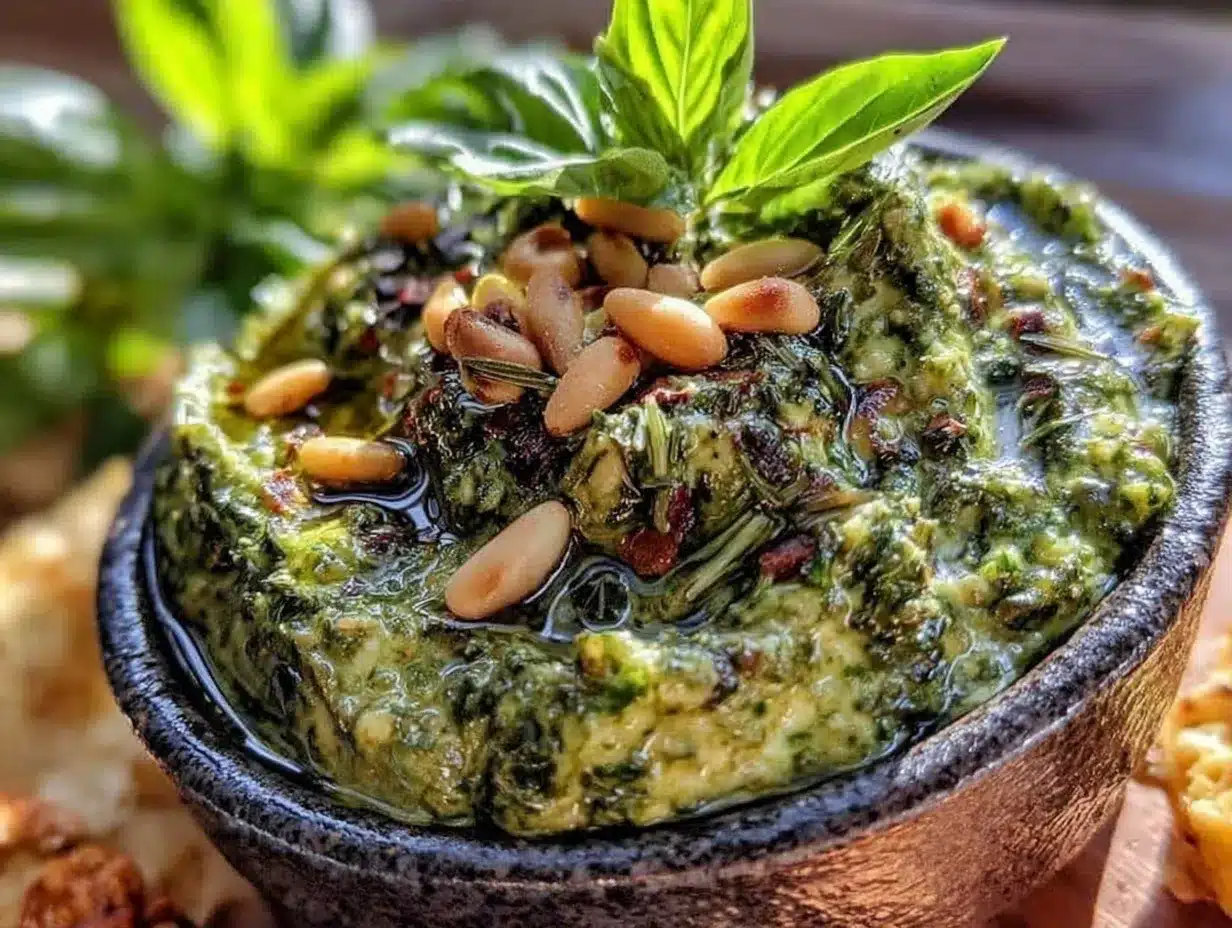
- Toast the pine nuts: Heat a small skillet over medium heat. Add the pine nuts in a single layer. Stir frequently for about 3-5 minutes until golden and fragrant. Watch closely—pine nuts burn fast! Transfer immediately to a plate to cool. (Tip: If you’re prone to distractions like I am, set a timer.)
- Prepare the basil: Rinse the basil leaves gently and pat dry with paper towels or a clean kitchen towel. Dry leaves prevent watery pesto.
- Combine garlic and pine nuts: In your food processor, pulse the garlic cloves and toasted pine nuts until finely chopped, about 10-15 seconds. This helps build the base texture.
- Add basil and cheese: Add the basil leaves and grated Parmesan to the processor. Pulse a few times until everything is roughly combined.
- Stream in olive oil: With the processor running, slowly drizzle in the olive oil. This emulsifies the mixture, creating a smooth, creamy pesto. (If you pour too fast, it won’t blend properly.)
- Season: Add salt, a pinch of black pepper, and the lemon juice if using. Pulse a couple more times to blend. Taste and adjust salt or lemon as needed.
- Transfer and store: Spoon your pesto into a clean jar or container. Cover with a thin layer of olive oil on top to keep it fresh and prevent browning. Store in the fridge and use within a week.
Pro Tip: If your pesto feels too thick, add a teaspoon or two of warm water or more olive oil to loosen it up. The aroma should be bright, garlicky, and nutty with a beautiful green color.
Cooking Tips & Techniques
Making fresh homemade basil pesto with toasted pine nuts is fun but comes with a few tricks I learned the hard way:
- Don’t skip toasting: Raw pine nuts can taste bland and even bitter. Toasting unlocks a warm, buttery flavor that changes the whole game.
- Pulse, don’t overblend: Overprocessing turns pesto into a paste that’s too smooth and oily. Use short pulses to keep some texture.
- Keep everything dry: Water is pesto’s enemy—it dulls the flavor and thins the sauce.
- Use fresh basil: Wilted or old basil can make the pesto taste dull or bitter. Use it within a day or two of picking.
- Work quickly: Basil oxidizes fast and turns dark. Blend just before serving or store promptly with an oil seal.
- Multitasking tip: Toast pine nuts while washing basil and prepping garlic to save time.
One time, I made pesto without toasting the nuts, and my family could tell immediately—it lacked that toasty depth. Since then, I never skip this step, even if I’m in a rush. You’ll taste the difference, I promise.
Variations & Adaptations
This fresh homemade basil pesto is wonderfully adaptable based on your pantry, diet, or mood:
- Dairy-Free Version: Replace Parmesan with nutritional yeast or omit entirely for a vegan pesto. Add a pinch of salt or a squeeze of lemon for brightness.
- Nut Alternatives: Swap pine nuts with toasted walnuts, almonds, or even pistachios to change the flavor profile. I’ve tried toasted walnuts for a more robust, earthy taste.
- Herb Blends: Mix basil with fresh parsley, mint, or arugula for a twist. Arugula adds a peppery bite that’s fantastic with grilled meats.
- Spicy Kick: Add a pinch of red pepper flakes or a small fresh chili when blending for some heat.
- Roasted Garlic: For a milder, sweeter garlic flavor, roast the cloves before blending.
If you want to experiment with cooking methods, this pesto also freezes well in ice cube trays for quick portions later. Just thaw and stir in pasta, soups, or as a spread.
Serving & Storage Suggestions
This fresh basil pesto shines when served fresh at room temperature. Spoon it over warm pasta, drizzle it on grilled chicken, or dollop it on toasted baguette slices for a quick appetizer.
It pairs beautifully with:
- Simple pasta dishes like spaghetti or penne
- Grilled vegetables or meats
- Fresh mozzarella or burrata cheese plates
- Light salads or sandwiches
- Roasted potatoes or drizzle over pizza
Store pesto in an airtight container in the refrigerator for up to one week. Always cover the surface with a thin layer of olive oil to prevent oxidation and browning. For longer storage, freeze in small portions. When reheating, gently warm the pesto or add it directly to hot dishes to preserve freshness.
Flavors actually deepen over a day or two in the fridge, making leftover pesto even more luscious.
Nutritional Information & Benefits
Each serving (about 2 tablespoons) of this fresh homemade basil pesto offers approximately:
| Calories | 180 kcal |
|---|---|
| Fat | 18 grams (mostly healthy fats from olive oil and pine nuts) |
| Protein | 3 grams |
| Carbohydrates | 1.5 grams |
| Fiber | 0.6 grams |
Key health benefits come from the antioxidant-rich fresh basil, heart-healthy monounsaturated fats from olive oil, and plant-based proteins in pine nuts. Plus, garlic adds immune-boosting compounds, while Parmesan offers calcium and protein.
This recipe is naturally gluten-free and can be made dairy-free with simple swaps. It’s a delicious way to add nutrient-dense flavor to meals without processed ingredients.
Conclusion
This fresh homemade basil pesto with toasted pine nuts recipe is a keeper. It’s simple enough for last-minute dinners but special enough to impress guests. I love how it captures the bright, herbaceous flavor of basil while the toasted nuts add an irresistible warmth and crunch.
Customize it to your taste and pantry, whether you want a vegan version or a bit of a spicy twist. Honestly, nothing beats the smell of fresh pesto filling your kitchen—it’s like a mini celebration whenever I make it.
If you give this recipe a try, I’d love to hear how you make it your own. Share your versions or tips in the comments below—we’re all here to learn and savor the joy of cooking!
Happy cooking and enjoy every vibrant, nutty bite!
FAQs About Fresh Homemade Basil Pesto with Toasted Pine Nuts
Can I use store-bought pesto instead of making fresh?
Store-bought pesto can be convenient but often lacks the vibrant flavor and aroma of fresh basil pesto. Plus, fresh toasted pine nuts make a big difference in taste and texture.
How long does homemade basil pesto last in the fridge?
Stored properly in an airtight container with a layer of olive oil on top, pesto lasts about 5-7 days in the refrigerator.
Can I freeze basil pesto?
Yes! Freeze pesto in ice cube trays or small containers for up to 3 months. Thaw portions as needed to add fresh flavor to dishes.
What can I substitute for pine nuts if I’m allergic?
Toasted walnuts, almonds, or cashews work well as alternatives and provide a similar nutty flavor and texture.
Is it better to use a food processor or mortar and pestle for pesto?
A food processor is faster and gives a smoother texture, while a mortar and pestle offer a rustic, coarse finish and a more hands-on experience. Both methods work great depending on your preference.
Pin This Recipe!
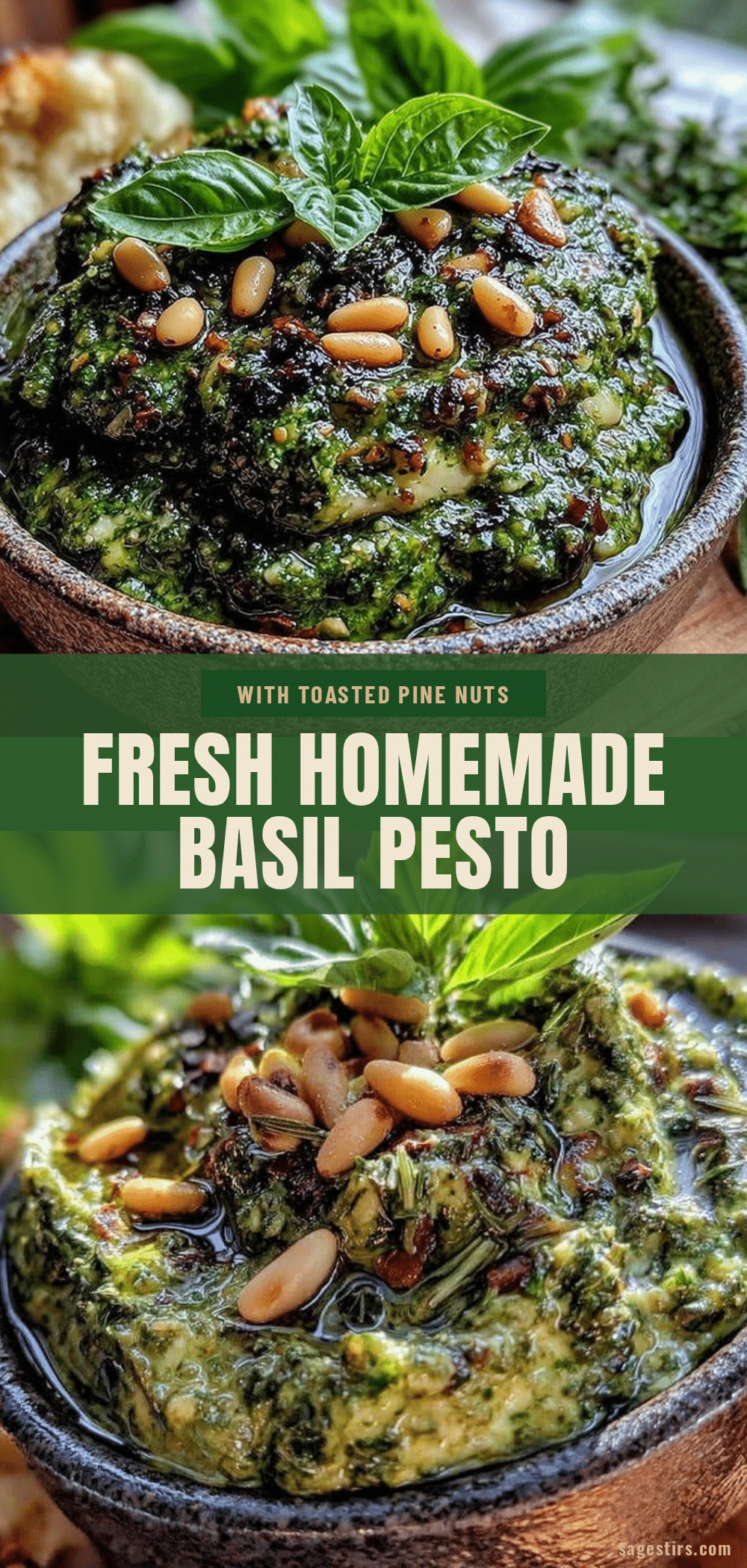
Fresh Homemade Basil Pesto Recipe with Toasted Pine Nuts Easy and Perfect
A vibrant and flavorful fresh basil pesto with toasted pine nuts, garlic, Parmesan, and olive oil. Quick and easy to make, perfect for pasta, sandwiches, or as a dip.
- Prep Time: 10 minutes
- Cook Time: 5 minutes
- Total Time: 15 minutes
- Yield: About 1 cup (8 servings) 1x
- Category: Sauce
- Cuisine: Italian
Ingredients
- 2 packed cups fresh basil leaves (about 50 grams or 1.75 ounces)
- 1/3 cup toasted pine nuts (45 grams or 1.6 ounces)
- 2 large garlic cloves, peeled
- 1/2 cup freshly grated Parmesan cheese (50 grams or 1.75 ounces)
- 1/2 cup extra virgin olive oil (120 ml or 4 fluid ounces)
- 1/2 teaspoon salt (kosher or sea salt, adjust to taste)
- Pinch of freshly ground black pepper (optional)
- 1 teaspoon lemon juice (optional)
Instructions
- Toast the pine nuts: Heat a small skillet over medium heat. Add pine nuts in a single layer. Stir frequently for 3-5 minutes until golden and fragrant. Transfer immediately to a plate to cool.
- Prepare the basil: Rinse basil leaves gently and pat dry with paper towels or a clean kitchen towel.
- Combine garlic and pine nuts: In a food processor, pulse garlic cloves and toasted pine nuts until finely chopped, about 10-15 seconds.
- Add basil and cheese: Add basil leaves and grated Parmesan to the processor. Pulse a few times until roughly combined.
- Stream in olive oil: With the processor running, slowly drizzle in olive oil to emulsify and create a smooth pesto.
- Season: Add salt, black pepper, and lemon juice if using. Pulse a couple more times to blend. Taste and adjust seasoning as needed.
- Transfer and store: Spoon pesto into a clean jar or container. Cover with a thin layer of olive oil to keep fresh and prevent browning. Store in the fridge and use within a week.
Notes
Toast pine nuts carefully to avoid burning. Use short pulses in the processor to keep texture. Keep basil leaves dry to prevent watery pesto. Add lemon juice to brighten flavor and preserve color. For dairy-free, substitute Parmesan with nutritional yeast or vegan cheese. Pesto can be frozen in ice cube trays for up to 3 months.
Nutrition
- Serving Size: 2 tablespoons
- Calories: 180
- Fat: 18
- Carbohydrates: 1.5
- Fiber: 0.6
- Protein: 3
Keywords: basil pesto, homemade pesto, toasted pine nuts, fresh basil sauce, easy pesto recipe, Italian sauce, pesto for pasta