Love this? Save it for later!
Share the inspiration with your friends
I want the skin to crackle. That’s the only thought in my head right now, standing in front of the stove with a fillet of salmon staring back at me. I have the pan hot, the oil shimmering, and the garlic minced, but I’m missing the one thing that makes this meal actually sing. It’s the lemon. I need that sharp, bright acidity to cut through the richness of the fish before it even hits the plate.
Honestly, I’ve made this crispy lemon garlic salmon so many times that I could do it blindfolded. But there’s always that moment of hesitation, the tiny fear that the garlic will burn before the fish cooks through. It’s a balance, really. A delicate dance between heat and time.
I remember the first time I tried to get salmon crispy. I put it in a cold pan. Rookie mistake. The skin just steamed. It was rubbery and sad. I almost gave up on the idea of a quick, healthy dinner entirely. I thought I was stuck with bland, boiled fish for the rest of my life.
Then I learned the secret. Pat it dry. Really dry. Like, paper-towel-dry. And get that pan screaming hot before the fish ever touches the surface. Once I did that, everything changed. The skin turned into a natural chip, a crunchy shell protecting the tender, flaky flesh inside.
It’s not just about the crunch, though. It’s about the speed. I’m tired after work. I don’t have time to marinate for four hours or wait for an oven to preheat. I need dinner on the table in fifteen minutes. This recipe fits that need perfectly.
I also toss in some asparagus. It cooks at roughly the same speed, which means one pan, less cleanup, and a complete meal. The bitterness of the asparagus pairs so well with the bright lemon. It feels like a vacation on a Tuesday night.
There’s something comforting about knowing exactly how this will turn out. No surprises. Just golden, crispy edges and a sauce that coats everything in a glossy, savory-sweet glaze. It’s the kind of meal that makes you feel like you actually cared about what you ate, even though it took less time than ordering takeout.
I’ve kept coming back to this because it respects my time and my appetite. It’s honest food. Simple ingredients, cooked right. No fuss, no mess, just good flavor. That’s why it’s stuck in my routine. It’s reliable. And sometimes, reliable is the best thing you can have in the kitchen.
Why You’ll Love This Recipe
This isn’t just another salmon recipe. It’s the one you’ll make when you need a win. I’ve tested this method over dozens of weeknights, and it delivers consistent results every single time. The key is in the technique, which I’ve refined to ensure maximum crispiness without burning the garlic.
Here is why this recipe stands out from the rest:
- Quick & Easy: It comes together in under 15 minutes. This is perfect for busy weeknights when you’re hungry but exhausted. You can have a hot, healthy meal on the table faster than you can scroll through delivery apps.
- Simple Ingredients: No fancy grocery trips needed. You likely already have salmon, asparagus, garlic, lemon, and olive oil in your kitchen. It’s pantry-friendly and reduces food waste.
- Perfect for Meal Prep: While best served fresh, the leftovers hold up surprisingly well in the fridge for up to two days. It’s a great option for lunch boxes or quick reheats.
- Crowd-Pleaser: This gets rave reviews from kids and adults alike. The crispy skin is a texture everyone loves, and the lemon-garlic flavor is universally appealing without being too heavy or spicy.
- Unbelievably Delicious: The texture and flavor combo is next-level comfort food. The contrast between the crunchy skin and the tender fish, paired with the charred asparagus, creates a satisfying eating experience.
What makes this different is the specific attention to moisture control. Most people fail because their salmon is too wet. By emphasizing the drying step and the high-heat sear, we ensure that the skin crisps up like a chip. It’s not just cooked; it’s transformed.
This recipe isn’t just good—it’s the kind that makes you close your eyes after the first bite. It’s comfort food reimagined—healthier, faster, but with the same soul-soothing satisfaction. I love that it feels fancy enough for guests but simple enough for a solo night in.
It’s perfect for impressing guests without stress, or turning a simple meal into something memorable. The bright flavors cut through the richness of the fish, leaving you feeling light and satisfied rather than heavy and sluggish.
I’ve served this to friends who claim they “don’t like fish,” and they always ask for the recipe. It’s a testament to how well the lemon and garlic balance the natural oils of the salmon. It’s a dish that proves you don’t need complex techniques to make something extraordinary.
What Ingredients You Will Need
This recipe uses simple, wholesome ingredients to deliver bold flavor and satisfying texture without the fuss. The magic happens because of the quality of just a few key items. You don’t need a whole pantry of spices; you just need the right basics, prepared correctly.
Here is what you’ll need to gather:
- Salmon Fillets: Aim for skin-on fillets, about 6 ounces each. Skin-on is non-negotiable for the crispy texture. I recommend looking for wild-caught Alaskan salmon if you can find it; it has a firmer texture that holds up better to high heat. Farmed salmon works too, but it’s softer.
- Asparagus: Choose medium-thick spears. Thin spears cook too fast and get mushy. Look for firm stalks with tight tips. If you buy a bunch, snap off the woody ends before cooking. You’ll need about one pound for this recipe.
- Garlic: Fresh garlic is essential. Jarred minced garlic has a metallic taste that clashes with the delicate fish. I use about three to four cloves, minced finely. Fresh garlic burns easily, so we add it later in the process to keep it fragrant, not bitter.
- Lemon: You’ll need two lemons. One for juicing to create the sauce, and one sliced into rounds for garnish. Fresh lemon juice is the backbone of this dish. Bottled juice just won’t cut it here.
- Olive Oil: Use extra virgin olive oil for the finishing drizzle, but a neutral oil like avocado or grapeseed is better for searing because it has a higher smoke point. I use avocado oil for the pan to prevent burning.
- Butter: Unsalted butter adds richness and helps emulsify the sauce. It brings everything together. I prefer European-style butter for its higher fat content, which creates a creamier sauce.
- Red Pepper Flakes: Just a pinch. This adds a subtle heat that wakes up the palate without making the dish spicy. It balances the sweetness of the lemon.
- Fresh Parsley: Chopped flat-leaf parsley adds color and a fresh, herbaceous note. It’s optional but highly recommended for visual appeal and flavor complexity.
- Sea Salt and Black Pepper: Use kosher salt for seasoning the fish. It adheres better and seasons more evenly than table salt. Freshly cracked black pepper adds a nice bite.
If you can’t find asparagus, green beans or broccolini are great substitutes. They have a similar crunch and cook quickly. For the salmon, any firm-fleshed fish like trout or halibut will work, but the cooking time may vary slightly.
Equipment Needed
You don’t need a fancy kitchen to make this work. A few basic tools are all you require.
- Large Skillet: A 12-inch stainless steel or cast-iron skillet is ideal. Stainless steel gives you the best control over the sear, allowing the skin to release easily once it’s crispy. Non-stick works, but you won’t get that same golden-brown crust.
- Paper Towels: Essential for drying the salmon. This is the most important tool in your arsenal for this recipe. Moisture is the enemy of crispiness.
- Tongs:
- Microplane or Zester: For zesting the lemon. Fresh zest contains essential oils that add intense aroma. Pre-grated zest in a jar has none of this flavor.
- Citrus Juicer: A simple handheld juicer works fine. You just need to extract the juice efficiently.
If you don’t have a large skillet, you can use two smaller pans, but you’ll need to cook in batches. This is fine, but timing becomes trickier. I recommend investing in a good stainless steel pan if you cook fish often. It lasts forever and improves with age.
Preparation Method
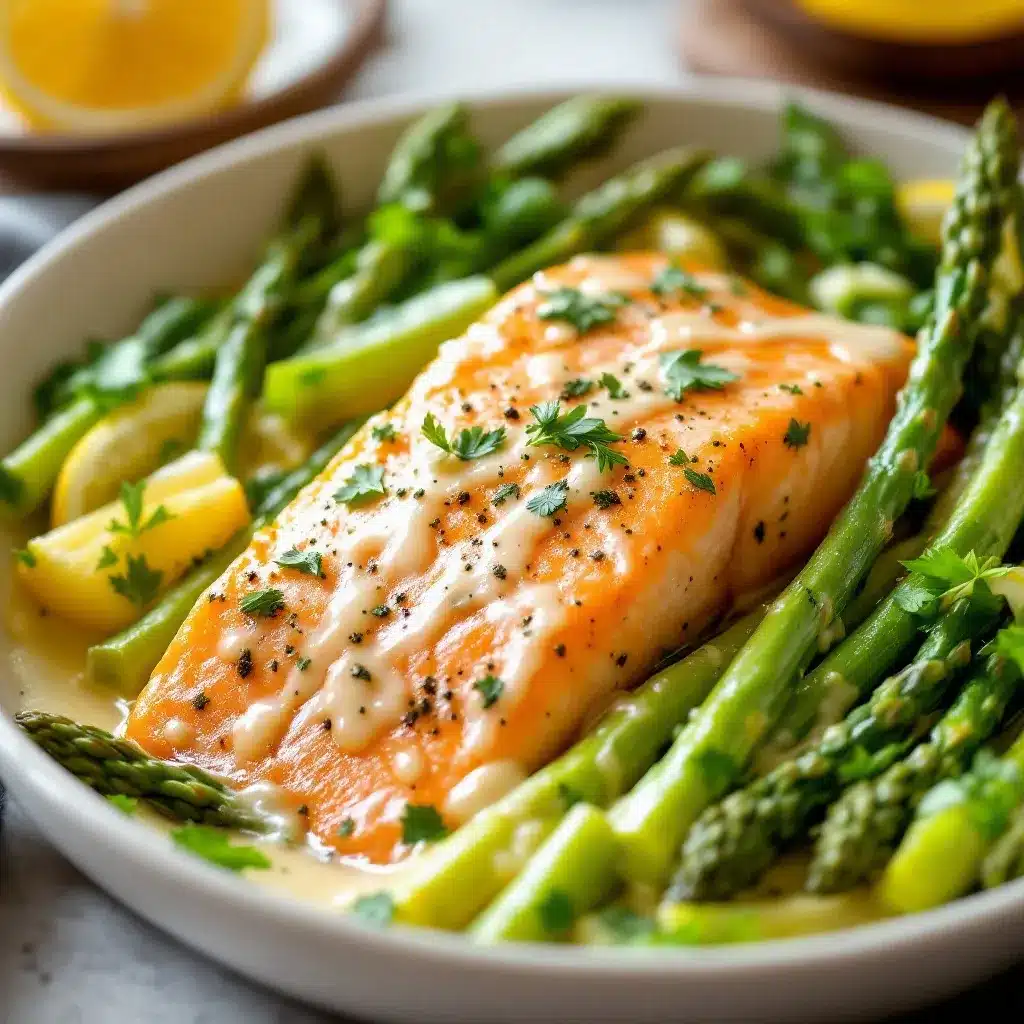
Getting this right is about timing and temperature. Follow these steps carefully for the best results.
- Prep the Salmon: Take your salmon fillets out of the fridge. Let them sit for 10 minutes to take the chill off. This helps them cook evenly. Pat them dry with paper towels. I mean really dry. Press down firmly. Then season both sides generously with salt and pepper. Set aside.
- Prep the Asparagus: Wash the asparagus and snap off the woody ends. Toss them with a little olive oil, salt, and pepper. Set aside next to the salmon.
- Heat the Pan: Place your large skillet over medium-high heat. Add one tablespoon of neutral oil. Wait until the oil shimmers and just starts to smoke slightly. This is crucial. The pan must be hot before the fish goes in.
- Sear the Salmon: Place the salmon fillets in the pan skin-side down. Press down gently with a spatula for 10 seconds to prevent curling. Do not touch it. Let it cook undisturbed for 4-5 minutes. You should hear a steady sizzle. If it’s silent, the pan isn’t hot enough.
- Check the Crispiness: Lift a corner to check the skin. It should be golden brown and crispy. If it’s sticking, give it 30 more seconds. Once it releases easily, it’s ready to flip.
- Flip and Cook: Flip the fillets carefully. Cook for another 2-4 minutes, depending on thickness. The fish is done when it flakes easily with a fork and reaches an internal temperature of 145°F (63°C). Remove the salmon to a plate and tent with foil.
- Cook the Asparagus: In the same pan, add the asparagus. Toss in the remaining oil if needed. Cook for 3-4 minutes, turning occasionally, until tender-crisp and slightly charred. Remove asparagus to the same plate as the salmon.
- Make the Sauce: Reduce heat to low. Add the butter to the pan. Once melted, add the minced garlic and red pepper flakes. Cook for 30 seconds, stirring constantly, until fragrant. Do not let the garlic brown.
- Finish the Sauce: Remove the pan from heat. Squeeze in the juice of one lemon and add the zest. Stir vigorously to combine the butter, oil, and lemon juice into a glossy sauce.
- Assemble: Pour the sauce over the salmon and asparagus. Garnish with fresh parsley and lemon slices. Serve immediately.
Cooking Tips & Techniques
The biggest mistake people make is overcrowding the pan. If you have thin fillets, you might fit four in a 12-inch pan. If they are thick, two might be too many. Overcrowding lowers the pan temperature and steams the fish instead of searing it. Cook in batches if necessary.
Another tip is to not move the fish. When you put the salmon in, it sticks. That’s normal. It’s bonding with the pan. If you try to flip it too early, the skin will tear. Trust the process. Wait until it releases on its own.
I once burned a batch of garlic because I added it to a hot pan with oil and walked away. Never do that. Garlic burns in seconds. Always add it when you reduce the heat or take the pan off the burner.
For consistent results, use a meat thermometer. Visual cues can be tricky, especially with varying fillet sizes. 145°F is the safe target, but some prefer it slightly lower, around 135°F, for a moister center. Just be sure to check with local food safety guidelines.
Multitasking is key here. While the salmon rests, the sauce comes together quickly. Have your lemon cut and your parsley chopped before you start cooking. This is a fast recipe, and you don’t want to be hunting for ingredients while the garlic is sizzling.
Variations & Adaptations
This recipe is flexible. Here are a few ways to change it up:
- Dairy-Free: Skip the butter and use extra olive oil or coconut oil for the sauce. It still works beautifully, just with a slightly different mouthfeel.
- Spicy Kick: Add a diced jalapeño with the garlic. Or use chili crisp oil instead of plain olive oil for a smoky heat.
- Herb Swap: If you don’t like parsley, try cilantro or dill. Dill pairs especially well with lemon and salmon.
- Gluten-Free: This recipe is naturally gluten-free. Just ensure your soy sauce (if you add it) is tamari.
I once tried adding honey to the sauce for a glaze. It caramelized nicely but made the skin less crispy. If you want sweetness, add it after the sauce is poured over the finished dish.
For a low-carb option, swap the asparagus for zucchini noodles or cauliflower florets. They absorb the sauce well and keep the meal light.
Serving & Storage Suggestions
Serve this immediately while the salmon is hot and crispy. Pair it with a simple green salad or roasted potatoes. A glass of crisp white wine, like Sauvignon Blanc, complements the lemon perfectly.
Leftovers can be stored in an airtight container in the refrigerator for up to two days. The salmon will firm up, which some people prefer. Reheat gently in a skillet over low heat to avoid drying it out. Microwaving will make the skin soggy, so avoid that if you can.
The flavors meld nicely overnight. The asparagus absorbs the lemon-garlic sauce, becoming even more flavorful. It’s a great option for next-day lunches.
Nutritional Information & Benefits
This meal is packed with omega-3 fatty acids, which are great for heart and brain health. Salmon is a lean protein source, helping with muscle repair and satiety. Asparagus is high in fiber, folate, and vitamins A, C, and K.
The lemon adds vitamin C, which aids in iron absorption from the fish. This is a balanced, nutrient-dense meal that supports overall wellness. It’s light enough for dinner but filling enough to keep you energized.
For those watching sodium, you can reduce the salt and rely more on the lemon and pepper for flavor. The natural oils in the fish provide healthy fats that keep you full.
Conclusion
This crispy lemon garlic salmon with asparagus is a weeknight winner. It’s fast, healthy, and incredibly flavorful. I love that it uses simple ingredients but delivers restaurant-quality results.
I encourage you to try it and make it your own. Add your favorite herbs or swap the vegetables based on what’s in season. Cooking should be fun and adaptable.
I’ve made this dozens of times, and it never gets old. The crispiness of the skin is always a surprise, even to me. It’s a reminder that small details, like drying the fish, make a huge difference.
Please leave a comment below if you try it. I’d love to hear how it turned out for you. Share your variations or tips with the community. Let’s keep the conversation going.
Enjoy your dinner. It’s going to be delicious.
Frequently Asked Questions
How do I know when the salmon is done?
The easiest way is to check the internal temperature. It should reach 145°F (63°C). You can also press the fillet gently; it should flake easily with a fork but still feel slightly springy.
Can I use frozen salmon?
Yes, but you must thaw it completely and pat it very dry. Excess moisture from freezing can prevent the skin from crisping. Thaw it in the fridge overnight for best results.
What if I don’t have asparagus?
You can use green beans, broccolini, or even zucchini. Just adjust the cooking time based on the vegetable’s thickness. Harder vegetables take longer to cook.
Can I make this in the oven?
Yes, but you won’t get the same crispy skin. Bake at 400°F (200°C) for 12-15 minutes. For crispy skin in the oven, broil for the last 2-3 minutes, but watch it closely to avoid burning.
How long does the sauce last?
The sauce is best made fresh. If you have leftovers, store it in the fridge for up to two days. Reheat gently on the stove. The butter may separate, so whisk it back together when warming.
Pin This Recipe!
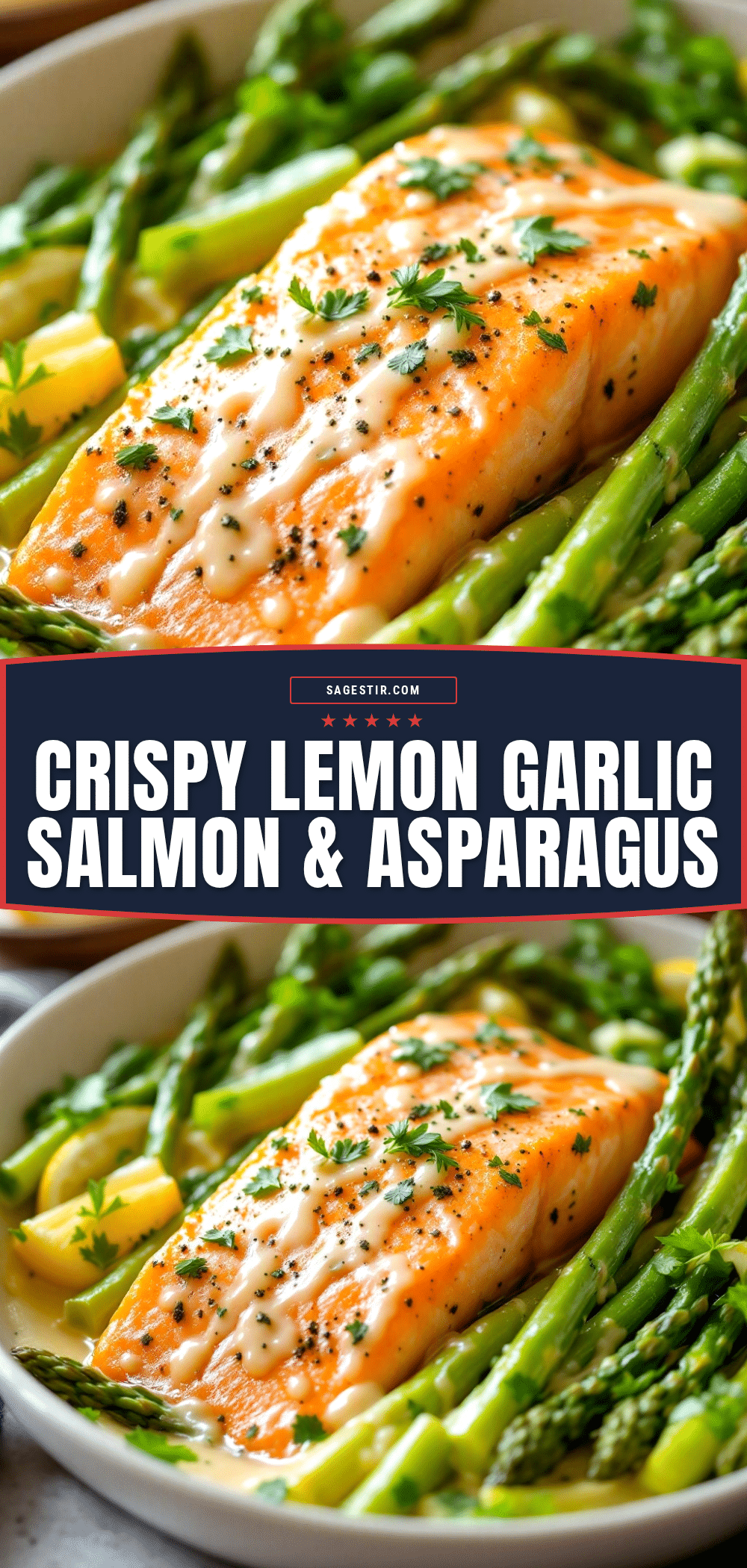
Crispy Lemon Garlic Salmon
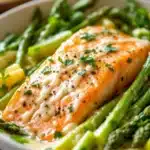
A quick and healthy 15-minute dinner featuring skin-on salmon seared to perfection with crispy skin, served with asparagus and a bright lemon-garlic butter sauce.
- Prep Time: 10 minutes
- Cook Time: 15 minutes
- Total Time: 25 minutes
- Yield: 4 servings 1x
- Category: Main Course
- Cuisine: American
Ingredients
- 4 salmon fillets (skin-on, approx. 6 oz each)
- 1 lb asparagus spears
- 3–4 cloves garlic, minced
- 2 lemons (1 juiced, 1 sliced for garnish)
- 2 tbsp avocado oil or neutral oil (for searing)
- 2 tbsp unsalted butter
- 1 tsp fresh lemon zest
- 1/4 tsp red pepper flakes
- 2 tbsp fresh parsley, chopped
- Kosher salt and freshly cracked black pepper
Instructions
- Remove salmon from fridge and let sit for 10 minutes. Pat fillets completely dry with paper towels and season generously with salt and pepper.
- Wash asparagus, snap off woody ends, and toss with a little olive oil, salt, and pepper.
- Heat a large skillet (stainless steel or cast iron) over medium-high heat with 1 tbsp neutral oil until it shimmers and just starts to smoke.
- Place salmon fillets skin-side down in the pan. Press gently for 10 seconds to prevent curling. Cook undisturbed for 4-5 minutes until skin is golden and crispy.
- Flip fillets and cook for another 2-4 minutes until internal temperature reaches 145°F (63°C). Remove salmon to a plate and tent with foil.
- In the same pan, add asparagus and cook for 3-4 minutes until tender-crisp. Remove to the plate with the salmon.
- Reduce heat to low. Add butter to the pan. Once melted, add minced garlic and red pepper flakes. Cook for 30 seconds until fragrant.
- Remove pan from heat. Stir in lemon juice and zest to create a glossy sauce.
- Pour sauce over salmon and asparagus. Garnish with parsley and lemon slices. Serve immediately.
Notes
Patting the salmon dry is crucial for crispy skin. Do not overcrowd the pan. Add garlic only after reducing heat to prevent burning. For dairy-free, substitute butter with olive oil.
Nutrition
- Serving Size: 1 fillet and 1/4 lb
- Calories: 350
- Sugar: 2
- Sodium: 400
- Fat: 22
- Saturated Fat: 6
- Carbohydrates: 8
- Fiber: 3
- Protein: 30
Keywords: salmon, crispy salmon, lemon garlic salmon, healthy dinner, quick meals, asparagus, weeknight dinner, high protein, gluten-free