Love this? Save it for later!
Share the inspiration with your friends
My neighbor Carol wasn’t trying to impress anyone. I’d stopped by to borrow a ladder—mine had mysteriously vanished after a garage sale—and the smell hit me before I even made it past her front door. It was warm, woodsy, and sweet in a way that made my stomach actually growl out loud. Embarrassing, honestly.
Carol waved me into the kitchen, completely unfazed. She was wearing an old apron with a faded sunflower on it, and there, on a baking sheet, was the most beautiful tray of butternut squash I had ever seen. The edges were caramelized and dark, the maple glaze was bubbling gently, and a pan of butter was sizzling on the stove with fresh sage leaves floating in it. “Oh, that?” she said when I asked. “It’s just squash. My husband’s obsessed with it.” Just squash. Like it was nothing.
But it wasn’t nothing. She let me try a piece straight from the pan—burned my tongue, totally worth it—and I stood there in her kitchen, eating roasted squash like it was candy. The outside was shatteringly crisp, the inside was creamy and sweet, and that sage brown butter? Let me tell you, it was the kind of thing you want to put on everything. Potatoes, pasta, maybe even your morning toast. I asked for the recipe, and she scribbled it on the back of an old envelope. I still have that envelope, stained with butter and maple syrup.
Maybe you’ve been there—you taste something at someone else’s house and you know, deep down, that it’s going to become a regular thing in your own kitchen. That’s this recipe for me. I’ve made it every fall since that day, tweaking it just a little to get the perfect crispy edges every single time. It’s become my go-to for Thanksgiving, for cozy weeknight dinners, and for those days when you just need something warm and beautiful on the table. This Crispy Maple Roasted Butternut Squash with Sage Brown Butter is simple, but it’s the kind of simple that feels special. Carol wasn’t trying to show off, but she taught me something that day—sometimes the best recipes are the ones you stumble into when you’re not looking.
Why You’ll Love This Recipe
I’ve tested this recipe more times than I can count, trying different temperatures, different cuts of squash, different ways to get that perfect crisp. And I can tell you with confidence—this is the one. Here’s why it works so well:
- Quick & Easy: You only need about 10 minutes of active prep time. The oven does the rest of the work while you get on with your evening.
- Simple Ingredients: Butternut squash, maple syrup, butter, sage, salt, and pepper. That’s it. No fancy grocery trips required.
- Perfect for Fall: This is the ultimate autumn side dish. It shines at Thanksgiving, but it’s simple enough for a Tuesday night dinner.
- Crowd-Pleaser: I’ve served this to picky kids, skeptical in-laws, and serious foodie friends. Every single person goes back for seconds.
- Unbelievably Delicious: The contrast between the crispy, caramelized edges and the tender, sweet interior is honestly next-level. And that sage brown butter? Pure magic.
What makes this recipe different from all the other roasted squash recipes out there? It’s the technique. Most recipes tell you to just toss everything together and roast, but that gives you soggy, steamed squash. I’ve figured out the secret to getting those edges truly crispy—spreading the squash out in a single layer, using high heat, and waiting to add the maple syrup until the squash is almost done. It makes all the difference. This isn’t just another version of roasted squash. It’s the best version.
This recipe is the kind that makes you close your eyes after the first bite. It’s comfort food that feels a little fancy, but it’s actually the easiest thing in the world to pull off. Perfect for impressing guests without any stress, or turning a simple weeknight meal into something you’ll remember.
What Ingredients You Will Need
This recipe uses simple, wholesome ingredients that come together to create something truly special. Most of these are pantry staples, especially if you cook during the fall months. Let me walk you through each one.
- Butternut Squash (1 large, about 3 pounds): Look for a squash that feels heavy for its size with a firm, unblemished skin. I prefer buying pre-peeled and cubed squash from the grocery store when I’m short on time, but cutting your own from a whole squash gives you more control over the size of the pieces. Aim for 1-inch cubes for the best texture—too small and they burn, too large and they won’t get crispy.
- Maple Syrup (3 tablespoons, pure): Please don’t use pancake syrup here. Real maple syrup makes a huge difference in flavor. I like using Grade A Dark Amber for a more robust maple taste. If you’re in a pinch, honey works as a substitute, but the flavor will be different.
- Unsalted Butter (4 tablespoons): Unsalted is important here because we’re controlling the salt separately. If you only have salted butter, just reduce the added salt in the recipe. I recommend a good quality butter like Kerrygold for the richest brown butter flavor.
- Fresh Sage Leaves (10-12 leaves): Fresh sage is non-negotiable for this recipe. Dried sage just won’t give you the same aromatic, slightly peppery flavor that makes this dish so special. Look for sage leaves that are bright green and fragrant, without any wilting or brown spots.
- Olive Oil (2 tablespoons): A good extra virgin olive oil helps the squash roast evenly and get those crispy edges. Avocado oil works well too if you prefer a neutral flavor.
- Salt (1 teaspoon, plus more to taste): I use kosher salt for roasting. It distributes more evenly than table salt and gives you better control over the seasoning.
- Black Pepper (½ teaspoon, freshly ground): Freshly ground pepper makes a difference here. It adds a subtle warmth that complements the maple and sage beautifully.
One ingredient tip I’ve learned the hard way—make sure your butternut squash is completely dry before you toss it with oil. Any moisture on the surface will steam the squash instead of roasting it, and you won’t get those crispy edges we’re after. Pat the cubes dry with a clean kitchen towel if needed.
For substitutions, you can swap the maple syrup with honey or agave nectar if that’s what you have on hand. The flavor will change slightly, but it’ll still be delicious. If you’re dairy-free, use a good quality vegan butter for the brown butter sauce—just be aware that it may not brown quite as deeply as regular butter.
Equipment Needed
You don’t need a lot of fancy equipment for this recipe, which is one of the reasons I love it. Here’s what you’ll need:
- Large Baking Sheet (half-sheet pan, 18×13 inches): A rimmed baking sheet is essential. You need enough space to spread the squash in a single layer without overcrowding. If your pan is too small, the squash will steam instead of roast. I’ve ruined many batches by cramming too much onto one pan.
- Parchment Paper or Silicone Baking Mat: This makes cleanup so much easier and helps prevent sticking. I prefer parchment paper because it promotes better browning than a silicone mat.
- Chef’s Knife: A sharp chef’s knife makes cutting butternut squash much safer and easier. If you’re cutting a whole squash, a sturdy 8-inch knife is ideal.
- Vegetable Peeler: For peeling the squash if you’re starting from whole. A Y-shaped peeler works best for the tough skin of butternut squash.
- Small Skillet: For making the sage brown butter. A light-colored skillet is helpful because you can see the butter change color as it browns.
- Mixing Bowl: For tossing the squash with oil and seasonings before roasting.
If you don’t have a baking sheet large enough, you can use two smaller pans. Just make sure to rotate them halfway through cooking for even browning. And if you don’t have a vegetable peeler, a sharp paring knife works in a pinch—just be careful with those fingers.
Preparation Method
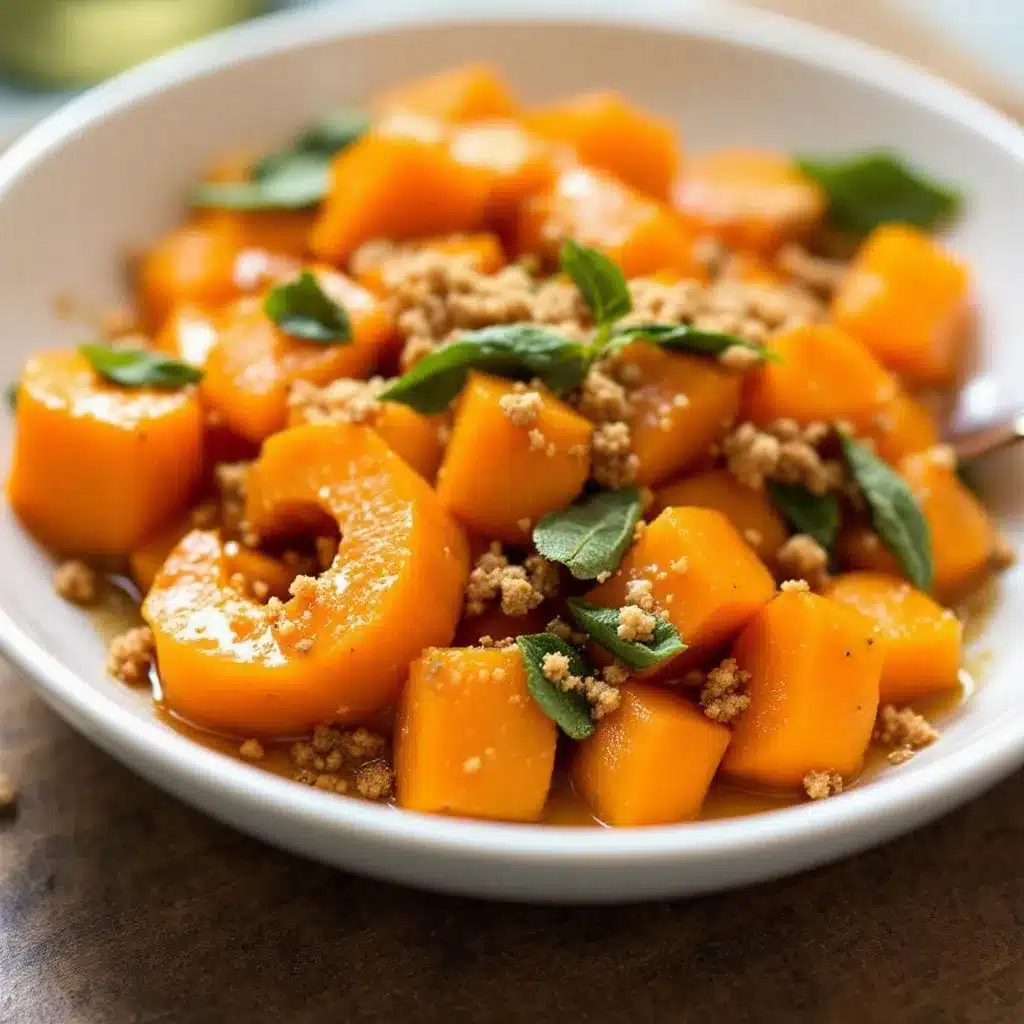
Let me walk you through this step by step. I’ve made this recipe dozens of times, so I’ll share all the little tricks I’ve picked up along the way.
Step 1: Preheat the Oven and Prep the Squash
Preheat your oven to 425°F (220°C). This high heat is crucial for getting those crispy, caramelized edges. While the oven heats up, prepare your butternut squash. If you’re using a whole squash, carefully peel it with a vegetable peeler, then cut it in half lengthwise and scoop out the seeds. Cut the squash into 1-inch cubes. If you’re using pre-cut squash, just make sure the pieces are roughly the same size for even cooking.
Here’s a tip I learned the hard way: dry the squash cubes thoroughly with a clean kitchen towel. Any excess moisture will prevent browning. I know it seems like an extra step, but trust me, it makes a real difference.
Step 2: Season and Toss
In a large mixing bowl, combine the cubed squash with 2 tablespoons of olive oil, 1 teaspoon of kosher salt, and ½ teaspoon of freshly ground black pepper. Toss everything together until the squash is evenly coated. Don’t add the maple syrup yet—we’ll do that later to prevent burning.
Step 3: Roast the Squash
Line your baking sheet with parchment paper. Spread the seasoned squash in a single, even layer. Make sure there’s space between each piece—if they’re touching, they’ll steam instead of roast. Roast for 20 minutes, then remove the pan from the oven and flip each piece using tongs or a spatula. Return to the oven and roast for another 15 minutes.
At this point, the squash should be tender and starting to brown on the edges. Drizzle 2 tablespoons of the maple syrup over the squash and toss gently to coat. Spread the squash back into a single layer and roast for another 10-15 minutes, until the edges are deeply caramelized and crispy.
Step 4: Make the Sage Brown Butter
While the squash finishes roasting, make the brown butter. Place a small skillet over medium heat and add 4 tablespoons of unsalted butter. Let it melt completely, then continue cooking, swirling the pan occasionally. The butter will start to foam and then turn a golden amber color. Watch carefully—it can go from perfect to burnt in seconds.
When the butter is a deep golden brown and smells nutty and toasty, add the fresh sage leaves. They’ll sizzle and crisp up almost immediately. Cook for about 30 seconds, then remove the pan from the heat. Stir in the remaining 1 tablespoon of maple syrup and a pinch of salt.
Step 5: Combine and Serve
Transfer the roasted squash to a serving platter. Drizzle the sage brown butter over the top, making sure to distribute the crispy sage leaves evenly. Serve immediately while everything is hot and the squash is at its crispiest.
Cooking Tips & Techniques
Over the years, I’ve made every mistake you can imagine with this recipe. Let me save you some trouble with these tips.
Don’t overcrowd the pan. This is the number one mistake people make. If the squash pieces are too close together, they’ll release steam and never get crispy. Use two pans if you need to, and rotate them halfway through cooking.
Wait to add the maple syrup. I know it’s tempting to toss everything together at once, but maple syrup burns at high temperatures. Adding it halfway through cooking gives the squash time to develop those crispy edges without the sugar scorching.
Use a light-colored pan for the brown butter. Dark nonstick pans make it hard to see the color change as the butter browns. A stainless steel or light-colored skillet lets you watch for that perfect amber hue.
Keep the sage leaves whole. Don’t chop them. Whole sage leaves crisp up beautifully in the brown butter and make a stunning garnish. Plus, they’re easier to fish out if someone doesn’t want them.
Season in layers. A pinch of salt on the brown butter at the end makes a surprising difference. It balances the sweetness of the maple and brings out the nuttiness of the browned butter.
Variations & Adaptations
This recipe is wonderfully adaptable. Here are some variations I’ve tried and loved:
Spicy Maple Version: Add ½ teaspoon of red pepper flakes to the brown butter along with the sage leaves. The heat pairs beautifully with the sweet maple and rich brown butter. I made this version for a Friendsgiving last year, and it was gone in minutes.
Roasted Root Vegetable Medley: Swap half the butternut squash for cubed sweet potatoes, parsnips, or carrots. Just make sure all the pieces are cut to the same size so they cook evenly. The combination of flavors is incredible.
Vegan Option: Use coconut oil or a high-quality vegan butter for the brown butter sauce. I’ve tested this with Miyoko’s European Style Cultured Vegan Butter, and it browns beautifully. The flavor is slightly different but still delicious.
Herb Variations: If you don’t have fresh sage, try fresh thyme or rosemary instead. Each herb brings its own unique flavor. Thyme adds an earthy, slightly lemony note, while rosemary gives a piney, aromatic quality.
Balsamic Glaze Finish: For a tangy twist, drizzle a little balsamic glaze over the finished dish along with the brown butter. The acidity cuts through the richness and adds another layer of flavor.
Serving & Storage Suggestions
This dish is best served immediately, while the squash is still hot and the edges are perfectly crispy. The contrast between the crispy exterior and the creamy interior is at its peak right out of the oven.
For serving, I like to pile the squash on a large platter and drizzle the sage brown butter over the top. Garnish with a few extra fresh sage leaves and a sprinkle of flaky sea salt for a beautiful presentation. It’s a showstopper on any Thanksgiving table, but it’s also special enough for a Sunday dinner with family.
This squash pairs beautifully with roasted chicken, pork chops, or a hearty grain bowl. I often serve it alongside a simple green salad with a tangy vinaigrette to balance the richness. For a cozy fall meal, try it with a warm bowl of creamy Tuscan chicken soup.
If you have leftovers, store them in an airtight container in the refrigerator for up to 4 days. The squash will soften as it sits, but the flavor actually gets better over time. To reheat, spread the squash on a baking sheet and warm it in a 350°F oven for about 10 minutes. This helps restore some of the crispiness. Avoid microwaving, as it will make the squash soggy.
You can also freeze the roasted squash for up to 3 months. Let it cool completely, then transfer to a freezer-safe container. To serve, thaw in the refrigerator overnight and reheat in the oven as directed above.
Nutritional Information & Benefits
This recipe is as nutritious as it is delicious. Here’s an approximate breakdown per serving (based on 6 servings):
| Nutrient | Amount |
|---|---|
| Calories | 195 |
| Total Fat | 12g |
| Saturated Fat | 6g |
| Carbohydrates | 23g |
| Fiber | 4g |
| Sugar | 10g |
| Protein | 2g |
| Vitamin A | 210% DV |
| Vitamin C | 35% DV |
| Potassium | 582mg |
Butternut squash is packed with vitamin A, which supports eye health and immune function. It’s also a great source of fiber, which aids digestion and keeps you feeling full. The sage in this recipe is more than just a flavor booster—it’s rich in antioxidants and has anti-inflammatory properties. And while brown butter is indulgent, a little goes a long way in adding rich flavor without overdoing it.
This recipe is naturally gluten-free and can easily be made vegan with a butter substitution. It’s also suitable for a low-carb diet in moderation, though the maple syrup does add natural sugars.
Conclusion
This Crispy Maple Roasted Butternut Squash with Sage Brown Butter is the kind of recipe that becomes a tradition. It’s simple enough for a weeknight, but beautiful enough for a holiday table. Every time I make it, I think of Carol and her faded sunflower apron, and I smile. That’s what good food does—it connects us to moments and people we love.
I hope you’ll make this recipe your own. Maybe you’ll add a pinch of cayenne for heat, or swap the sage for rosemary, or serve it alongside your favorite roast chicken. However you make it, I promise it’ll be delicious. And if you discover a variation you love, I’d love to hear about it. Drop a comment below and tell me how it turned out—your twist might inspire someone else to try something new.
Happy cooking, friends. Here’s to crispy edges, nutty brown butter, and the simple joy of a perfectly roasted squash.
Frequently Asked Questions
Can I use frozen butternut squash for this recipe?
I don’t recommend it. Frozen squash releases a lot of water as it thaws, which will prevent it from getting crispy. Fresh squash gives you the best texture and flavor.
How do I cut a butternut squash safely?
First, microwave the whole squash for 2-3 minutes to soften the skin slightly. Then cut off both ends, stand the squash upright, and slice down to remove the skin in strips. Cut in half, scoop out the seeds, and cube the flesh. Use a sharp knife and a stable cutting board.
Can I make this recipe ahead of time?
You can roast the squash up to a day in advance and reheat it in the oven just before serving. Make the brown butter fresh, as it loses its nutty flavor when reheated. The crispy edges won’t be as crisp after reheating, but the flavor will still be wonderful.
What can I substitute for fresh sage?
Fresh thyme or rosemary are excellent substitutes. Use about 1 tablespoon of fresh thyme leaves or 2 teaspoons of finely chopped fresh rosemary. Dried herbs won’t give you the same texture or flavor, so stick with fresh if possible.
Is this recipe suitable for meal prep?
Absolutely. Roast a large batch of squash on Sunday and use it throughout the week in salads, grain bowls, or as a quick side dish. Just store the brown butter separately and add it when you’re ready to serve. I love adding leftover squash to a warm kale and quinoa salad for an easy lunch.
Pin This Recipe!
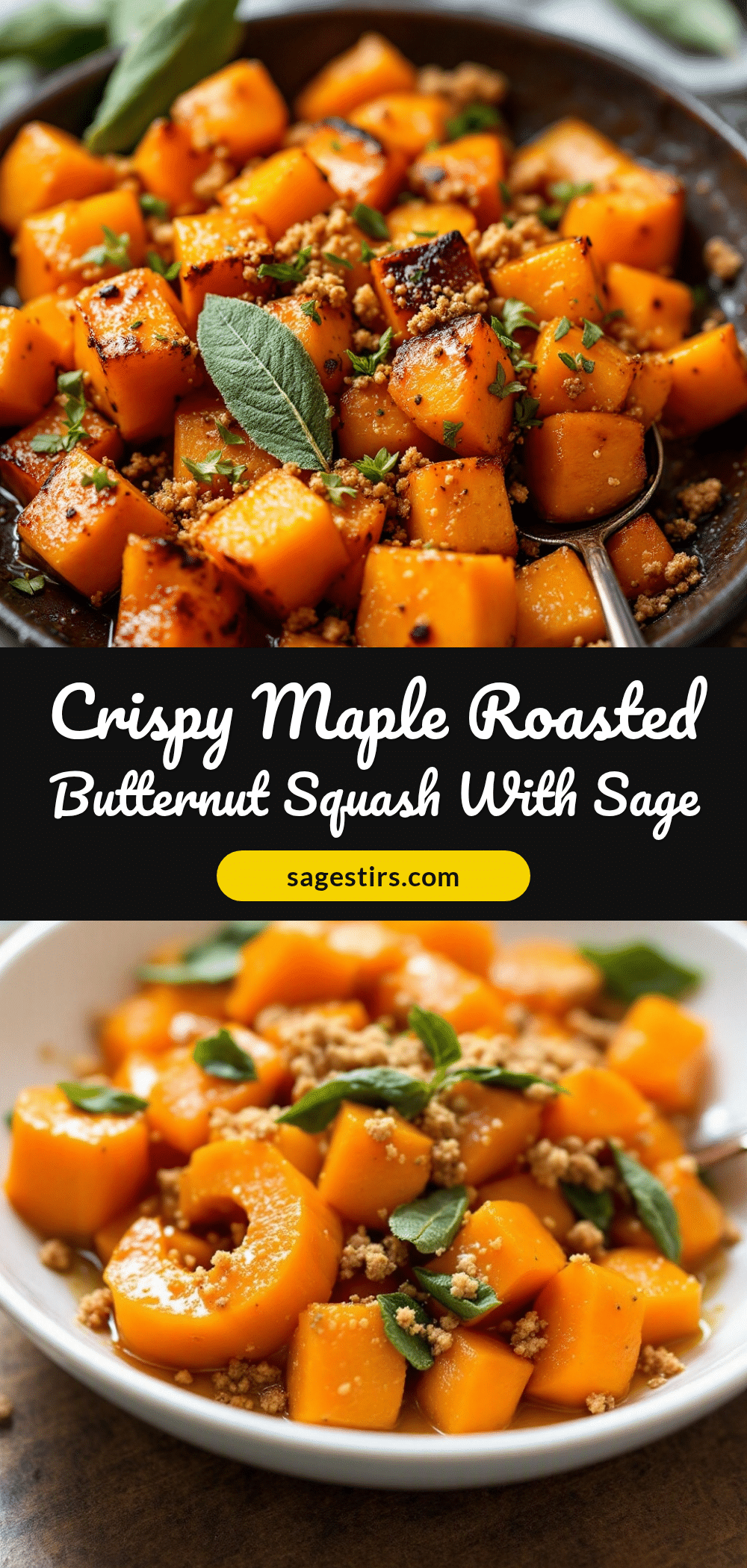
Crispy Maple Roasted Butternut Squash with Sage Brown Butter
This recipe delivers perfectly crispy, caramelized butternut squash with a rich sage brown butter sauce. It’s a simple yet elegant side dish that’s perfect for fall, from weeknight dinners to Thanksgiving feasts.
- Prep Time: 10 minutes
- Cook Time: 45 minutes
- Total Time: 55 minutes
- Yield: 6 servings 1x
- Category: Side Dish
- Cuisine: American
Ingredients
- 1 large butternut squash (about 3 pounds), peeled and cut into 1-inch cubes
- 3 tablespoons pure maple syrup, divided
- 4 tablespoons unsalted butter
- 10–12 fresh sage leaves
- 2 tablespoons olive oil
- 1 teaspoon kosher salt, plus more to taste
- ½ teaspoon freshly ground black pepper
Instructions
- Preheat oven to 425°F (220°C). Line a large baking sheet with parchment paper.
- In a large bowl, toss cubed squash with olive oil, salt, and pepper until evenly coated.
- Spread squash in a single layer on the prepared baking sheet. Roast for 20 minutes.
- Flip squash pieces and roast for another 15 minutes.
- Drizzle 2 tablespoons maple syrup over squash, toss gently, and spread back into a single layer. Roast for 10-15 more minutes until deeply caramelized and crispy.
- Meanwhile, in a small skillet over medium heat, melt butter. Cook, swirling occasionally, until it turns a deep golden brown and smells nutty, about 3-4 minutes.
- Add sage leaves to the brown butter; they will sizzle and crisp. Cook for 30 seconds, then remove from heat. Stir in remaining 1 tablespoon maple syrup and a pinch of salt.
- Transfer roasted squash to a serving platter. Drizzle with sage brown butter and top with crispy sage leaves. Serve immediately.
Notes
For the crispiest edges, make sure squash cubes are thoroughly dried before tossing with oil. Do not overcrowd the pan; use two pans if needed. Add maple syrup halfway through roasting to prevent burning. Brown butter can go from perfect to burnt quickly, so watch carefully. Leftovers can be stored in an airtight container in the refrigerator for up to 4 days; reheat in a 350°F oven for about 10 minutes to restore crispiness.
Nutrition
- Serving Size: 1 serving
- Calories: 195
- Sugar: 10
- Sodium: 390
- Fat: 12
- Saturated Fat: 6
- Carbohydrates: 23
- Fiber: 4
- Protein: 2
Keywords: roasted butternut squash, maple roasted squash, sage brown butter, fall side dish, Thanksgiving side dish, crispy squash