Love this? Save it for later!
Share the inspiration with your friends
My husband took one bite of this Bavarian bratwurst and sauerkraut skillet and said, “I didn’t think I liked sauerkraut.” That right there is the whole story. I spent years avoiding sauerkraut myself, honestly. The mushy, sour stuff from a can that sat in my grandma’s fridge for way too long? No thanks. But this recipe changed my mind completely, and it happened on a random Tuesday night when I had brats in the fridge and zero energy for a complicated dinner.
The trick, I learned, is not to hide the sauerkraut but to treat it right. You rinse it, you squeeze it dry, and you let it caramelize in the same pan where the bratwurst left all those beautiful browned bits. That changes everything. The tang mellows out, the texture firms up, and suddenly you have this deeply savory, almost sweet sidekick to the juicy bratwurst. It’s not the sauerkraut you remember from childhood—it’s better.
This quick Bavarian bratwurst and sauerkraut skillet came together in about twenty-five minutes, start to finish. One pan, minimal chopping, and a flavor payoff that felt like I had been cooking for hours. We ate it straight from the skillet, standing at the counter, which is always the best sign. If you think you don’t like sauerkraut, I get it. But this recipe might just prove you wrong, too.
Why You’ll Love This Recipe
This isn’t just another weeknight dinner. This is the kind of meal that makes you feel like you actually have your life together, even when you don’t. I’ve tested this quick Bavarian bratwurst and sauerkraut skillet at least eight times now, tweaking the timing and the liquid ratios until it was just right. Here is why it earned a permanent spot in my rotation.
- Quick & Easy: From fridge to table in under 30 minutes. No marinating, no complicated techniques, just straightforward cooking that works.
- Simple Ingredients: You need bratwurst, sauerkraut, an onion, some broth, and a few pantry staples. That is it. No weird specialty items required.
- Perfect for Busy Weeknights: When you want something hearty and satisfying but don’t have time to babysit a pot on the stove, this skillet delivers.
- Crowd-Pleaser: Even the sauerkraut skeptics in my house went back for seconds. The caramelization process makes all the difference.
- One-Pan Cleanup: Because nobody wants to wash a pile of dishes after dinner. Just one skillet and you are done.
What makes this recipe different from every other bratwurst recipe out there? It is the two-step sauerkraut method. Most recipes just dump the sauerkraut straight into the pan, liquid and all, which results in a watery, one-note dish. Here, you rinse the sauerkraut, squeeze it dry, and let it brown in the rendered fat from the bratwurst. That extra five minutes of effort transforms the entire dish. The sauerkraut becomes nutty, slightly crispy at the edges, and deeply flavorful instead of just sour.
This is comfort food that doesn’t weigh you down. It is hearty enough to satisfy a hungry family after a long day, but it comes together so fast you will actually have time to sit down and enjoy it. That is the kind of dinner win we all need.
What Ingredients You Will Need
This recipe keeps things simple, using everyday ingredients that come together to create something genuinely special. Here is everything you need for this quick Bavarian bratwurst and sauerkraut skillet.
- 4 fresh bratwurst links (about 1 pound) – Look for uncooked, fresh bratwurst from the meat counter, not the pre-cooked kind. Johnsonville is a solid supermarket option, but if your local butcher makes their own, grab those. The fat content in fresh brats is what creates the flavor base for the whole dish.
- 1 tablespoon olive oil – Just enough to help the brats brown without sticking. You can also use avocado oil if that is what you have.
- 1 medium yellow onion, thinly sliced – The onion softens and caramelizes alongside the bratwurst, adding sweetness that balances the tangy sauerkraut. A sweet onion like Vidalia works great here too.
- 1 ½ cups sauerkraut, drained and rinsed – This is the star of the show, so choose a good one. I prefer refrigerated sauerkraut from the deli section over the canned stuff. Brands like Bubbies or Cleveland Kraut have great texture and flavor. Rinsing is crucial here—it removes excess brine that would make the dish too salty and sour.
- ½ cup low-sodium chicken broth – The liquid helps steam the brats through after browning and creates a little bit of saucy goodness. Vegetable broth works fine if that is what you have on hand.
- 1 teaspoon caraway seeds – This is the secret ingredient that gives the dish that authentic Bavarian flavor. It adds a subtle anise-like warmth that pairs perfectly with the pork and sauerkraut. If you do not have caraway, you can skip it, but the dish will lose some of its signature character.
- ½ teaspoon black pepper – Freshly ground is best. Go easy on the salt here because the bratwurst and sauerkraut both bring plenty of saltiness to the table.
- 1 tablespoon whole-grain mustard (optional, for serving) – A dollop on the side adds a nice sharp kick that cuts through the richness.
- Fresh parsley, chopped (optional, for garnish) – Adds a pop of color and freshness at the end.
That is everything you need. No long list of obscure spices or hard-to-find ingredients. These are all things you can grab on a regular grocery run, and the result tastes like you put in way more effort than you actually did.
Equipment Needed
You do not need a fully stocked kitchen to make this quick Bavarian bratwurst and sauerkraut skillet. In fact, you probably already own everything required.
- A large skillet with a lid – A 12-inch cast-iron skillet is my personal favorite for this recipe. It holds heat beautifully and gives the brats a gorgeous sear. But any heavy-bottomed skillet with a lid will work. A stainless steel or non-stick pan with a tight-fitting lid is perfectly fine.
- Tongs – For flipping the bratwurst and moving the onions around without piercing the casings.
- A sharp knife and cutting board – For slicing the onion and chopping the parsley.
- A colander – For rinsing the sauerkraut. A fine-mesh strainer works even better.
- Paper towels – For squeezing the sauerkraut dry after rinsing. This step is non-negotiable for getting that caramelized texture.
- A wooden spoon or spatula – For stirring and scraping up the browned bits from the bottom of the pan.
If you do not have a lid that fits your skillet, a large piece of aluminum foil crimped tightly around the edges works as a temporary cover. I have done this more times than I care to admit, and it works just fine.
Preparation Method

Let me walk you through this step by step. The whole process takes about 25 minutes from start to finish, and I have included all the little details that make the difference between a good skillet and a great one.
- Prep the sauerkraut. Dump your sauerkraut into a colander and rinse it under cold running water for about 30 seconds. Let it drain, then grab handfuls and squeeze out as much liquid as you can. Set it aside on a plate or in a bowl. This step seems fussy, I know, but it is the single most important thing you can do for the texture. Wet sauerkraut steams instead of caramelizing, and you want those crispy, browned edges.
- Brown the bratwurst. Heat your large skillet over medium-high heat and add the olive oil. Once the oil shimmers, carefully place the bratwurst links in the pan. Let them cook without moving them for 4-5 minutes, until the bottoms are deeply browned. Flip them with tongs and cook another 4-5 minutes on the second side. You are not looking for fully cooked brats here—just a beautiful golden-brown crust. Transfer them to a plate and set aside. The pan should have some browned bits stuck to the bottom. That is flavor gold.
- Cook the onion. Reduce the heat to medium and add the sliced onion to the same pan. Stir it around, scraping up those browned bits from the bottom of the skillet. Cook for 4-5 minutes, stirring occasionally, until the onion softens and starts to turn golden at the edges. If the pan looks dry, add a tiny splash of the chicken broth.
- Caramelize the sauerkraut. Add the rinsed and squeezed sauerkraut to the pan with the onions. Sprinkle the caraway seeds and black pepper over the top. Stir everything together and let it cook undisturbed for 3-4 minutes. You want the sauerkraut to get some color and crispy bits. Stir once, then let it cook another 2-3 minutes. The smell at this point is absolutely incredible—nutty, savory, and warm.
- Simmer everything together. Nestle the browned bratwurst back into the pan on top of the sauerkraut and onions. Pour the chicken broth around the sides of the pan, being careful not to wash the browned bits off the brats. Bring the liquid to a gentle simmer, then cover the skillet with your lid.
- Finish cooking. Reduce the heat to medium-low and let everything cook covered for 8-10 minutes. The steam will finish cooking the bratwurst through while the sauerkraut soaks up all those lovely juices. The internal temperature of the brats should reach 160°F if you want to check with a thermometer. When you lift the lid, the brats should be plump and juicy, and the sauerkraut will have softened beautifully.
- Rest and serve. Remove the lid and let the skillet rest for 2-3 minutes off the heat. This allows the juices to redistribute. Serve the bratwurst on a bed of the caramelized sauerkraut, with a dollop of whole-grain mustard on the side if you like. Sprinkle fresh parsley over the top for a pop of color.
One thing I learned the hard way: do not skip the resting step. I was impatient one night and served everything straight away, and the brats were noticeably less juicy. That two-minute rest makes a real difference.
Cooking Tips & Techniques
After making this quick Bavarian bratwurst and sauerkraut skillet more times than I can count, I have picked up a few tricks that make the process smoother and the results more consistent. Here are the ones that matter most.
Do not pierce the bratwurst. I know it is tempting to poke them with a fork to check if they are done, but resist the urge. Piercing the casings lets all those flavorful juices leak out into the pan, leaving you with dry, sad brats. Use tongs to flip them, and rely on a thermometer or the covered simmering time to ensure doneness.
Get the pan hot enough for browning. If your skillet is not hot enough when you add the bratwurst, they will steam instead of sear. You want that deep, mahogany-brown crust. A good test: flick a drop of water into the pan. If it sizzles and evaporates immediately, you are ready to go.
Let the sauerkraut sit undisturbed. When you add the sauerkraut to the pan, resist the urge to stir it constantly. Let it sit and caramelize for a few minutes before stirring. This is what creates those crispy, almost fried bits that completely transform the texture. I learned this after making a few batches of soggy, sad sauerkraut. Patience pays off here.
Use low-sodium broth. Bratwurst and sauerkraut are both naturally salty. Using regular chicken broth can push the dish over the edge into too-salty territory. Low-sodium broth gives you control, and you can always add a pinch of salt at the end if needed.
Multitask wisely. While the bratwurst are browning, you can rinse and squeeze the sauerkraut. While the sauerkraut is caramelizing, you can slice the onion. This recipe moves fast, so having your ingredients prepped and ready before you start cooking makes everything smoother.
One mistake I made early on: I used pre-cooked bratwurst the first time I made this, thinking it would be faster. It was not. Pre-cooked brats do not render enough fat to build the flavor base, and they turn rubbery when simmered. Stick with fresh, uncooked bratwurst for the best texture and taste.
Variations & Adaptations
This recipe is wonderfully flexible. Here are some ways I have adapted it over the years to suit different tastes and dietary needs.
German-style with beer: Swap the chicken broth for a light lager or pilsner beer. The beer adds a malty depth that pairs beautifully with the bratwurst and caraway. Just be sure to simmer it uncovered for an extra minute or two to cook off the alcohol. This is my personal favorite variation for game day. It pairs perfectly with a batch of easy BBQ pulled pork sliders for a full spread.
Apple and onion twist: Add one thinly sliced apple (Granny Smith or Honeycrisp work great) to the pan along with the onion. The apple softens and sweetens as it cooks, adding a subtle fruitiness that complements the tangy sauerkraut. I discovered this variation by accident when I had an apple about to go bad, and it was a happy accident.
Spicy kick: Add ½ teaspoon of red pepper flakes along with the caraway seeds, or use spicy bratwurst if your grocery store carries them. A drizzle of sriracha or hot honey at the end also works. My brother-in-law swears by this version.
Low-carb option: This recipe is naturally low in carbs, thanks to the sauerkraut and bratwurst. Skip the mustard if you are watching your sugar intake, and serve the skillet as is without any starchy sides. It is satisfying enough on its own.
Dairy-free and gluten-free: This recipe is naturally both dairy-free and gluten-free, as long as your bratwurst and broth are certified gluten-free. Some bratwurst brands use fillers that contain gluten, so check the label if that is a concern. Most whole-grain mustards are gluten-free, but again, check the label.
Vegetarian adaptation: Swap the bratwurst for a good-quality plant-based sausage. I have tried this with Beyond Meat brats and Field Roast sausages, and both worked well. The cooking time will be shorter since plant-based sausages cook through faster. Keep an eye on them to prevent drying out.
If you are planning a cozy dinner spread, this skillet pairs beautifully with a bowl of cozy fall chicken and wild rice soup on the side. The heartiness of both dishes together is pure comfort.
Serving & Storage Suggestions
This quick Bavarian bratwurst and sauerkraut skillet is best served hot, straight from the pan. The bratwurst should be plump and juicy, and the sauerkraut should have those lovely caramelized edges. Here is how I like to serve it.
What to serve alongside: A dollop of whole-grain mustard on the side is my go-to. The sharpness cuts through the richness of the bratwurst perfectly. You can also serve it with crusty bread or soft pretzels for soaking up the juices. A simple green salad with a tangy vinaigrette balances the heartiness of the dish. For a truly Bavarian experience, serve it with warm potato salad or spaetzle.
Drink pairings: A cold German-style lager or pilsner is the classic choice. The crisp, clean flavors of the beer complement the savory bratwurst and tangy sauerkraut. If you prefer wine, a dry Riesling or a Grüner Veltliner works beautifully. For a non-alcoholic option, sparkling water with a squeeze of lemon is refreshing.
Storage: Leftovers keep well in an airtight container in the refrigerator for up to 4 days. The flavors actually meld together and deepen overnight, so leftovers might be even better the next day. I have been known to make a double batch just for the leftovers.
Reheating: The best way to reheat this dish is in a skillet over medium-low heat. Add a splash of broth or water to loosen the sauerkraut, cover the pan, and heat for 5-7 minutes, stirring occasionally. The microwave works in a pinch, but the bratwurst can turn rubbery. If you use the microwave, cover the dish with a damp paper towel to add moisture.
Freezing: You can freeze this skillet for up to 3 months. Let it cool completely, then transfer to a freezer-safe container. To reheat, thaw overnight in the refrigerator, then reheat in a skillet as directed above. The texture of the sauerkraut softens a bit after freezing, but the flavor remains excellent.
How flavors develop: This is one of those dishes that tastes even better the next day. The bratwurst and sauerkraut continue to exchange flavors as they sit, creating a more unified and complex taste. I actually prefer the leftovers for lunch the following day, when the whole dish has had time to marry together.
Nutritional Information & Benefits
This quick Bavarian bratwurst and sauerkraut skillet is surprisingly balanced. Here is an approximate nutritional breakdown per serving (one bratwurst plus about ⅓ cup sauerkraut mixture).
- Calories: 380-420
- Protein: 18-22 grams
- Fat: 28-32 grams
- Carbohydrates: 8-10 grams
- Fiber: 3-4 grams
- Sugar: 4-5 grams
- Sodium: 900-1100 mg (varies by brand)
Health benefits of key ingredients: Sauerkraut is a fermented food, which means it is packed with probiotics that support gut health. It is also rich in vitamin C and vitamin K. The caraway seeds in this recipe are known for their digestive benefits and add a subtle warmth without extra calories. Bratwurst provides high-quality protein and essential B vitamins, though it is higher in saturated fat, so enjoy it in moderation.
Dietary considerations: This recipe is naturally low-carb, gluten-free (check your bratwurst labels), and dairy-free. It is not suitable for a vegetarian or vegan diet unless you swap the bratwurst for a plant-based alternative. The sodium content is on the higher side due to the bratwurst and sauerkraut, so if you are watching your salt intake, use low-sodium broth and rinse the sauerkraut thoroughly.
Allergen note: Bratwurst typically contains pork, and some brands may contain wheat or other fillers. Always check labels if you have specific allergies or dietary restrictions.
My personal perspective: I love that this dish feels indulgent but is actually pretty straightforward nutritionally. It is a satisfying, protein-rich meal that keeps you full for hours without the heavy, bloated feeling you get from some comfort foods. It fits nicely into a balanced eating pattern when paired with vegetables or a light salad.
Conclusion
This quick Bavarian bratwurst and sauerkraut skillet has become one of those recipes I turn to again and again. It is fast enough for a harried Tuesday night but special enough to serve when you have company. The caramelized sauerkraut is the real revelation here—it transforms a humble ingredient into something you will actually crave.
I love how forgiving this recipe is. You can swap in different sausages, play with the seasonings, or add extras like apples or beer, and it always turns out delicious. It is the kind of cooking that builds confidence, because you learn that a few simple techniques—browning, caramelizing, simmering—can create something genuinely impressive.
If you make this recipe, I would love to hear how it turns out. Did you add your own twist? Did it convert a sauerkraut skeptic in your house? Drop a comment below or tag me in your photos. And if you are looking for more one-pan dinners that deliver big flavor without the fuss, check out this easy crockpot honey garlic chicken or these crispy bacon-wrapped smokies for another quick win.
Go ahead and grab that skillet. Dinner is twenty-five minutes away, and it is going to be really, really good.
Frequently Asked Questions
Can I use pre-cooked bratwurst for this recipe?
You can, but I do not recommend it. Pre-cooked bratwurst do not render enough fat to build the flavor base, and they tend to turn rubbery when simmered. Fresh, uncooked bratwurst give you a better texture and a deeper, richer flavor. If you are in a pinch, pre-cooked brats will work, just reduce the simmering time to 5 minutes and keep an eye on them.
How do I keep the bratwurst from drying out?
The key is not to overcook them. Brown them quickly over medium-high heat to develop a crust, then finish them gently in the covered skillet with the broth. The steam keeps them moist. Also, do not pierce the casings while cooking, and let them rest for a few minutes after cooking. That rest period allows the juices to redistribute throughout the meat.
Can I make this recipe in a slow cooker?
You can, but the texture will be different. The slow cooker will not give you the caramelized sauerkraut or the browned bratwurst crust that make this dish special. If you want to use a slow cooker, brown the bratwurst and caramelize the sauerkraut in a skillet first, then transfer everything to the slow cooker and cook on low for 2-3 hours. You lose some of the crispy texture, but the flavor is still good.
What is the best type of sauerkraut to use?
Refrigerated sauerkraut from the deli section is your best bet. Brands like Bubbies, Cleveland Kraut, or your local grocery store brand all work well. Look for sauerkraut that is crisp and not too mushy. Avoid canned sauerkraut if you can—it tends to be softer and more one-dimensionally sour. Whatever you choose, rinsing and squeezing it dry is non-negotiable for the best texture.
Can I add potatoes or other vegetables to this skillet?
Absolutely. Thinly sliced potatoes can be added along with the sauerkraut, but you will need to increase the cooking time and add a bit more broth to ensure they cook through. You can also add sliced bell peppers, shredded carrots, or even some chopped apple. Just keep in mind that adding more vegetables will increase the cooking time and may require a larger skillet to avoid overcrowding.
Pin This Recipe!
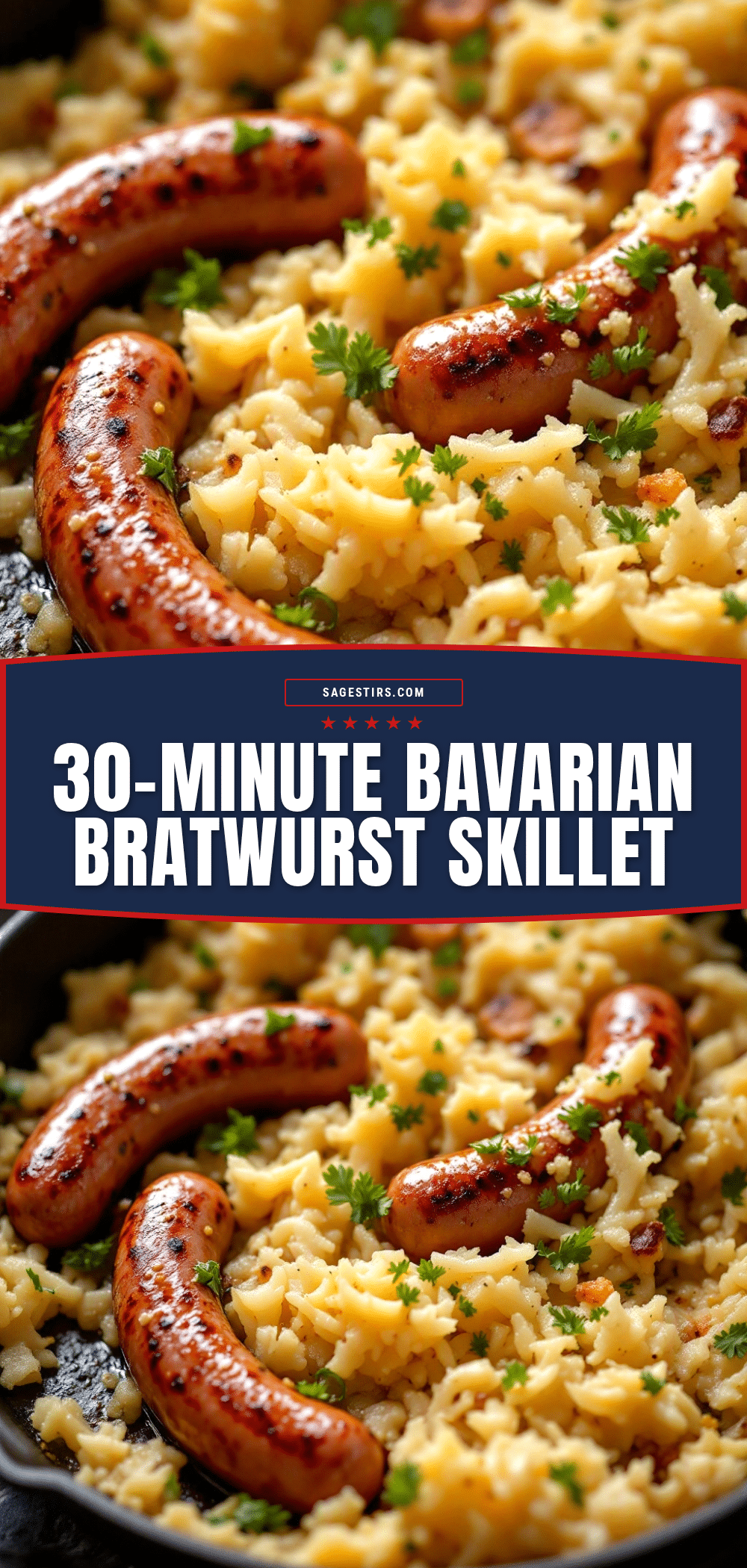
Easy One-Pan Bavarian Bratwurst and Sauerkraut Skillet

This quick Bavarian bratwurst and sauerkraut skillet comes together in about 25 minutes with one pan and minimal chopping. The caramelized sauerkraut transforms a humble ingredient into something you’ll actually crave, even if you think you don’t like sauerkraut.
- Prep Time: 10 minutes
- Cook Time: 15 minutes
- Total Time: 25 minutes
- Yield: 4 servings 1x
- Category: Main Course
- Cuisine: German
Ingredients
- 4 fresh bratwurst links (about 1 pound)
- 1 tablespoon olive oil
- 1 medium yellow onion, thinly sliced
- 1 ½ cups sauerkraut, drained and rinsed
- ½ cup low-sodium chicken broth
- 1 teaspoon caraway seeds
- ½ teaspoon black pepper, freshly ground
- 1 tablespoon whole-grain mustard (optional, for serving)
- Fresh parsley, chopped (optional, for garnish)
Instructions
- Prep the sauerkraut: Dump sauerkraut into a colander and rinse under cold running water for about 30 seconds. Let it drain, then grab handfuls and squeeze out as much liquid as possible. Set aside.
- Brown the bratwurst: Heat a large skillet over medium-high heat and add olive oil. Once shimmering, place bratwurst links in the pan. Cook without moving for 4-5 minutes until deeply browned. Flip and cook another 4-5 minutes. Transfer to a plate and set aside.
- Cook the onion: Reduce heat to medium and add sliced onion to the same pan. Stir, scraping up browned bits. Cook for 4-5 minutes, stirring occasionally, until softened and golden. Add a splash of chicken broth if dry.
- Caramelize the sauerkraut: Add rinsed and squeezed sauerkraut to the pan with onions. Sprinkle caraway seeds and black pepper. Stir and cook undisturbed for 3-4 minutes. Stir once and cook another 2-3 minutes until sauerkraut has color and crispy bits.
- Simmer everything together: Nestle browned bratwurst back into the pan on top of sauerkraut and onions. Pour chicken broth around the sides. Bring to a gentle simmer, then cover the skillet.
- Finish cooking: Reduce heat to medium-low and cook covered for 8-10 minutes until bratwurst reaches an internal temperature of 160°F.
- Rest and serve: Remove lid and let skillet rest for 2-3 minutes off the heat. Serve bratwurst on a bed of caramelized sauerkraut with whole-grain mustard and fresh parsley if desired.
Notes
Do not pierce the bratwurst casings while cooking to keep them juicy. Rinsing and squeezing the sauerkraut dry is crucial for caramelization. Let the skillet rest for 2-3 minutes before serving to allow juices to redistribute. For a beer variation, swap chicken broth for a light lager or pilsner.
Nutrition
- Serving Size: 1 bratwurst plus abo
- Calories: 400
- Sugar: 4.5
- Sodium: 1000
- Fat: 30
- Saturated Fat: 10
- Carbohydrates: 9
- Fiber: 3.5
- Protein: 20
Keywords: bratwurst, sauerkraut, one-pan, quick dinner, Bavarian, skillet, weeknight dinner