Love this? Save it for later!
Share the inspiration with your friends
The dinner party was in four hours and I’d completely forgotten I was supposed to bring the main course. Everyone else would be showing up with their signature dishes—my neighbor Karen with her slow-braised short ribs that take two days, my friend Tom with his cedar-plank grilled salmon that requires a PhD in grilling, and my sister-in-law with her famous lasagna that’s been passed down for generations. I had a salmon filet in my fridge, a lemon that was starting to look a little sad, and maybe twenty minutes of actual cooking energy left in me after a week that had, let me tell you, completely wiped me out.
I stood there staring into my fridge like it might magically produce a plan. The butter dish caught my eye. Then the garlic. Then I remembered I had a sheet pan I’d barely used. Honestly, I was half-tempted to just order pizza and show up with a lie about traffic. But I’d already told everyone I was bringing the fish course—because apparently I enjoy creating problems for myself.
So I grabbed the salmon, smashed some garlic, melted butter in the microwave (yes, microwave, judge me if you want), squeezed that sad lemon, and threw it all on a sheet pan. I didn’t even preheat the oven properly. I just slid it in and prayed. When I pulled it out, the smell was ridiculous—in the best way. The edges were crispy, the center was flaky, and the garlic butter sauce had turned into this gorgeous golden pool around the fish. I brought it to the party feeling like a fraud. It was the first dish to disappear. People asked for the recipe. I had to admit it took almost no effort. Maybe you’ve been there—showing up with something you threw together in panic mode, only to have it outshine everything else. That’s this salmon. It’s the recipe I keep making, not because it’s fancy, but because it works every single time.
Why You’ll Love This Recipe
This Easy Sheet Pan Salmon with Lemon Garlic Butter isn’t just another fish recipe. It’s the one that makes you look like you spent hours in the kitchen when you absolutely did not. I’ve tested this in my own cramped kitchen with a finicky oven, and I can promise you—it delivers every time.
- Quick & Easy: From fridge to table in under 30 minutes. Seriously. Perfect for those nights when you’re staring at the clock wondering how it’s already 6 PM.
- Simple Ingredients: You probably have everything already—salmon, butter, garlic, lemon, salt, pepper. No exotic spice blends or trips to specialty stores.
- Perfect for Entertaining: This salmon shines at dinner parties, weeknight family meals, or even a fancy-ish Tuesday for yourself. It’s elegant without the stress.
- Crowd-Pleaser: Even people who “don’t like fish” have asked me for seconds. The butter-garlic situation wins everyone over.
- Unbelievably Delicious: The secret is in the technique—roasting on a sheet pan at high heat creates crispy edges while keeping the center buttery-soft. That lemon garlic butter sauce pools around the fish and turns into something you’ll want to drink with a straw.
What makes this different from every other salmon recipe out there? It’s the balance. The butter isn’t overpowering, the garlic is fragrant without being sharp, and the lemon cuts through everything just enough. I’ve tried versions with honey, with soy sauce, with herb crusts—and I keep coming back to this one. It’s comfort food that happens to be good for you. It’s impressive without being pretentious. And honestly? It’s the kind of meal that makes you close your eyes after the first bite and just breathe for a second.
What Ingredients You Will Need
This recipe uses simple, wholesome ingredients that come together to create something truly special. Most of these are pantry staples, which is exactly why this recipe works for last-minute meals.
- Salmon filet (1.5 to 2 pounds, skin-on or skin-off) – Look for bright, firm flesh with no fishy smell. I prefer center-cut filets for even cooking. If frozen, thaw completely in the fridge overnight.
- Unsalted butter (4 tablespoons, melted) – I use Kerrygold when I can, but any good unsalted butter works. Salted butter is fine too—just reduce the added salt slightly.
- Fresh garlic (4 to 5 cloves, minced) – Please don’t use the jarred stuff here. Fresh garlic makes a real difference in flavor. You want it fragrant, not bitter.
- Fresh lemon (1 large lemon) – You’ll need both the zest and the juice. Roll the lemon on the counter before juicing to get more out of it.
- Extra-virgin olive oil (1 tablespoon) – Just a little to grease the pan and help everything crisp up nicely.
- Salt (1 teaspoon, preferably kosher) – I use Diamond Crystal. If using table salt, reduce to ¾ teaspoon.
- Black pepper (½ teaspoon, freshly ground) – Freshly ground really does taste better here.
- Fresh parsley (2 tablespoons, chopped) – Optional for garnish, but it adds a nice pop of color and freshness.
- Optional vegetables (asparagus, green beans, or broccoli) – If you want to make it a complete sheet pan meal, add 2 cups of your favorite veggies. Toss them in olive oil and salt, and arrange around the salmon.
That’s it. Seven ingredients (eight if you count the parsley), and you have a restaurant-quality dinner. I love recipes like this because they prove you don’t need a long ingredient list to create something memorable. If you’re looking for another simple dish that uses similar ingredients, you might enjoy my lemon garlic chicken thighs—same bright flavors, different protein.
Equipment Needed
You don’t need a fancy kitchen for this recipe. Here’s what you’ll actually use:
- Sheet pan (half-sheet size, 18×13 inches) – A rimmed baking sheet is ideal to catch all that buttery goodness. I’ve used cheap ones and expensive ones—honestly, the cheap ones work fine as long as they’re not warped.
- Parchment paper or aluminum foil – For easy cleanup. Trust me on this one. The butter will stick otherwise, and scrubbing a sheet pan is nobody’s idea of fun.
- Small microwave-safe bowl – For melting the butter. Or use a small saucepan if you’re feeling traditional.
- Chef’s knife and cutting board – For mincing garlic and chopping parsley.
- Microplane or zester – For getting that lemon zest without the bitter white pith. A regular grater works too.
- Citrus juicer or your hands – I usually just squeeze the lemon with my hand and pick out the seeds. Fancy tools are optional.
- Instant-read thermometer (optional but helpful) – Salmon is perfectly cooked at 125°F to 130°F in the thickest part. After years of overcooking fish, I finally bought one and it changed everything.
That’s genuinely it. No stand mixer, no food processor, no special pans. This is the kind of recipe that makes you realize you already have everything you need.
Preparation Method
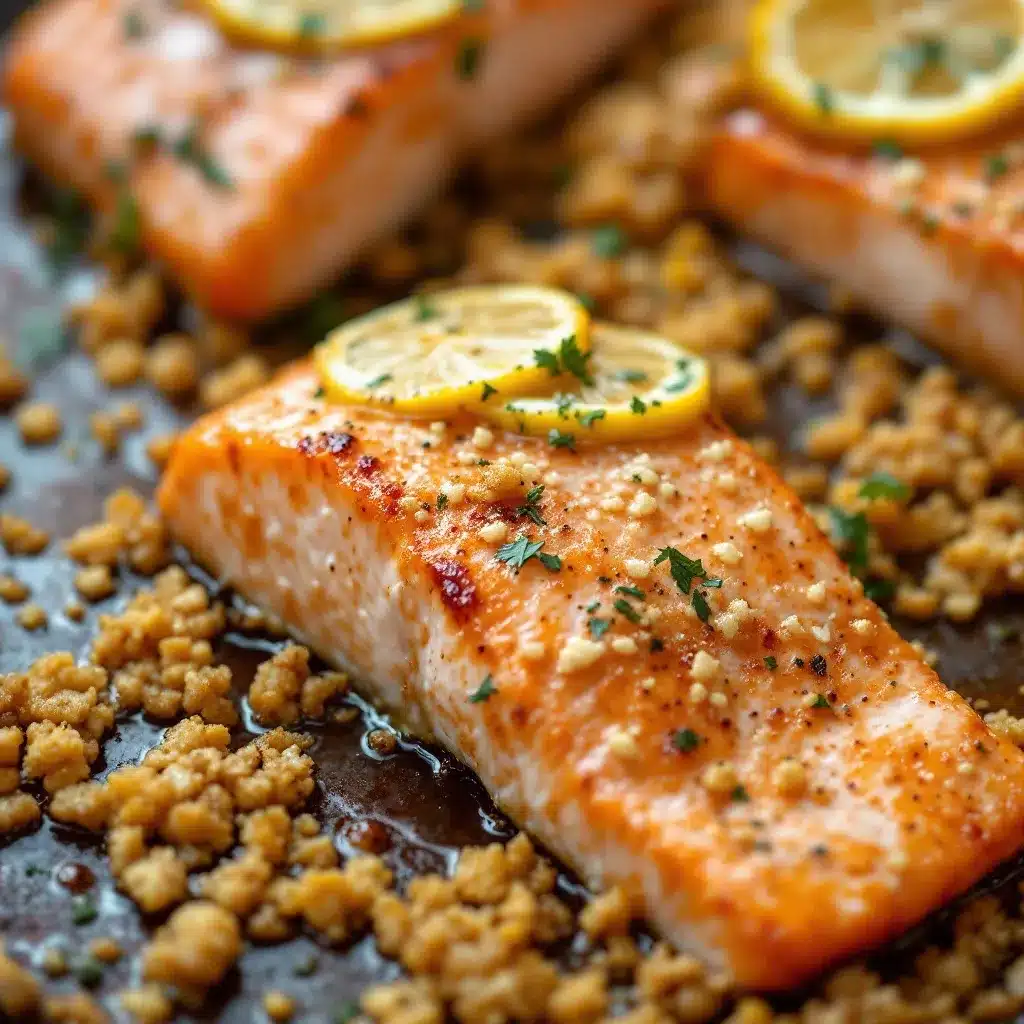
Let me walk you through this step by step. I’ve made this salmon more times than I can count, and these are the exact moves that work every time.
- Preheat your oven to 400°F (200°C). Position the rack in the middle. Don’t skip the preheat—putting salmon into a cold oven messes with the cooking time and texture. While it’s heating, line your sheet pan with parchment paper or foil for easy cleanup.
- Prepare the lemon garlic butter. In a small bowl, melt 4 tablespoons of unsalted butter in the microwave (about 30 seconds on high, or until just melted). Add the minced garlic (4-5 cloves), the zest of one whole lemon, 2 tablespoons of fresh lemon juice, ½ teaspoon of salt, and ¼ teaspoon of black pepper. Whisk it all together. The smell at this point is already amazing. Set aside about 2 tablespoons of this mixture for brushing on after cooking.
- Prep the salmon. Pat your salmon filet dry with paper towels. This is crucial—wet salmon won’t brown properly. If there are any pin bones, run your fingers along the filet and pull them out with tweezers. Place the salmon skin-side down (if using skin-on) on your prepared sheet pan. Drizzle with 1 tablespoon of olive oil and season with the remaining ½ teaspoon of salt and ¼ teaspoon of pepper.
- Add vegetables (optional). If you’re adding asparagus, green beans, or broccoli, toss them in a bowl with a little olive oil, salt, and pepper. Arrange them around the salmon on the sheet pan. Don’t overcrowd—give everything some breathing room so it roasts instead of steaming.
- Brush with butter mixture. Using a pastry brush or the back of a spoon, coat the salmon with the lemon garlic butter mixture. Reserve that 2 tablespoons you set aside for later. Make sure you get the sides of the filet too—that’s where the crispy edges come from.
- Roast the salmon. Place the sheet pan in the preheated oven. Roast for 12 to 15 minutes, depending on the thickness of your filet. For a 1-inch thick filet, start checking at 12 minutes. The salmon is done when it flakes easily with a fork and the internal temperature reaches 125°F to 130°F in the thickest part. The edges should look golden and slightly crispy.
- Finish with reserved butter. As soon as the salmon comes out of the oven, brush or spoon that reserved lemon garlic butter over the top. This step adds an extra layer of fresh garlic flavor that makes a real difference. Let it rest for 2 to 3 minutes—this helps the juices redistribute.
- Garnish and serve. Sprinkle with fresh chopped parsley and a few thin lemon slices if you’re feeling fancy. Serve immediately while it’s still warm and the butter is glossy.
A few things I’ve learned the hard way: Don’t walk away during the last few minutes of cooking. Salmon can go from perfectly flaky to dry in about 60 seconds. Also, if your filet is uneven in thickness (thicker on one end), consider cutting it into two pieces so the thinner part doesn’t overcook while the thicker part catches up. And if you’re doubling the recipe, use two sheet pans instead of crowding one—trust me on this.
For another weeknight dinner that’s just as forgiving, try my one-pan rosemary chicken. Same sheet pan magic, different flavor profile.
Cooking Tips & Techniques
After making this salmon probably fifty times (not exaggerating), I’ve collected some hard-won wisdom. Let me save you from my mistakes.
The biggest mistake people make is overcooking. I did it for years. Salmon that’s cooked past 135°F turns into dry, sad fish flakes. Invest in an instant-read thermometer—it’s the single best tool for perfect salmon. Pull it out at 125°F for medium-rare (my preference) or 130°F for medium. It will continue cooking slightly from residual heat as it rests.
Room temperature salmon cooks more evenly. Take your salmon out of the fridge 15 to 20 minutes before cooking. A cold filet straight from the fridge will cook unevenly—the outside will be done while the center is still raw. I learned this after serving lukewarm salmon to guests one time. Never again.
Don’t skip the pat-dry step. Moisture is the enemy of browning. If your salmon is wet, it will steam instead of roast, and you’ll miss out on those gorgeous crispy edges. I pat mine dry, then let it sit on a paper towel for a minute before seasoning.
Timing tip for multitaskers: While the salmon roasts, make a quick side dish. Rice, quinoa, or a simple green salad all work beautifully. The salmon takes about 15 minutes, so start your sides when you put the fish in the oven. Everything finishes around the same time.
One more thing about garlic: Fresh garlic burns easily. If your butter mixture starts looking brown before you brush it on, you’ve overheated it. Next time, melt the butter gently and add the garlic after it’s off the heat. Burnt garlic tastes bitter and will ruin the whole dish. I speak from experience—my kitchen smelled like regret for hours.
Variations & Adaptations
This recipe is wonderfully flexible. Here are some ways I’ve adapted it over the years:
Herb-Crusted Version: Add 2 tablespoons of fresh dill, thyme, or rosemary to the butter mixture. I tried this on a whim when I had leftover herbs from another recipe, and it was fantastic. Dill especially pairs beautifully with salmon.
Spicy Kick: Add ½ teaspoon of red pepper flakes or a pinch of cayenne to the butter. My husband loves this version. It adds warmth without overwhelming the salmon’s natural flavor.
Maple-Mustard Twist: Replace 1 tablespoon of the butter with 1 tablespoon of maple syrup and 1 teaspoon of Dijon mustard. The sweetness caramelizes in the oven and creates a beautiful glaze. I made this for a brunch gathering and it was gone in minutes.
Low-FODMAP Adaptation: Use garlic-infused olive oil instead of fresh garlic. The oil carries the garlic flavor without the compounds that cause digestive issues for some people. It works surprisingly well.
Dairy-Free Version: Substitute the butter with a high-quality vegan butter or use avocado oil. The texture will be slightly different, but the lemon and garlic still shine through. I’ve tested this with Miyoko’s vegan butter and it was genuinely good.
Sheet Pan Meal: Add baby potatoes (halved) and green beans to the pan. Toss them in olive oil and salt, then arrange around the salmon. The potatoes might need an extra 5 minutes of roasting, so start them first, then add the salmon and green beans later.
If you’re in the mood for something completely different but equally simple, check out my crispy baked chicken drumsticks. Same hands-off cooking philosophy, different protein.
Serving & Storage Suggestions
Serving: This salmon is best served warm, straight from the oven. The butter sauce will be glossy and the edges will still have that perfect crispiness. I like to serve it on a large platter with the roasted vegetables around it, drizzled with any remaining pan juices. A squeeze of fresh lemon right before serving brightens everything up.
What to serve with it: The possibilities are endless. A simple lemony Greek salad is my go-to for a light meal. For something heartier, try roasted baby potatoes, steamed rice, or crusty bread to soak up that garlic butter sauce. A side of roasted asparagus or green beans completes the sheet pan meal beautifully. For wine lovers, a crisp Sauvignon Blanc or a light Pinot Noir pairs wonderfully.
Storage: Leftover salmon keeps in an airtight container in the refrigerator for up to 3 days. The texture won’t be quite as perfect as fresh, but it’s still delicious. I actually love cold salmon flaked over a salad the next day for lunch.
Reheating: The best way to reheat is in a low oven (275°F) for about 10 minutes, or in a skillet over medium-low heat with a splash of water or broth. Cover the skillet to trap steam. Avoid the microwave—it will overcook the salmon and make it dry and rubbery. I learned this the hard way after ruining perfectly good leftovers.
Freezing: Cooked salmon freezes well for up to 2 months. Wrap it tightly in plastic wrap, then foil, and place in a freezer bag. Thaw overnight in the fridge and reheat gently. The texture won’t be exactly the same as fresh, but it’s still a great option for meal prep.
Flavor development: The lemon garlic flavor actually mellows and deepens overnight. I sometimes make extra on purpose just for next-day salmon salads or salmon cakes. The leftovers are a gift to your future self.
Nutritional Information & Benefits
Here’s the approximate nutritional breakdown for one serving (based on 4 servings, without vegetables):
| Nutrient | Amount per Serving |
|---|---|
| Calories | 380 |
| Protein | 35g |
| Fat | 25g |
| Saturated Fat | 10g |
| Carbohydrates | 2g |
| Fiber | 0g |
| Sugar | 1g |
| Sodium | 450mg |
| Vitamin D | 15mcg (75% DV) |
| Omega-3 Fatty Acids | 2.5g |
Salmon is one of the most nutrient-dense foods you can eat. It’s packed with high-quality protein, omega-3 fatty acids (which support heart and brain health), and vitamin D—something many of us don’t get enough of. The garlic adds allicin, a compound with anti-inflammatory properties, and the lemon provides a boost of vitamin C. This isn’t just a delicious dinner; it’s one that genuinely supports your health. I feel good serving it to my family because I know it’s nourishing them in ways that processed foods never could.
Dietary considerations: This recipe is naturally gluten-free, low-carb, and keto-friendly. For a dairy-free version, substitute the butter with avocado oil or vegan butter. It’s also Whole30-compliant if you use ghee instead of butter. Always check your specific dietary needs and adjust accordingly.
Conclusion
This Easy Sheet Pan Salmon with Lemon Garlic Butter has become my secret weapon for busy weeknights, last-minute dinner parties, and everything in between. It’s the recipe that taught me you don’t need complicated techniques or a dozen ingredients to create something genuinely memorable. Sometimes the simplest things are the ones that stick with you—and this salmon sticks with you.
I love this recipe because it’s forgiving. It doesn’t punish you for being tired or distracted. It works when you’re rushing, when you’re stressed, when you’re just trying to get dinner on the table without a meltdown. And somehow, it still tastes like you put real care into it. That’s rare, and it’s worth holding onto.
I’d love to hear how it goes for you. Did you add your own twist? Did your picky eater actually ask for seconds? Did you discover a new favorite side dish to go with it? Drop a comment below and let me know—I read every single one, and your stories honestly make my day. Share this recipe with someone who needs an easy win in the kitchen. And if you try it, tag me in your photos. There’s nothing I love more than seeing this salmon show up on your tables.
Now go preheat that oven. Dinner’s waiting.
Frequently Asked Questions
Can I use frozen salmon for this recipe?
Yes, but thaw it completely in the refrigerator overnight first. Pat it very dry before cooking—frozen salmon releases more moisture as it thaws, so extra drying is essential for good browning. Never cook salmon straight from frozen in this recipe; it will release too much water and steam instead of roast.
How do I know when the salmon is done without a thermometer?
Look for visual cues: the flesh should be opaque and flake easily when gently pressed with a fork. The color changes from translucent orange-pink to a uniform lighter pink. If you see white albumin (that white protein goo) oozing out, you’ve likely overcooked it slightly. The salmon should be just barely flaky in the thickest part.
What if I don’t have fresh garlic?
Fresh garlic really does make a difference here, but in a pinch, you can use 1 teaspoon of garlic powder mixed into the melted butter. The flavor won’t be as bright, and you’ll miss that aromatic quality, but it will still be good. Avoid jarred minced garlic—it has a different flavor profile and can taste metallic when roasted.
Can I make this recipe ahead of time?
This salmon is best served fresh from the oven, but you can prep ahead. Mix the lemon garlic butter (minus the parsley) up to 2 days in advance and store it in the fridge. Pat the salmon dry and keep it refrigerated. When you’re ready to cook, simply brush the butter on and roast. Leftover cooked salmon keeps well for 3 days and is excellent cold on salads.
How do I prevent the salmon from sticking to the pan?
Use parchment paper or aluminum foil, and don’t skip the olive oil drizzle on the pan. Even with a non-stick sheet pan, I always line it with parchment for easy cleanup. The butter in the recipe also helps create a barrier. Let the salmon rest for a minute after cooking before trying to lift it—this allows the natural release to happen.
Pin This Recipe!
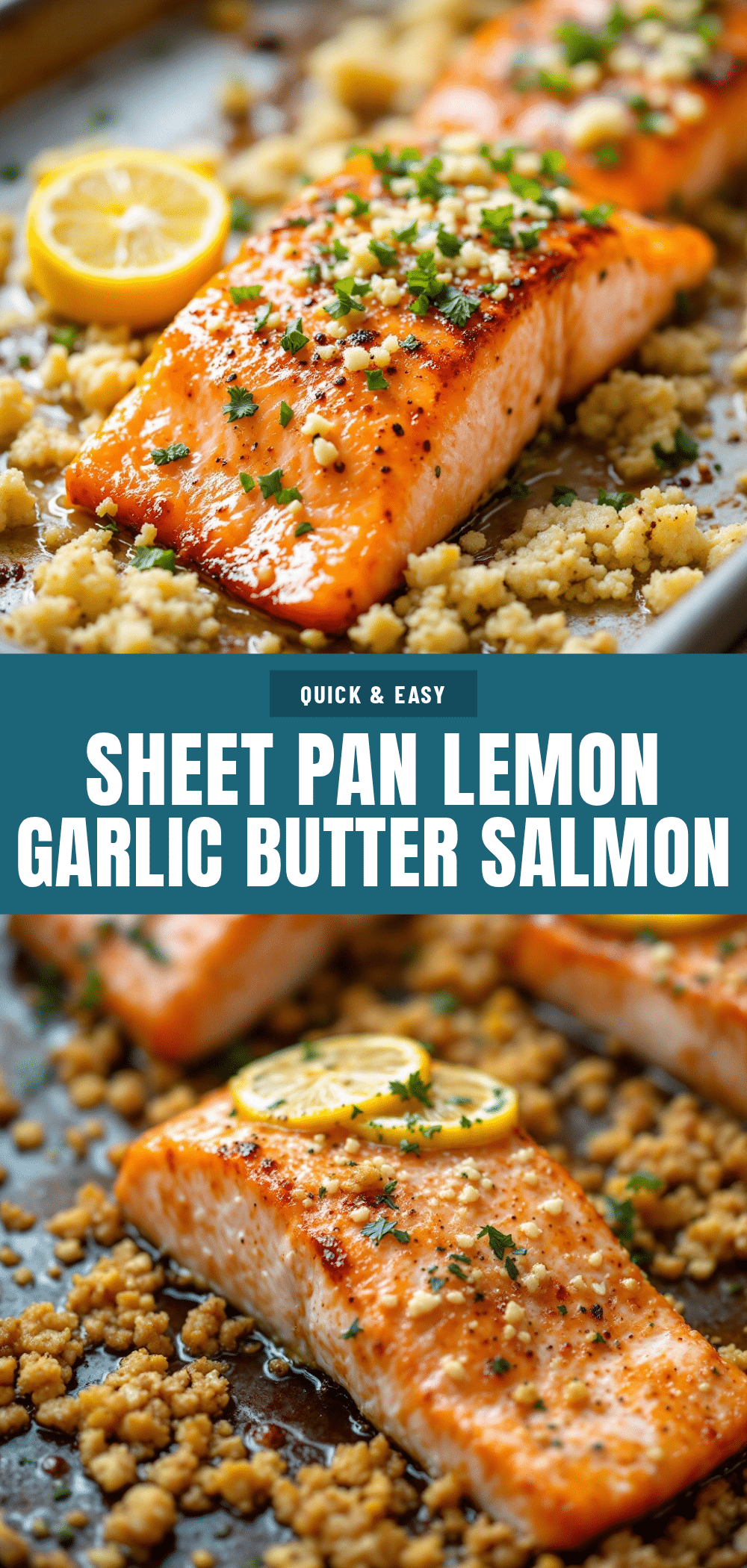
Easy Sheet Pan Salmon in Lemon Garlic Butter

This Easy Sheet Pan Salmon with Lemon Garlic Butter is a quick and delicious dinner that comes together in under 30 minutes. With simple ingredients like salmon, butter, garlic, and lemon, it’s perfect for busy weeknights or last-minute dinner parties.
- Prep Time: 10 minutes
- Cook Time: 15 minutes
- Total Time: 25 minutes
- Yield: 4 servings 1x
- Category: Main Course
- Cuisine: American
Ingredients
- 1.5 to 2 pounds salmon filet (skin-on or skin-off)
- 4 tablespoons unsalted butter, melted
- 4 to 5 cloves fresh garlic, minced
- 1 large lemon (zest and juice)
- 1 tablespoon extra-virgin olive oil
- 1 teaspoon kosher salt (or ¾ teaspoon table salt)
- ½ teaspoon freshly ground black pepper
- 2 tablespoons fresh parsley, chopped (optional for garnish)
- Optional: 2 cups vegetables (asparagus, green beans, or broccoli), tossed in olive oil and salt
Instructions
- Preheat your oven to 400°F (200°C). Position the rack in the middle. Line a sheet pan with parchment paper or aluminum foil.
- In a small bowl, melt 4 tablespoons of unsalted butter in the microwave (about 30 seconds on high). Add minced garlic (4-5 cloves), zest of one lemon, 2 tablespoons of fresh lemon juice, ½ teaspoon of salt, and ¼ teaspoon of black pepper. Whisk together. Set aside about 2 tablespoons of this mixture for brushing after cooking.
- Pat the salmon filet dry with paper towels. Remove any pin bones. Place the salmon skin-side down on the prepared sheet pan. Drizzle with 1 tablespoon of olive oil and season with the remaining ½ teaspoon of salt and ¼ teaspoon of pepper.
- If adding vegetables, toss them in a bowl with a little olive oil, salt, and pepper. Arrange them around the salmon on the sheet pan.
- Brush the salmon with the lemon garlic butter mixture, reserving 2 tablespoons for later. Make sure to coat the sides as well.
- Roast for 12 to 15 minutes, depending on thickness. For a 1-inch thick filet, start checking at 12 minutes. The salmon is done when it flakes easily with a fork and the internal temperature reaches 125°F to 130°F in the thickest part.
- As soon as the salmon comes out of the oven, brush or spoon the reserved lemon garlic butter over the top. Let it rest for 2 to 3 minutes.
- Sprinkle with fresh chopped parsley and a few thin lemon slices if desired. Serve immediately.
Notes
Don’t overcook the salmon; use an instant-read thermometer for best results. Let the salmon come to room temperature for 15-20 minutes before cooking for even cooking. Pat the salmon dry to ensure crispy edges. Fresh garlic is recommended over jarred for best flavor.
Nutrition
- Serving Size: 1 serving (without v
- Calories: 380
- Sugar: 1
- Sodium: 450
- Fat: 25
- Saturated Fat: 10
- Carbohydrates: 2
- Protein: 35
Keywords: sheet pan salmon, lemon garlic butter salmon, easy salmon recipe, quick salmon dinner, healthy salmon recipe