Love this? Save it for later!
Share the inspiration with your friends
I figured a hidden-veggie mac and cheese would taste like a compromise—something you eat because you should, not because you want to. It took about one bite of this creamy baked butternut squash mac and cheese for that assumption to fall apart completely. The squash doesn’t hide in the background; it melts into the cheese sauce, making everything silkier and a little sweet in a way that catches you off guard. I was standing at the counter, fork in hand, trying to figure out why this tasted better than the boxed stuff I grew up on.
The answer, honestly, is that the squash does the heavy lifting. It adds body without needing a ton of heavy cream, and it brings this subtle, nutty sweetness that plays off the sharp cheddar in a way that just works. My first attempt was a little thin, and I learned the hard way that roasting the squash until it’s truly soft makes all the difference. You want it almost falling apart before it hits the blender.
This recipe came together on a random Tuesday when I had half a butternut squash sitting on the counter and a serious craving for comfort food. I didn’t plan it. I just started roasting, blending, and stirring, and somewhere between the nutmeg and the breadcrumb topping, I realized I had stumbled onto something worth repeating. It’s the kind of dish that makes you feel clever without trying too hard.
Why You’ll Love This Recipe
This isn’t your average mac and cheese. It’s richer, creamier, and somehow lighter at the same time. Here is why this creamy baked butternut squash mac and cheese deserves a permanent spot in your dinner rotation:
- Quick & Easy: Comes together in about 30 minutes, especially if you use pre-cubed squash. Perfect for those nights when you need dinner on the table fast.
- Simple Ingredients: No fancy cheese shops required. Sharp cheddar, a little Parmesan, and pantry staples are all you need.
- Perfect for Fall: Great for cozy weeknight dinners, Thanksgiving sides, or when you just want something warm and comforting.
- Crowd-Pleaser: Kids love it, adults love it, and nobody guesses there is a vegetable hiding in the sauce.
- Unbelievably Delicious: The texture is velvety, the flavor is deeply cheesy with a hint of sweetness, and the crispy panko topping adds just the right crunch.
What sets this recipe apart is the technique. Instead of just boiling squash and calling it a day, we roast it first to concentrate the natural sugars. Then we blend it into a silky puree that becomes the base of the cheese sauce. This isn’t a “healthy” compromise—it is genuinely the best mac and cheese I have ever made. The first time I served it to my family, my husband asked what I did differently. When I told him, he just shook his head and went back for seconds.
What Ingredients You Will Need
This recipe uses simple, wholesome ingredients to deliver bold flavor and satisfying texture without the fuss. Most of these are pantry staples, and the squash is the star that ties everything together.
- Butternut squash, peeled and cubed (2 cups) – Roasted until tender and blended into a creamy puree. This is the secret to the silky sauce. Look for firm, deep-orange squash for the sweetest flavor.
- Elbow macaroni (8 ounces) – Classic choice, but any short pasta works. I have used shells and cavatappi with great results.
- Unsalted butter (2 tablespoons) – For the roux and for toasting the panko. I prefer Kerrygold for its rich taste.
- All-purpose flour (2 tablespoons) – Thickens the sauce. A gluten-free 1:1 blend works if needed.
- Whole milk (1 ½ cups) – Creates a rich, creamy base. Use 2% if that is what you have, but avoid skim milk.
- Sharp cheddar cheese, shredded (1 ½ cups) – The main cheese. Buy a block and shred it yourself—pre-shredded has anti-caking agents that affect melting.
- Parmesan cheese, grated (½ cup) – Adds a salty, nutty depth to the sauce.
- Dijon mustard (1 teaspoon) – A secret ingredient that brightens the cheese flavor without tasting like mustard.
- Garlic powder (½ teaspoon) – For a subtle savory note.
- Nutmeg, freshly grated (¼ teaspoon) – A pinch that makes the squash and cheese sing together.
- Salt and black pepper – To taste. Go easy on the salt since the cheeses add plenty.
- Panko breadcrumbs (½ cup) – For the crispy topping. Regular breadcrumbs work, but panko gives a better crunch.
- Fresh thyme or parsley (optional) – For garnish and a pop of color.
Substitution Guidance: For a gluten-free version, use gluten-free pasta and a 1:1 gluten-free flour blend. Swap the milk with unsweetened oat milk for a dairy-free option, and use nutritional yeast instead of Parmesan. The texture will be slightly different, but still delicious.
Equipment Needed
You do not need a fully stocked professional kitchen for this creamy baked butternut squash mac and cheese. Here is what you will need:
- Baking sheet – For roasting the squash. A rimmed sheet works best to catch any juices.
- Large pot – For boiling the pasta. You will also use it for the cheese sauce, so choose one that holds at least 4 quarts.
- Blender or food processor – To puree the roasted squash until smooth. An immersion blender works too, but the texture is better with a countertop blender.
- Medium saucepan – For making the roux and cheese sauce.
- Whisk – Essential for a lump-free sauce. A silicone whisk is my favorite because it doesn’t scratch nonstick pans.
- 8×8 or 9×9 baking dish – For baking the assembled mac and cheese. A 2-quart casserole dish also works.
- Cheese grater – Please shred your own cheese. It melts so much better than the bagged stuff.
Budget-Friendly Tip: If you do not have a blender, you can mash the roasted squash with a fork or potato masher. The texture will be a little chunkier, but it still tastes great. I have done this more times than I care to admit.
Preparation Method
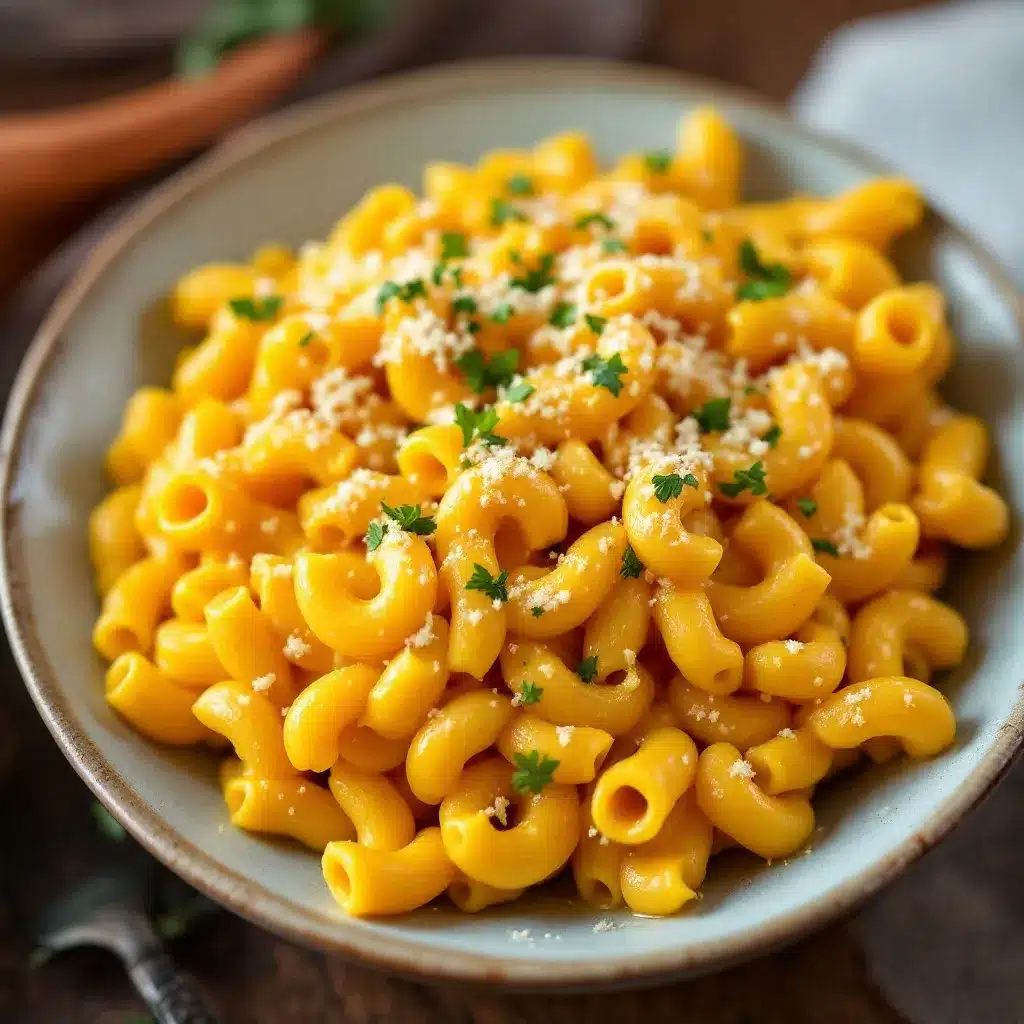
Follow these steps carefully, and you will have a creamy baked butternut squash mac and cheese that rivals any restaurant version. The key is taking time with each stage—rushing leads to a grainy sauce or overcooked pasta.
- Preheat your oven to 400°F (200°C). Line a baking sheet with parchment paper for easy cleanup.
- Roast the squash. Toss the cubed butternut squash with 1 tablespoon of olive oil, a pinch of salt, and a crack of black pepper. Spread in a single layer on the prepared baking sheet. Roast for 20-25 minutes, flipping halfway, until the squash is fork-tender and the edges are lightly caramelized. The smell at this point is incredible—sweet and nutty.
- Cook the pasta. While the squash roasts, bring a large pot of salted water to a boil. Add the elbow macaroni and cook according to package directions until al dente. Undercook by about 1 minute since the pasta will continue cooking in the oven. Drain and set aside. Do not rinse the pasta—the starch helps the sauce cling.
- Puree the squash. Transfer the roasted squash to a blender. Add ½ cup of the milk and blend on high until completely smooth. You may need to scrape down the sides once. The puree should look like a thick, velvety orange soup. Set aside.
- Make the roux. In a medium saucepan, melt the butter over medium heat. Once it is bubbling, whisk in the flour. Cook for 1-2 minutes, stirring constantly, until the mixture turns a pale golden color and smells slightly nutty. This step removes the raw flour taste.
- Build the cheese sauce. Slowly pour in the remaining 1 cup of milk while whisking continuously. Add the squash puree, Dijon mustard, garlic powder, nutmeg, and a pinch of salt. Keep whisking until the sauce thickens, about 3-4 minutes. It should coat the back of a spoon. Remove from heat.
- Add the cheese. Stir in the shredded cheddar and grated Parmesan a handful at a time, waiting until each addition melts before adding the next. The sauce will turn a gorgeous golden-orange. Taste and adjust salt and pepper as needed. If the sauce seems too thick, add a splash of warm milk.
- Combine and transfer. Pour the cooked pasta into the cheese sauce and stir until every piece is coated. Transfer everything to a greased 8×8 baking dish. Spread it into an even layer.
- Make the topping. In a small bowl, melt 1 tablespoon of butter. Stir in the panko breadcrumbs and a pinch of salt. Sprinkle evenly over the mac and cheese.
- Bake. Place the dish in the oven and bake at 375°F (190°C) for 15-18 minutes, until the sauce is bubbly around the edges and the topping is golden brown. If you want extra crunch, broil for the last 1-2 minutes, but watch it closely—panko burns fast.
- Rest and serve. Let the dish rest for 5 minutes before serving. This allows the sauce to set slightly so it doesn’t run all over the plate. Garnish with fresh thyme or parsley if desired.
Sensory Cue: When the sauce is ready, it should feel heavy on the whisk and look glossy, not greasy. If it looks separated, you may have added the cheese too quickly or over the heat—next time, take the pan off the heat before stirring in the cheese.
Cooking Tips & Techniques
After making this creamy baked butternut squash mac and cheese more times than I can count, here are the things I wish someone had told me earlier:
Roast the squash properly. The first time I made this, I under-roasted the squash because I was impatient. The puree was watery, and the sauce never thickened right. Do not skip the roasting step—it concentrates the flavor and removes excess moisture. You want the squash to be so soft that a fork slides through it with zero resistance.
Shred your own cheese. I know it is tempting to buy the bagged shreds, but they are coated with potato starch and cellulose to prevent clumping. That coating also prevents smooth melting. Spend the two minutes shredding a block of cheddar—your sauce will be silky instead of grainy.
Do not overcook the pasta. Undercook it by a full minute. The pasta absorbs more liquid from the sauce as it bakes, and if you start with fully cooked noodles, you will end up with mushy mac and cheese. Al dente is your friend.
Season in layers. Add a little salt at every stage—to the squash before roasting, to the pasta water, and to the sauce. But go easy on the final salt because the cheeses bring plenty. I once oversalted the sauce and had to start over. Learn from my mistake.
Use a thermometer for the sauce. If you have one, keep the sauce between 150°F and 160°F when adding the cheese. Too hot, and the cheese separates into a greasy mess. Too cold, and it clumps instead of melting.
Make the topping ahead. You can toast the panko in a dry skillet while the pasta bakes, then sprinkle it on just before serving. This keeps it extra crunchy if you are reheating leftovers.
Variations & Adaptations
This creamy baked butternut squash mac and cheese is endlessly adaptable. Here are some ways to make it your own:
Add Protein: Stir in 1 cup of shredded rotisserie chicken, cooked crumbled bacon, or leftover pulled pork before baking. It turns the dish into a complete meal. I have done this with leftover BBQ pulled pork, and the smoky-sweet combo is unreal.
Make it Spicy: Add ½ teaspoon of smoked paprika and a pinch of cayenne pepper to the cheese sauce. Top with sliced jalapeños before baking for a kick that cuts through the richness.
Go Dairy-Free: Use unsweetened oat milk, dairy-free butter, and vegan cheddar shreds. The sauce will be a little thinner, but the squash helps maintain the creamy texture. Nutritional yeast adds a cheesy flavor without the dairy.
Swap the Squash: No butternut squash? Use roasted sweet potato, pumpkin puree, or even carrot puree. Each gives a slightly different sweetness and color. For a fall twist, try the pumpkin sourdough bread on the side for dipping.
Add Greens: Stir in a handful of chopped spinach or kale after the sauce is made. The residual heat will wilt it perfectly without overcooking. It adds color and a little extra nutrition.
Try a Different Cheese: Swap half the cheddar for Gruyère, fontina, or smoked Gouda. Each brings a unique flavor—Gruyère is nutty, fontina is buttery, and smoked Gouda adds a campfire note that pairs beautifully with the squash.
Serving & Storage Suggestions
This dish is best served warm, straight from the oven, when the topping is still crispy and the sauce is molten. Let it rest for 5 minutes so it holds its shape on the plate. I like to serve it in shallow bowls with a simple side salad dressed with lemon vinaigrette—the acidity cuts through the richness. A side of roasted broccoli or green beans also works beautifully.
For a cozy fall dinner, pair it with chicken and wild rice soup for a soup-and-mac combo that feels like a warm hug.
Storage: Leftovers keep in an airtight container in the refrigerator for up to 4 days. The sauce thickens as it sits, so do not be alarmed if it looks more like a casserole than pasta the next day. That is normal.
Reheating: The best way to reheat is in the oven at 350°F (175°C) for 10-15 minutes, covered with foil to prevent the topping from burning. Add a splash of milk before reheating to restore the creamy texture. The microwave works in a pinch, but the sauce can get grainy, and the topping loses its crunch.
Freezing: Assemble the mac and cheese in a freezer-safe dish but do not add the panko topping. Cover tightly with foil and freeze for up to 3 months. To bake, thaw overnight in the refrigerator, add the panko topping, and bake as directed. You may need to add 5-10 minutes to the baking time.
Flavor Development: Honestly, this dish tastes even better the next day. The flavors meld together overnight, and the squash sweetness becomes more pronounced. I have been known to make a double batch just for the leftovers.
Nutritional Information & Benefits
This creamy baked butternut squash mac and cheese is comfort food with a nutritional upgrade. Here is the estimated breakdown per serving (based on 6 servings):
- Calories: 420
- Protein: 18g
- Fat: 18g
- Carbohydrates: 48g
- Fiber: 4g
- Sugar: 8g
- Sodium: 520mg
Health Benefits: Butternut squash is packed with vitamin A (over 400% of your daily needs per cup), vitamin C, and fiber. It supports eye health, immune function, and digestion. The cheese adds calcium and protein, while the whole milk provides vitamin D. Compared to traditional mac and cheese, this version has about 30% fewer calories and half the saturated fat, thanks to the squash replacing some of the heavy cream and butter.
Dietary Considerations: This recipe is vegetarian. For gluten-free, use gluten-free pasta and flour. For lower fat, use 2% milk and reduced-fat cheddar. The nut-free and egg-free status makes it suitable for common allergies.
Conclusion
This creamy baked butternut squash mac and cheese is proof that comfort food does not have to be a guilty pleasure. It is rich, satisfying, and packed with flavor that comes from real ingredients, not processed cheese powder. The squash adds a natural sweetness and velvety texture that makes every bite feel indulgent, even though you are eating a vegetable.
I love this recipe because it bridges the gap between what I want to eat and what I want to feed my family. It is the dish I make when I need a win—a guaranteed crowd-pleaser that leaves everyone asking for the recipe. And honestly, it is simple enough for a Tuesday night but fancy enough for company.
Try it once, and I bet you will find yourself making it on repeat. Play with the variations, swap in your favorite cheese, and make it your own. When you do, come back and let me know how it turned out in the comments. I would love to hear about your version.
Frequently Asked Questions
Can I use frozen butternut squash instead of fresh?
Yes, absolutely. Thaw the frozen squash first, pat it dry to remove excess moisture, and roast it at 400°F for about 15-18 minutes. Frozen squash releases more water than fresh, so you may need to drain it after roasting to avoid a watery sauce.
Why is my cheese sauce grainy?
Grainy sauce usually happens when the cheese is added to liquid that is too hot, or when pre-shredded cheese is used. Keep the heat low or remove the pan from the stove before stirring in the cheese. Always shred your own cheddar from a block for the smoothest melt.
Can I make this ahead of time?
Yes. Assemble the mac and cheese completely, including the panko topping, and refrigerate for up to 24 hours before baking. Add 5-10 minutes to the baking time since you are starting from cold. You can also freeze it unbaked for up to 3 months.
What pasta shapes work best besides elbows?
Any short pasta works well. Shells, cavatappi, rotini, and penne are all excellent choices because their shapes catch and hold the creamy sauce. Avoid long pasta like spaghetti—it does not bake as evenly in a casserole dish.
How do I make the topping extra crispy?
Toast the panko in a dry skillet over medium heat for 2-3 minutes before sprinkling it over the dish. You can also mix the panko with an extra tablespoon of melted butter and a pinch of garlic powder. For the crispiest result, broil the finished dish for 1-2 minutes, watching closely so it does not burn.
Pin This Recipe!
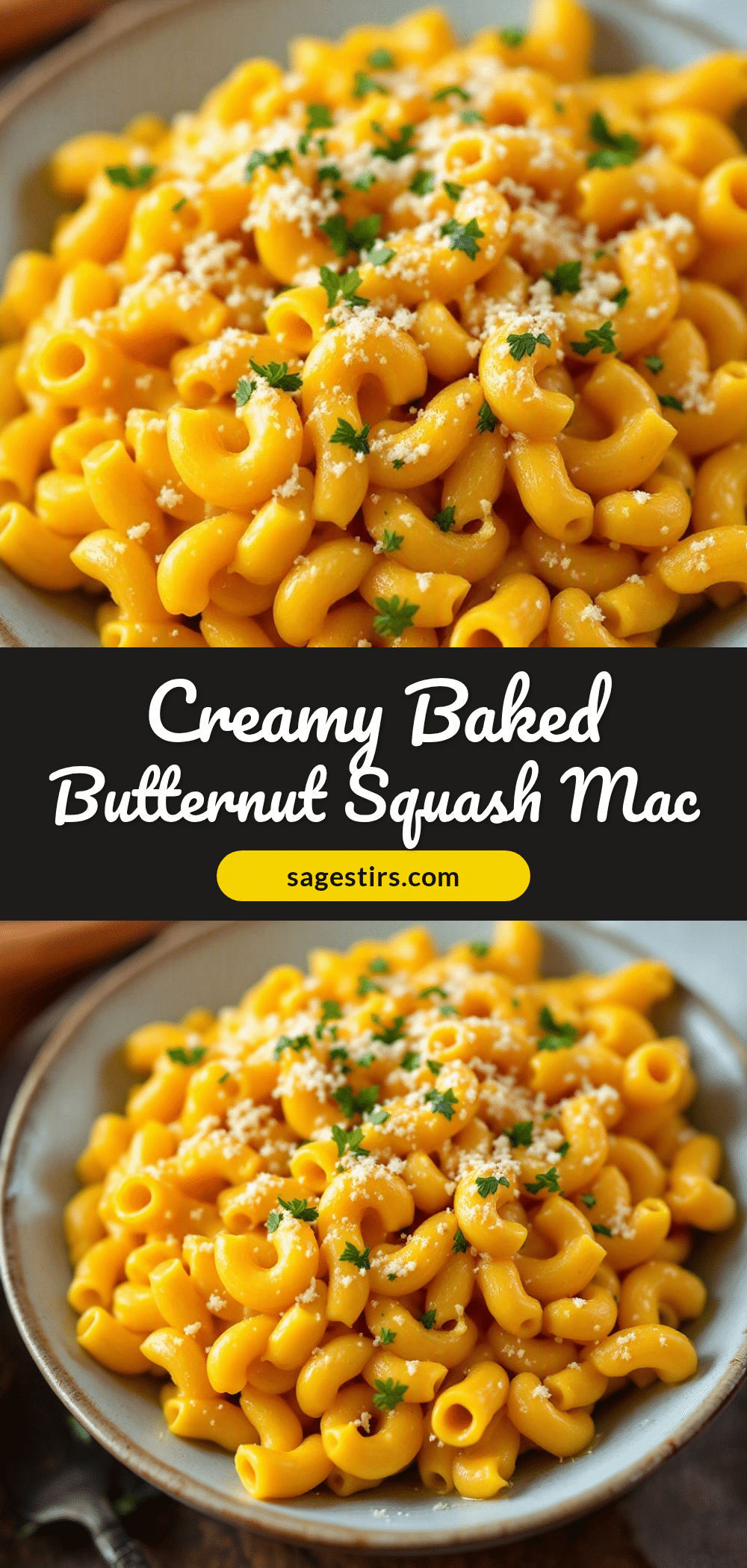
Creamy Baked Butternut Squash Mac and Cheese (Easy 30-Min Recipe)

This creamy baked butternut squash mac and cheese is rich, velvety, and surprisingly light. Roasted squash blends into a silky cheese sauce, creating a comforting dish that’s ready in about 30 minutes and packed with hidden veggies.
- Prep Time: 10 minutes
- Cook Time: 20 minutes
- Total Time: 30 minutes
- Yield: 6 servings 1x
- Category: Main Course
- Cuisine: American
Ingredients
- 2 cups butternut squash, peeled and cubed
- 8 ounces elbow macaroni
- 2 tablespoons unsalted butter
- 2 tablespoons all-purpose flour
- 1 ½ cups whole milk
- 1 ½ cups sharp cheddar cheese, shredded
- ½ cup Parmesan cheese, grated
- 1 teaspoon Dijon mustard
- ½ teaspoon garlic powder
- ¼ teaspoon freshly grated nutmeg
- Salt and black pepper to taste
- ½ cup panko breadcrumbs
- 1 tablespoon olive oil (for roasting squash)
- Fresh thyme or parsley for garnish (optional)
Instructions
- Preheat your oven to 400°F (200°C). Line a baking sheet with parchment paper.
- Toss cubed butternut squash with 1 tablespoon olive oil, a pinch of salt, and black pepper. Spread in a single layer on the prepared baking sheet. Roast for 20-25 minutes, flipping halfway, until fork-tender and edges are lightly caramelized.
- While squash roasts, bring a large pot of salted water to a boil. Cook elbow macaroni according to package directions until al dente, undercooking by about 1 minute. Drain and set aside (do not rinse).
- Transfer roasted squash to a blender. Add ½ cup of the milk and blend on high until completely smooth. Set aside.
- In a medium saucepan, melt butter over medium heat. Whisk in flour and cook for 1-2 minutes, stirring constantly, until pale golden and nutty.
- Slowly pour in remaining 1 cup milk while whisking continuously. Add squash puree, Dijon mustard, garlic powder, nutmeg, and a pinch of salt. Whisk until sauce thickens, about 3-4 minutes. Remove from heat.
- Stir in shredded cheddar and grated Parmesan a handful at a time, waiting until each addition melts before adding the next. Taste and adjust salt and pepper as needed.
- Pour cooked pasta into the cheese sauce and stir until evenly coated. Transfer to a greased 8×8 baking dish.
- In a small bowl, melt 1 tablespoon butter. Stir in panko breadcrumbs and a pinch of salt. Sprinkle evenly over the mac and cheese.
- Bake at 375°F (190°C) for 15-18 minutes, until bubbly around edges and topping is golden brown. For extra crunch, broil for 1-2 minutes, watching closely.
- Let rest for 5 minutes before serving. Garnish with fresh thyme or parsley if desired.
Notes
Roast squash until very soft for best texture. Shred cheese from a block for smooth melting. Undercook pasta by 1 minute to avoid mushiness. For gluten-free, use gluten-free pasta and flour. For dairy-free, use unsweetened oat milk, dairy-free butter, and vegan cheese. Leftovers keep refrigerated for up to 4 days; reheat in oven at 350°F with a splash of milk.
Nutrition
- Serving Size: 1 serving (about 1 c
- Calories: 420
- Sugar: 8
- Sodium: 520
- Fat: 18
- Saturated Fat: 10
- Carbohydrates: 48
- Fiber: 4
- Protein: 18
Keywords: butternut squash mac and cheese, baked mac and cheese, hidden veggie mac and cheese, easy mac and cheese, fall comfort food, vegetarian mac and cheese