Love this? Save it for later!
Share the inspiration with your friends
The front door banged shut and I heard, “Something smells incredible in here!” before the keys even hit the bowl. It was my neighbor, who had texted me ten minutes earlier asking if I was home. I had completely forgotten to reply. My hands were covered in flour, a blob of sticky pumpkin sourdough starter was clinging to my knuckle, and the kitchen looked like a cinnamon bomb had gone off. The only thing in the fridge that was remotely presentable was a jar of homemade apple butter from last weekend’s farmers market trip. I offered her some on a slice of the just-cooled bread, still warm in the center. She took one bite, closed her eyes, and said, “This is it. This is the fall bread.”
And honestly? She wasn’t wrong. This cozy pumpkin sourdough bread has become my unofficial autumn mascot. It’s the loaf I make when the air gets crisp and I want the house to smell like a candle shop, but better. It’s the bread that makes people linger at the counter, tearing off pieces without asking for a plate. I didn’t set out to create a masterpiece—I was just trying to use up some pumpkin purée and a neglected jar of sourdough starter sitting in the back of the fridge. But that first bite, with its soft crumb and crackling crust laced with cinnamon and ginger, told me I had stumbled onto something worth keeping.
This isn’t a complicated bread. It doesn’t require a stand mixer or a proofing box or a degree in bread science. It just needs a little patience, a few fall spices, and the kind of starter that’s been fed recently enough to be happy. The result is a loaf that’s deeply flavorful, slightly tangy from the fermentation, and impossibly soft on the inside with a crust that shatters when you bite into it. It’s the kind of bread that makes a simple slice of butter feel like a special occasion.
Why You’ll Love This Recipe
I’ve tested this cozy pumpkin sourdough bread at least a dozen times now, tweaking the hydration, the spice ratios, the proofing times. I’ve made it with active starter and with discard (it works both ways, though active starter gives a better rise). I’ve even brought it to a Friendsgiving where it disappeared before the turkey hit the table. Here’s why this recipe stands out:
- Incredibly Soft & Tender: The pumpkin purée adds so much moisture that this bread stays soft for days. No dry, crumbly slices here.
- Perfect Fall Flavor: Cinnamon, ginger, nutmeg, and a touch of cloves create that warm, cozy spice blend that screams autumn. It’s like pumpkin pie in bread form.
- Naturally Sweetened: A little maple syrup or brown sugar (your choice) gives it just enough sweetness without being dessert-like. It’s perfect for breakfast toast or alongside a bowl of soup.
- Beginner-Friendly Sourdough: If you’ve been intimidated by sourdough, this is a great place to start. The pumpkin makes the dough forgiving and easy to handle. It’s much more relaxed than a traditional lean dough.
- Uses Discard or Active Starter: Got sourdough discard piling up? This is one of my favorite ways to use it. The flavor is even better with a mature, tangy discard.
- Makes the Whole House Smell Amazing: Seriously. Your kitchen will smell like a bakery in a pumpkin patch. It’s aromatherapy and baking in one.
This isn’t just another pumpkin bread recipe. The fermentation from the sourdough adds a subtle tang that balances the sweetness of the pumpkin and spices perfectly. It’s what makes you go back for “just one more slice.” Plus, it’s a great way to impress guests without a ton of effort. I’ve served it slathered with salted butter for brunch, toasted with a drizzle of honey for an afternoon snack, and even as a side for a bowl of my cozy slow cooker tomato basil soup on a chilly evening. It just works everywhere.
What Ingredients You Will Need
This recipe relies on simple, wholesome ingredients that come together to create something truly special. The pumpkin and sourdwork in tandem to create a moist, flavorful loaf that’s far more interesting than your average quick bread. Here’s what you’ll need:
- Pumpkin Purée (1 cup / 245g): Make sure you’re using 100% pumpkin purée, not pumpkin pie filling. The filling has added sugar and spices that will throw off the balance. I usually grab a can of Libby’s, but homemade purée works beautifully too. Just make sure it’s not watery—if it seems loose, let it drain in a fine-mesh strainer for 30 minutes.
- Sourdough Starter (1/2 cup / 120g): You can use active, bubbly starter for the best rise, or sourdough discard for a more tangy flavor and slightly denser crumb. I’ve made this both ways and honestly love the discard version for its deeper sour notes. Just make sure your starter is at room temperature.
- Bread Flour (3 cups / 360g): Bread flour gives this loaf structure and a chewy crumb. All-purpose flour will work in a pinch, but the bread won’t be quite as tall or have the same satisfying chew. I’ve used King Arthur Bread Flour for years and it never lets me down.
- Whole Wheat Flour (1/2 cup / 60g): This adds a lovely nuttiness and a bit of heartiness. It also helps the bread stay moist. You can substitute with more bread flour if you don’t have whole wheat on hand.
- Warm Water (1/2 cup / 120ml): Use filtered water if your tap water is heavily chlorinated, as chlorine can inhibit fermentation. The water should be lukewarm, about 80-85°F (27-29°C)—warm to the touch but not hot.
- Maple Syrup or Brown Sugar (3 tablespoons): I prefer maple syrup for its complex flavor, but brown sugar works beautifully too. The sweetness is subtle—it’s meant to enhance the pumpkin and spices, not overpower them.
- Olive Oil or Melted Butter (2 tablespoons): This adds richness and helps keep the crumb tender. I often use a good quality olive oil for a fruity note, but melted unsalted butter is my go-to for a more classic flavor.
- Salt (1 1/2 teaspoons): Don’t skimp on the salt—it enhances all the other flavors and controls fermentation. I use fine sea salt.
- Pumpkin Pie Spice (2 teaspoons): You can use a store-bought blend or make your own. My homemade mix is 1 teaspoon cinnamon, 1/2 teaspoon ginger, 1/4 teaspoon nutmeg, and 1/4 teaspoon cloves. Sometimes I add a pinch of allspice too.
- Cinnamon (1 teaspoon): Because you can never have too much cinnamon in the fall. I add this separately from the pumpkin pie spice for an extra warm kick.
Optional Add-ins: I love folding in 1/2 cup of toasted pecans or pepitas for crunch. Dried cranberries or chopped crystallized ginger are also fantastic. If you’re feeling indulgent, a handful of dark chocolate chips makes this bread dangerously good.
Equipment Needed
You don’t need a ton of fancy gear for this cozy pumpkin sourdough bread, but a few specific tools make the process smoother. Here’s what I use:
- Large Mixing Bowl: A good-sized bowl is essential for mixing and doing your stretch-and-folds. I use a ceramic bowl because it retains warmth well.
- Digital Kitchen Scale: I cannot recommend this enough. Baking by weight is far more accurate than cups, especially with sourdough. It’s the difference between a good loaf and a great one.
- Danish Dough Whisk: This is my secret weapon for mixing sticky doughs. It combines ingredients without overworking the dough. A wooden spoon or your hands work too.
- Bench Scraper: Perfect for dividing dough, cleaning your work surface, and tucking the dough into a ball. A plastic one is gentle on your counter.
- Banneton or Proofing Basket (8-9 inch): This gives the bread its beautiful shape and allows air circulation during the final proof. If you don’t have one, a colander lined with a floured kitchen towel works perfectly.
- Dutch Oven (5-6 quart): This is key for achieving that crackling crust. The steam trapped inside mimics a professional bread oven. If you don’t have a Dutch oven, you can use a heavy baking sheet and place a metal pan of boiling water on the rack below.
- Parchment Paper: Makes transferring the dough into the hot Dutch oven a breeze. No sticking, no burns.
- Lame or Sharp Knife: For scoring the dough before baking. A lame gives you clean, beautiful cuts. A serrated knife works in a pinch.
Preparation Method

Making this cozy pumpkin sourdough bread takes a little time, but most of it is hands-off. The actual active work is maybe 20 minutes spread across the day. Here’s how I do it:
- Mix the Dough (8:00 AM): In a large bowl, combine 1/2 cup of your sourdough starter, 1/2 cup warm water, 1 cup pumpkin purée, 3 tablespoons maple syrup, and 2 tablespoons olive oil. Whisk until smooth. Add 3 cups bread flour, 1/2 cup whole wheat flour, 1 1/2 teaspoons salt, 2 teaspoons pumpkin pie spice, and 1 teaspoon cinnamon. Mix with a dough whisk or your hands until a shaggy dough forms. It will be sticky—that’s normal. Cover the bowl with a damp towel and let it rest for 30 minutes (this is called the autolyse).
- Stretch and Folds (8:30 AM – 10:00 AM): Every 30 minutes for the next 2 hours, perform a set of stretch and folds. Wet your hand slightly to prevent sticking. Grab one side of the dough, stretch it up as high as it will go without tearing, and fold it over the top. Rotate the bowl a quarter turn and repeat. Do this 4 times total per set. After 4 sets, the dough will feel smoother and more elastic. It will still be sticky, but it should hold its shape better.
- Bulk Fermentation (10:00 AM – 2:00 PM): Cover the bowl and let it sit at room temperature (around 70-75°F) for 4-6 hours. The dough should nearly double in size, with visible bubbles on the surface. It will be domed and jiggle slightly when you gently shake the bowl. If your kitchen is cold, it might take longer. If it’s warm, check it earlier. The dough is ready when it’s puffy and has a few bubbles on top.
- Shape the Dough (2:00 PM): Turn the dough out onto a lightly floured surface. Gently press it into a rectangle, then fold the top third down and the bottom third up (like a letter). Fold the sides in and roll it up into a tight log. Use a bench scraper to tuck and shape it into a round or oval boule. Don’t overwork it—you want to preserve the gas bubbles.
- Final Proof (2:30 PM – 8:00 PM or Overnight): Place the shaped dough seam-side up into a floured banneton. Cover with a towel or plastic bag and let it proof at room temperature for 2-4 hours, or in the refrigerator for 8-12 hours overnight. The cold proof develops more flavor and makes scoring easier. The dough is ready when it’s puffy and springs back slowly when you poke it with a floured finger.
- Preheat the Oven (30 minutes before baking): Place your Dutch oven with the lid on in the oven and preheat to 450°F (232°C). Let it heat for at least 30 minutes so it’s screaming hot.
- Bake the Bread (8:00 PM): Carefully remove the hot Dutch oven from the oven. Turn the dough out onto a piece of parchment paper. Score the top with a lame or sharp knife—a simple slash down the middle or a decorative pattern. Use the parchment to lower the dough into the Dutch oven. Cover with the lid and bake for 25 minutes. Remove the lid and bake for another 20-25 minutes, until the crust is deep golden brown and the internal temperature reaches 200°F (93°C).
- Cool Completely (8:45 PM – 9:45 PM): Transfer the bread to a wire rack and let it cool for at least 1 hour before slicing. I know it’s hard to wait, but cutting into it while it’s hot will result in a gummy interior. The bread continues to set as it cools.
Cooking Tips & Techniques
I’ve made this cozy pumpkin sourdough bread enough times to have a few tricks up my sleeve. Here are the things I wish I knew when I started:
- Don’t Overhydrate the Dough: Pumpkin purée varies in water content. If your dough feels extremely sticky and soupy, add a tablespoon of bread flour at a time until it comes together. Conversely, if it feels dry, add a teaspoon of water. The dough should be soft and tacky but not gluey.
- Use the Windowpane Test: After the stretch and folds, take a small piece of dough and gently stretch it between your fingers. If it stretches into a thin, translucent membrane without tearing, it’s developed enough gluten. If it tears easily, give it another set of folds.
- Cold Proof for Easier Scoring: I always do the final proof in the fridge overnight. The cold dough is much firmer and easier to score cleanly. It also gives the bread a more complex, tangy flavor. If you’re short on time, a 2-hour room temperature proof works, but the dough will be softer and harder to score.
- Steam is Your Friend: The Dutch oven creates a steamy environment that allows the bread to rise fully before the crust sets. If you don’t have a Dutch oven, place a metal pan on the bottom rack of the oven and pour 1 cup of boiling water into it right after you put the bread in. This creates steam and helps the crust develop.
- Don’t Skip the Cooling Time: I learned this the hard way. Cutting into warm bread is tempting, but the interior is still setting. If you cut it too soon, the crumb will be gummy and dense. Let it cool completely for the best texture.
- Toast It for Maximum Flavor: Day-old slices of this bread are absolutely incredible when toasted. The heat brings out the spices and the pumpkin flavor becomes even more pronounced. Try it with a smear of salted butter and a drizzle of honey.
Variations & Adaptations
One of the best things about this cozy pumpkin sourdough bread is how adaptable it is. Here are some variations I’ve tried and loved:
- Add-Ins: Fold in 1/2 cup of toasted pecans, walnuts, or pepitas for crunch. Dried cranberries or cherries add a tart pop that balances the sweetness. For a sweeter loaf, add 1/2 cup of chocolate chips or white chocolate chunks. I once made a version with chopped crystallized ginger and dark chocolate—it was incredible.
- Spice It Up: Swap the pumpkin pie spice for a chai spice blend (cardamom, cinnamon, ginger, cloves, black pepper) for a different flavor profile. Or add 1/4 teaspoon of cayenne pepper for a subtle heat that plays well with the pumpkin.
- Make It Vegan: Use maple syrup instead of honey (if you’re not already), and use olive oil or coconut oil instead of butter. The bread will still be moist and flavorful.
- Gluten-Free Option: I haven’t tested this with gluten-free flour, but a friend of mine used a 1:1 gluten-free baking blend and added 1 teaspoon of xanthan gum. She said it turned out denser but still delicious. If you try it, let me know how it goes!
- Savory Version: Reduce the maple syrup to 1 tablespoon and omit the pumpkin pie spice. Add 1 teaspoon of dried rosemary, 1/2 teaspoon of black pepper, and 1/2 cup of shredded sharp cheddar cheese. This makes an incredible savory bread for soups and stews.
- Mini Loaves or Rolls: Divide the dough into 8-10 pieces and shape into rolls. Bake at 400°F (200°C) for 15-20 minutes, until golden. These are perfect for Thanksgiving dinner or a cozy soup night.
Serving & Storage Suggestions
This cozy pumpkin sourdough bread is incredibly versatile when it comes to serving. Here’s how I enjoy it:
- Serving Temperature: It’s best served at room temperature or lightly toasted. Toasting brings out the spices and gives the crust an extra crunch. I love it with a generous slab of salted butter and a sprinkle of flaky sea salt.
- Pairings: This bread is amazing alongside a bowl of cozy slow cooker fall harvest beef stew or a warm bowl of cozy fall chicken and wild rice soup. It’s also perfect for breakfast with a cup of coffee or tea. For a sweet treat, try it with a dollop of creamy no-bake pumpkin pie with gingersnap crust spread on top.
- Storage: Store the bread in a paper bag or a bread box at room temperature for up to 3 days. Do not store it in plastic, as the crust will become soft and soggy. If you live in a humid climate, it might last only 2 days before starting to get stale.
- Freezing: This bread freezes beautifully. Let it cool completely, then wrap it tightly in plastic wrap, followed by a layer of aluminum foil. Freeze for up to 3 months. To thaw, leave it at room temperature for a few hours, then reheat in a 350°F (175°C) oven for 10 minutes to refresh the crust.
- Reheating: To revive day-old bread, wrap it in foil and warm it in a 350°F (175°C) oven for 10-15 minutes. For individual slices, the toaster is your best friend.
Nutritional Information & Benefits
While I’m not a nutritionist, I can tell you that this cozy pumpkin sourdough bread is a healthier alternative to many quick breads. Here’s a rough breakdown per slice (assuming 12 slices):
- Calories: Approximately 180-200
- Carbohydrates: 35-40g
- Protein: 5-6g
- Fat: 3-4g
- Fiber: 3-4g
The pumpkin purée is rich in vitamin A (beta-carotene), which supports eye health and immune function. The sourdough fermentation process breaks down phytic acid, making the minerals in the flour more bioavailable. It also lowers the bread’s glycemic index, meaning it won’t spike your blood sugar as much as a regular bread. Plus, the whole wheat flour adds extra fiber and nutrients. If you’re watching your sugar intake, this bread is a great option—it’s only lightly sweetened with maple syrup. It’s also naturally dairy-free if you use olive oil instead of butter.
Conclusion
This cozy pumpkin sourdough bread is more than just a recipe—it’s a fall ritual. It’s the bread I make when I want to slow down and enjoy the season. The process is meditative, the aroma is intoxicating, and the result is a loaf that feels both rustic and special. Whether you’re a seasoned sourdough baker or a complete beginner, I promise you can make this bread. The pumpkin makes the dough forgiving, the spices make it irresistible, and the sourdough makes it uniquely yours.
I’d love to hear how it turns out for you! Did you add any fun mix-ins? Did you serve it with soup or slather it with butter for breakfast? Drop a comment below and let me know. And if you’re looking for more fall baking inspiration, don’t miss my best easy pumpkin spice snickerdoodle cookies recipe or these perfect brown butter pumpkin cheesecake bars. Happy baking, and may your kitchen smell like cinnamon and contentment!
Frequently Asked Questions
Can I use all-purpose flour instead of bread flour?
Yes, you can, but the bread won’t be as tall or have the same chewy texture. Bread flour has more protein, which gives the bread structure and a better rise. If you use all-purpose, expect a slightly softer, more tender crumb.
How do I know when my pumpkin sourdough bread is done baking?
The bread is done when the crust is deep golden brown and the internal temperature reaches 200°F (93°C) when measured with an instant-read thermometer. The bottom should sound hollow when tapped.
Can I use sourdough discard instead of active starter?
Absolutely! I actually prefer using discard for this recipe because it adds a more pronounced tangy flavor. The bread will be slightly denser, but still incredibly soft and flavorful. Just make sure your discard is at room temperature.
Why is my pumpkin sourdough bread so dense?
Dense bread usually means one of three things: the dough was overhydrated (too much pumpkin or water), the bulk fermentation was too short (the starter wasn’t active enough), or the dough was overworked during shaping. Make sure your starter is bubbly and active, and don’t skip the stretch and folds.
Can I make this bread without a Dutch oven?
Yes! If you don’t have a Dutch oven, you can bake the bread on a preheated baking sheet. Place a metal pan on the bottom rack of the oven and pour 1 cup of boiling water into it right after you put the bread in. This creates steam and helps the crust develop. Bake at 450°F (232°C) for 25 minutes with the steam, then remove the water pan and bake for another 20-25 minutes.
Pin This Recipe!
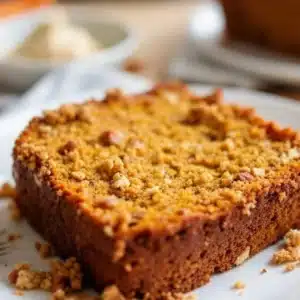
Cozy Pumpkin Sourdough Bread: Easy Fall Spice Recipe

This cozy pumpkin sourdough bread is a moist, tender loaf with a crackling crust, infused with warm fall spices like cinnamon, ginger, and nutmeg. It’s naturally sweetened with maple syrup, beginner-friendly, and perfect for breakfast, snacking, or alongside soups and stews.
- Prep Time: 20 minutes
- Cook Time: 45 minutes
- Total Time: 13 hours 45 minutes (includes bulk fermentation and proofing)
- Yield: 12 servings 1x
- Category: Bread
- Cuisine: American
Ingredients
- 1 cup (245g) pumpkin purée (100% pumpkin, not pie filling)
- 1/2 cup (120g) sourdough starter (active or discard, at room temperature)
- 3 cups (360g) bread flour
- 1/2 cup (60g) whole wheat flour
- 1/2 cup (120ml) warm water (80-85°F / 27-29°C)
- 3 tablespoons maple syrup or brown sugar
- 2 tablespoons olive oil or melted unsalted butter
- 1 1/2 teaspoons fine sea salt
- 2 teaspoons pumpkin pie spice (or homemade: 1 tsp cinnamon, 1/2 tsp ginger, 1/4 tsp nutmeg, 1/4 tsp cloves)
- 1 teaspoon cinnamon
- Optional add-ins: 1/2 cup toasted pecans, pepitas, dried cranberries, or dark chocolate chips
Instructions
- Mix the Dough (8:00 AM): In a large bowl, combine 1/2 cup sourdough starter, 1/2 cup warm water, 1 cup pumpkin purée, 3 tablespoons maple syrup, and 2 tablespoons olive oil. Whisk until smooth. Add 3 cups bread flour, 1/2 cup whole wheat flour, 1 1/2 teaspoons salt, 2 teaspoons pumpkin pie spice, and 1 teaspoon cinnamon. Mix with a dough whisk or hands until a shaggy dough forms. Cover with a damp towel and rest for 30 minutes (autolyse).
- Stretch and Folds (8:30 AM – 10:00 AM): Every 30 minutes for 2 hours, perform a set of stretch and folds. Wet your hand slightly, grab one side of the dough, stretch it up, and fold it over the top. Rotate the bowl a quarter turn and repeat 4 times per set. After 4 sets, the dough should feel smoother and more elastic.
- Bulk Fermentation (10:00 AM – 2:00 PM): Cover the bowl and let it sit at room temperature (70-75°F) for 4-6 hours until nearly doubled in size, with visible bubbles on the surface. The dough should be puffy and jiggle slightly when shaken.
- Shape the Dough (2:00 PM): Turn the dough out onto a lightly floured surface. Gently press into a rectangle, fold the top third down and bottom third up (like a letter). Fold the sides in and roll into a tight log. Use a bench scraper to shape into a round or oval boule.
- Final Proof (2:30 PM – 8:00 PM or Overnight): Place the shaped dough seam-side up into a floured banneton. Cover and proof at room temperature for 2-4 hours, or in the refrigerator for 8-12 hours overnight. The dough is ready when puffy and springs back slowly when poked.
- Preheat the Oven (30 minutes before baking): Place a Dutch oven with lid in the oven and preheat to 450°F (232°C) for at least 30 minutes.
- Bake the Bread (8:00 PM): Carefully remove the hot Dutch oven. Turn the dough out onto parchment paper. Score the top with a lame or sharp knife. Use the parchment to lower the dough into the Dutch oven. Cover and bake for 25 minutes. Remove lid and bake for another 20-25 minutes until deep golden brown and internal temperature reaches 200°F (93°C).
- Cool Completely (8:45 PM – 9:45 PM): Transfer bread to a wire rack and cool for at least 1 hour before slicing.
Notes
Pumpkin purée varies in water content; if dough is too sticky, add a tablespoon of bread flour at a time. For easier scoring, cold proof overnight. Do not skip cooling time to avoid gummy texture. Toast day-old slices for enhanced flavor.
Nutrition
- Serving Size: 1 slice
- Calories: 190
- Sugar: 6
- Sodium: 290
- Fat: 3.5
- Saturated Fat: 0.5
- Carbohydrates: 37
- Fiber: 3.5
- Protein: 5.5
Keywords: pumpkin sourdough bread, fall bread, sourdough bread, pumpkin bread, sourdough discard recipe, autumn baking, pumpkin spice bread